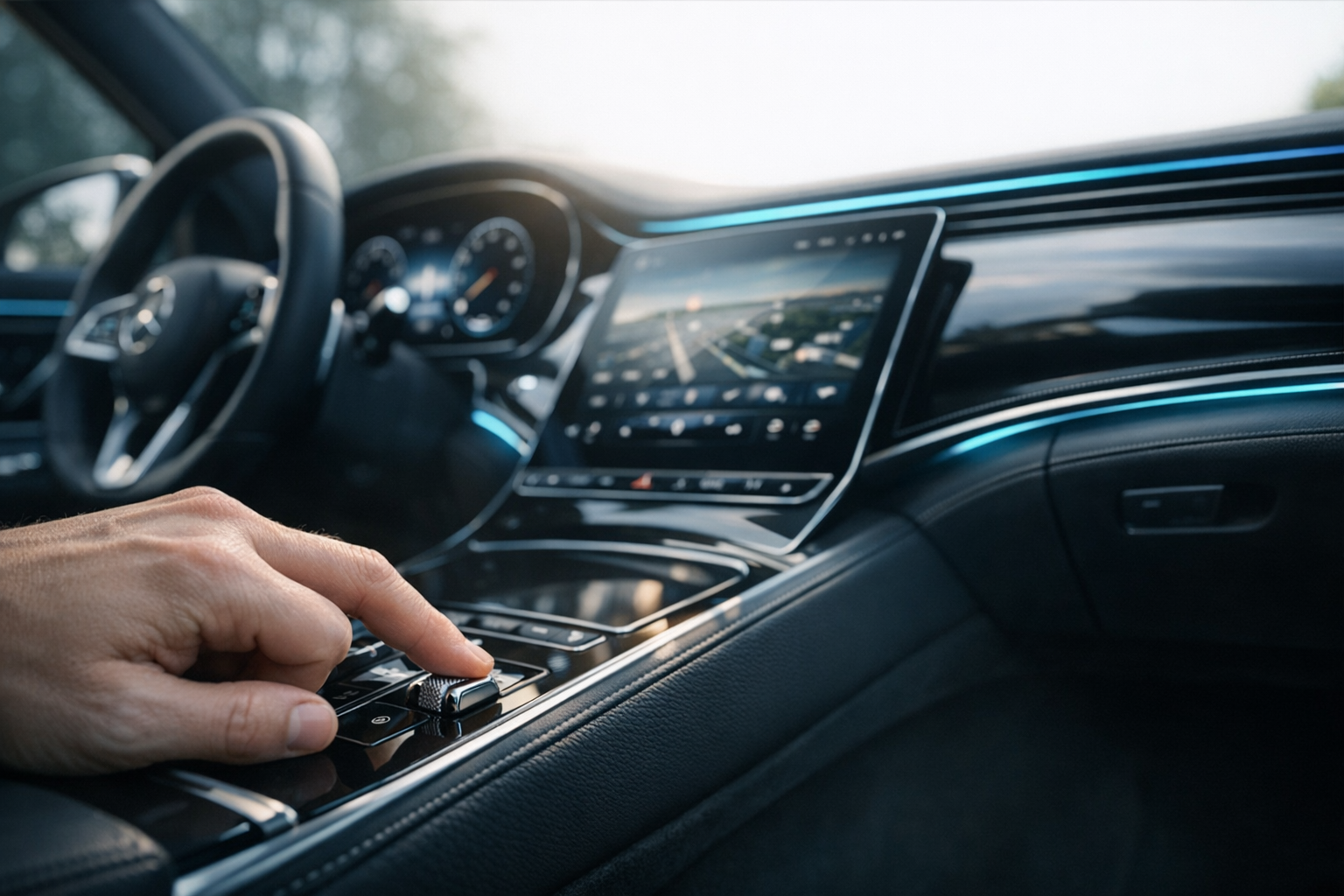
Mercedes-Benz has long been a leader in automotive luxury and innovation, synonymous with prestige and cutting-edge engineering. From the whisper-quiet cabins to the futuristic interface of the MBUX infotainment system, it appeared the brand was leaning fully into a tech-heavy driving future. But now, the brand’s head of software is making waves by challenging a major trend in automotive design: the replacement of *physical buttons* with *touchscreen controls*. In a surprising turn, Mercedes-Benz is reconsidering just how much technology is truly beneficial for drivers, sparking a broader industry discussion about safety, usability, and design intuition.
The shift comes as automakers race to connect vehicles with smartphone-like capabilities—installing ever-larger screens, digital dashboards, and app-driven control centers. Yet, despite millions of dollars poured into these upgrades, a critical voice has emerged from within. Mercedes-Benz Chief Software Officer Magnus Östberg recently acknowledged what many drivers have been quietly thinking: sometimes, *physical buttons just work better*.
This revelation not only redefines how the German automaker views driver experience but could also influence the trajectory of car interior design across the entire industry. With customer satisfaction, safety, and sensory feedback all under scrutiny, we explore why Mercedes-Benz is tapping the brakes on screen-heavy interfaces—and how this could shape the future of driving for luxury car owners and mainstream consumers alike.
What sparked Mercedes-Benz’s screen rethink
| Company | Mercedes-Benz |
| Strategy Shift | Reintroducing more physical buttons in vehicles |
| Previous Approach | Focus on large digital screens and touch-based interfaces |
| Who commented | Magnus Östberg, Chief Software Officer |
| Driver Concern | Distraction, lack of tactile feedback |
| Impacted Models | Future and current vehicle designs aimed at simplification |
Why drivers are fed up with excessive touchscreens
Over the past decade, car interiors have transformed into digital command centers. Oversized touchscreens have replaced physical knobs, and minimalist design has edged out traditional tactile interfaces in favor of ‘sleek’ software panels. However, as Mercedes-Benz is now highlighting, this design evolution hasn’t been universally celebrated.
Drivers often find themselves fumbling through nested menu screens, taking their eyes off the road just to adjust climate settings or change a radio station. In contrast, physical buttons allow muscle memory and tactile feedback to do the work—minimizing distraction and maximizing safety.
For Mercedes, a brand that prides itself on performance and safety, this insight was significant.
People make mistakes with touchscreen interfaces that they wouldn’t make with physical buttons. There’s something to be said for tactile interaction that keeps your eyes on the road.
— Magnus Östberg, Chief Software Officer
What’s changing in Mercedes-Benz’s vehicle interior strategy
Mercedes-Benz isn’t abandoning its digital ecosystem entirely—it’s evolving it. The company has started working toward a balance between sleek visual presentation and user-friendly design. That means reintroducing *essential physical controls* for functions like volume, air conditioning, and hazard lights, especially in newer and refreshed models.
This hybrid approach maintains the elegance of the MBUX system while also enhancing *driver usability*. It signals a departure from minimalism for minimalism’s sake and a pivot toward *ergonomic functionality*. Given Mercedes-Benz’s prominent role in automotive design trends, this movement is likely to ripple outward to other luxury brands—and beyond.
Winners and losers in the button vs. screen debate
| Winners | Losers |
|---|---|
| Drivers seeking intuitive and safe control layouts | Carmakers fully committed to screen-only user interfaces |
| Older users with lower tech affinity | Digital-only infotainment architects |
| Automotive safety advocates | Minimalist design purists |
Who qualifies for these changes and why it matters
The interior redesign philosophy will first become apparent in the next generation of Mercedes-Benz vehicles, expected as early as 2025 model-year rollouts. While existing customers may not see immediate hardware changes, those purchasing future models—especially in the E-Class and S-Class categories—will benefit from enhanced interfaces that blend screens with selective buttons.
This shift is not only about *luxury aesthetics* but practical real-world driving. Customers who value both modern technology and intuitive usability will benefit the most. Additionally, drivers in regions with more frequent urban traffic—where fast, instinctive controls matter more—will find these changes especially impactful.
The technology is not going away—just being refined
Mercedes-Benz is not removing screens completely. The MBUX (Mercedes-Benz User Experience) system remains a centerpiece of its digital identity. Instead, Östberg and his team aim to calibrate when and how visual interfaces are presented—so that tasks which don’t need to be on a screen, simply aren’t.
This outlook reflects a renewed emphasis on *contextual interface design*. Rather than flooding users with options, the system will present *the right function at the right time*, with many physical buttons serving as shortcuts. Voice control and AI integration will continue to evolve, but without replacing basic tactile inputs.
What industry insiders are saying
Other automakers are closely watching the German giant’s software shift. In many ways, Mercedes-Benz’s recalibration provides permission for competing brands to rethink their love affair with fullscreen dashboards.
This is the course correction we’ve been waiting for. Interfaces should not punish users for driving the car.
— Placeholder quote, UI/UX Design Expert
Some insiders speculate that even EV-focused tech makers, known for ultra-minimal dashboards, could eventually revisit their approach should driver feedback and safety ratings demand changes. While Mercedes isn’t signaling a complete reversal, its *centered approach* balances digital minimalism with analog ergonomics, a move that could redefine industry standards in 2025 and beyond.
Could this create a ripple effect across the industry?
The broader automotive industry often looks to Mercedes-Benz for signals on luxury, safety, and interior innovation. If this button resurgence catches on, carmakers more deeply rooted in touchscreen control philosophies could start to rethink their strategies.
It could also spur regulators and safety administrations to study the effects of screen-only interaction more closely. If studies show a significant reduction in distracted driving from physical controls, we might even see future guidelines or mandates in favor of tactile buttons on dashboards, especially for high-use features.
What it means for the average car buyer
For non-luxury car buyers, this shift provides an added benefit: validation. Many drivers have expressed frustration with vehicles requiring multiple screen taps just to perform basic tasks. Mercedes-Benz’s pivot lends credibility and amplified voice to these complaints.
It also increases the likelihood that physical buttons will remain a feature in mainstream and budget-friendly vehicles. While costs and global supply chain pressures have driven many automakers toward screen-dominant interiors, Mercedes’ change could justify the return of physical layouts that are cheaper and safer.
FAQs about Mercedes-Benz’s new interior philosophy
Why is Mercedes-Benz bringing buttons back?
The company believes physical buttons offer better safety and usability, allowing drivers to keep their focus on the road rather than navigating touchscreen menus.
Will future cars lose their digital screens entirely?
No. Mercedes-Benz is adjusting the balance—keeping digital elements where useful but reintroducing physical controls for essential and frequently used functions.
Which models will adopt this change first?
The next-generation E-Class and S-Class, along with updated electric vehicle lineups, are likely to feature this redesigned interface.
Is this just a Mercedes-Benz issue?
No. Many drivers across brands have reported frustration with screen-only controls, suggesting a broader industry concern.
Will this affect car prices?
There’s no confirmation yet, but integrating physical buttons could potentially reduce costs compared to high-end digital interface development.
How does this impact driving safety?
Physical buttons allow for tactile feedback and muscle memory, helping drivers perform actions without looking away from the road, reducing distraction.
Will voice control still be available?
Yes. Voice-assisted features will remain a core part of the user experience, particularly through the MBUX system, even as buttons return.
Are other carmakers doing the same?
While few have openly admitted to it, some automakers are quietly moving toward hybrid approaches, particularly in models aimed at broader demographics.