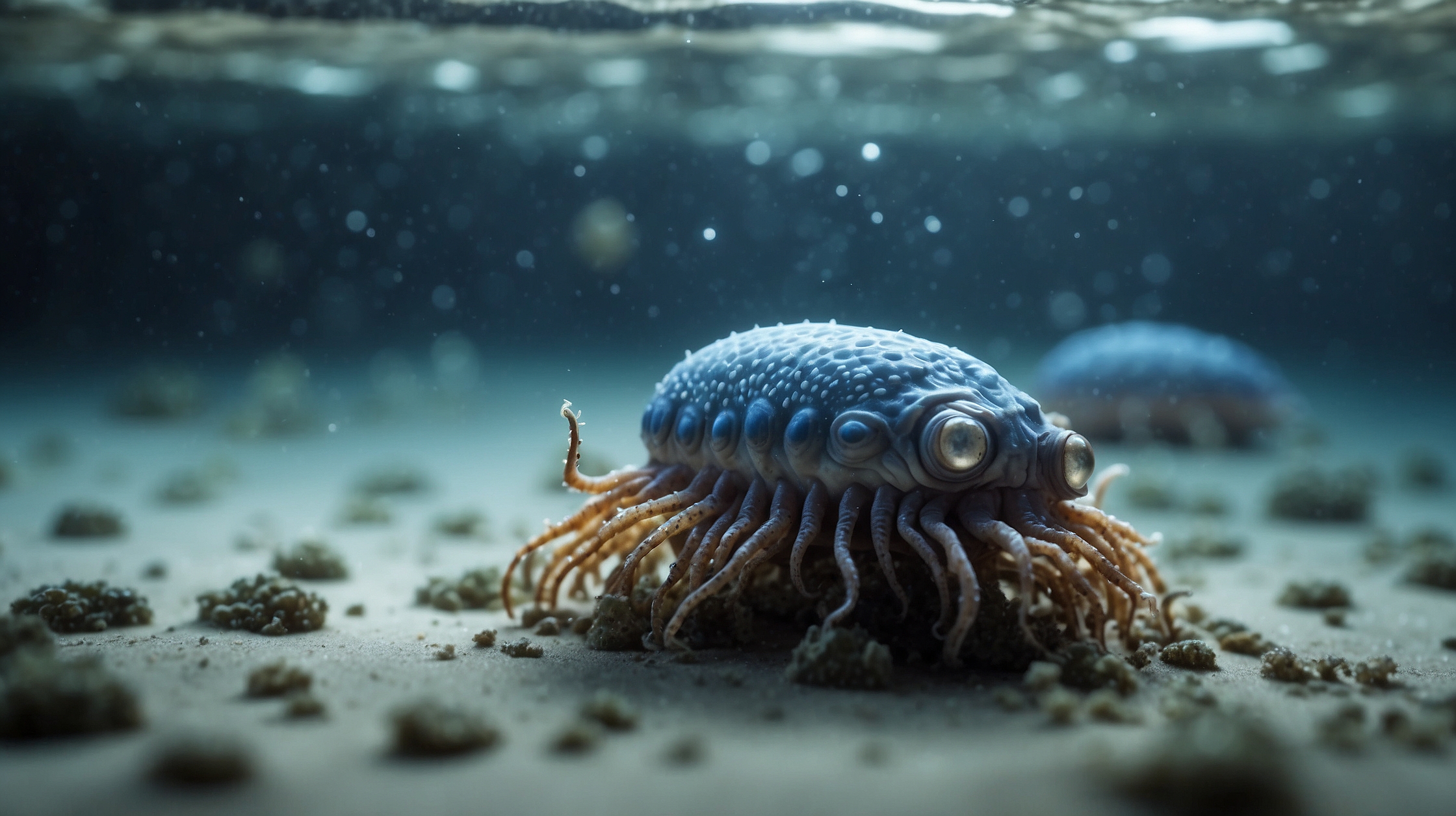
In the crushing darkness of the deep sea, where life as we know it struggles to exist, an unlikely hero has emerged—one that could hold the key to tackling one of humanity’s greatest climate challenges. Scientists are turning their eyes to an obscure, mutant microbe discovered thousands of meters beneath the ocean surface. In a world of harsh isolation, this microbe has evolved a remarkable ability: to consume and trap planet-heating carbon dioxide, offering a potential lifeline in the race to slow global warming.
While political leaders debate carbon caps and activists clash over climate policy above ground, undersea research may have just made a giant leap. This mutant, deep-sea bacterium could revolutionize how we think about carbon capture and storage. And the journey of how it was discovered—and what it could mean for our planet’s future—is as captivating as the science itself.
We will explore what makes this microbe unique, how it evolved its carbon-trapping skills, and what that could mean in a high-stakes global effort to reduce greenhouse gas emissions.
What makes this discovery so significant
| Aspect | Details |
|---|---|
| Organism | Mutant strain of marine bacterium *Thiomicrospira* |
| Location Discovered | Deep sea hydrothermal vents, several kilometers underwater |
| Special Trait | Enhanced ability to consume and store atmospheric CO₂ |
| Climate Benefit | Potential model for scalable carbon capture and storage systems |
| Research Led By | Biologists and genetic engineers at leading marine science labs |
Why a mutant microbe is making waves in climate science
At the heart of this discovery is a *Thiomicrospira* strain that mutated under high-pressure, low-temperature environments. Its genetic changes unlocked an exceptional trait: it can use carbon dioxide as an energy source far more efficiently than its natural relatives. This supercharged metabolism allows it to suck CO₂ directly from its environment and convert it into calcium carbonate—a solid material that can remain stable for centuries.
This trait is significant because current carbon capture technologies are expensive, energy-intensive, and difficult to scale. In contrast, leveraging biological carbon removal—especially from tough, remote environments like deep waters—could offer an eco-friendly, self-sustaining alternative.
“We never expected to find such an efficient carbon-consuming organism in one of Earth’s most extreme environments. This mutant strain is a game-changer.”
— Dr. Samuel Reyes, Marine Microbiologist
How the discovery came to light
Initially, researchers were studying microbial communities near hydrothermal vents for their potential in bioengineering and pharmaceuticals. But one particular strain stood out. Its unusual growth patterns and high intake of CO₂ prompted a series of genetic and metabolic tests. Sequencing revealed mutations in genes responsible for carbon fixation pathways, enhancing its natural ability multiple times over.
Standard *Thiomicrospira* strains consume CO₂ but not at meaningful levels. What makes this mutant important is that, even in stable laboratory conditions, its carbon consumption outperformed artificial bioreactors and atmospheric scrubbers by notable margins.
The biochemical mechanism behind the carbon capture
This super strain employs the Calvin-Benson-Bassham cycle, a metabolic pathway well-known for fixing carbon dioxide. However, due to the mutations, the enzymes operate at higher efficiency and increased stability under high pressure. This results in accelerated carbon uptake and mineralization—transforming gaseous CO₂ into solid carbonates through natural processes.
Calcium and magnesium in ocean waters further aid this transformation, making the captured carbon sink as sediment. This could mimic or improve natural carbon sink mechanisms, reducing the need for complex intervention processes.
Could these microbes be scaled up for global carbon reduction?
While it’s too early to claim a miracle solution, early prototype systems are already being discussed. Researchers are now exploring how these organisms could be integrated into underwater “bio-reactor farms” that produce little waste and require minimal energy. Such setups could become part of broader carbon capture programs, working alongside trees, direct air capture units, and geological storage systems.
The ocean covers more than 70% of Earth’s surface. Utilizing these vast blue spaces, particularly the deep-sea areas already rich in CO₂, could allow for decentralization of carbon sequestration. And because the captured carbon becomes solid, there’s less risk of it leaking back into the atmosphere.
“Scaling microbes for climate benefit isn’t science fiction anymore. With tools like CRISPR and synthetic biology, we can enhance nature’s best design for the planet’s toughest job.”
— Dr. Elina Koenig, Genetic Engineering Specialist
The challenges ahead for ocean-based carbon capture
Despite the promising outlook, the path to real-world deployment is far from straightforward. Some of the biggest challenges include:
- Ensuring the microbes don’t disrupt deep-sea ecosystems
- Establishing containment to prevent genetic material from spreading
- Gaining international environmental and legal approvals
- Developing cost-effective deployment methods
Unlike terrestrial solutions, the ocean offers a difficult-to-monitor environment. Concerns about unintended ecological consequences must be addressed, especially since ocean biodiversity is already under threat from warming, plastics, and acidification.
Winners and losers of this emerging technology
| Winners | Losers |
|---|---|
| Climate scientists and carbon-reduction startups | Fossil fuel-dependent industries resistant to carbon cost policies |
| Marine biotech companies | Opponents of genetic engineering applications |
| Governments investing in green innovation | Delay-prone legislative bodies |
What this could mean for climate policy
Each scientific milestone like this could provide the evidence base needed to support stronger environmental policy. If biological sequestration methods show scalability, governments may create carbon offset markets specifically for ocean-based projects. That would not only fund further research but also incentivize private sector participation in scaling such technologies.
Additionally, regulatory agencies may soon need to draft new frameworks to govern synthetic life forms and their deployment in natural ecosystems. The conversation could shift from “how do we limit emissions?” to “how do we remove what’s already here safely?”
Short FAQs on mutant deep sea microbe carbon trapping
What is the mutant microbe discovered in the deep sea?
It is a mutated strain of the bacterium *Thiomicrospira*, found near hydrothermal vents and possessing enhanced abilities to consume and store carbon dioxide long-term.
How does it help reduce atmospheric carbon levels?
The microbe transforms CO₂ into stable carbonates, effectively locking it away in solid form that can remain buried in ocean sediments for centuries.
Can this be scaled as a global climate solution?
Researchers believe so. Prototype systems are in development that could house these microbes in controlled ocean-floor bioreactors for large-scale carbon capture.
Are there any risks with using engineered microbes in the ocean?
Yes, environmental risks include ecosystem disruption and regulatory uncertainty about synthetic organisms operating in natural habitats.
Is this more efficient than traditional carbon capture methods?
Early results show higher efficiency in carbon fixation compared to industrial technologies, especially under energy-neutral conditions.
Who is leading this research?
A cross-disciplinary team of marine biologists, geneticists, and climate scientists from leading international labs is behind the discovery and development.
What is the main benefit over land-based carbon capture?
Ocean capture doesn’t compete with agriculture or urban space and could leverage Earth’s largest carbon sink with minimal surface disruption.
When could this be used commercially?
While still years away from large-scale implementation, pilot projects and environmental studies are currently in planning phases for the next decade.