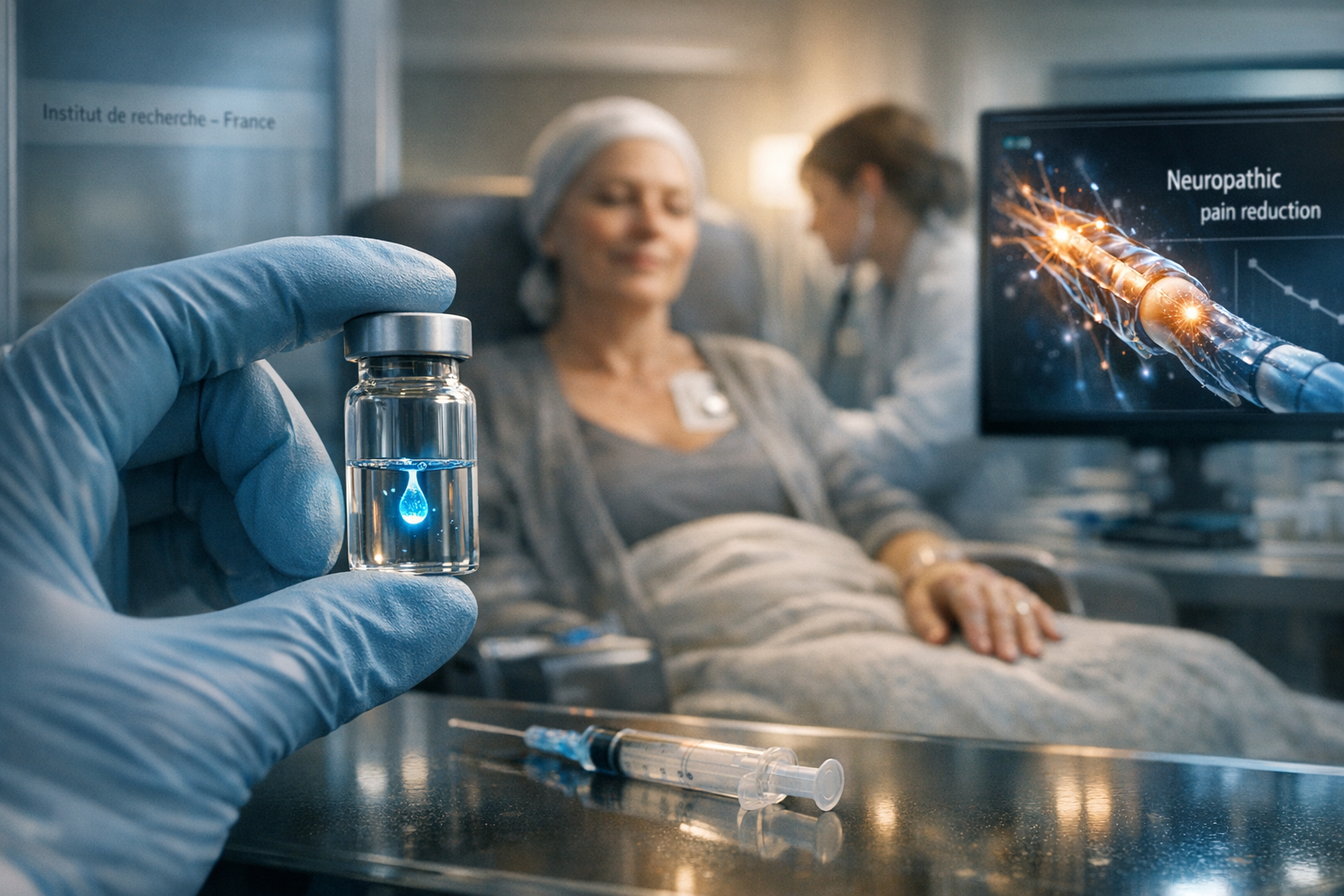
For many cancer patients, surviving the disease doesn’t necessarily mean the end of suffering. Chemotherapy, an essential lifeline in cancer treatment, brings along a host of side effects—some more devastating than others. Of these, **peripheral neuropathies** have emerged as a crippling condition. Affecting nearly **90% of patients undergoing chemotherapy**, this disorder severely impacts quality of life, often forcing patients to halt treatment prematurely.
But hope may be on the horizon. In a quiet laboratory on the outskirts of Paris, scientists are making headlines with a breakthrough molecule that has already shown promise in preclinical trials. Developed as part of a multi-disciplinary collaboration among neurologists, oncologists, and pharmacologists, the French-produced therapeutic compound could be the first of its kind to prevent—and potentially treat—chemotherapy-induced peripheral neuropathies (CIPN).
The search for effective therapies for CIPN has been long and fraught with disappointing setbacks. Current treatments mainly include symptomatic remedies like painkillers or antidepressants, none of which offer targeted results. But this new molecule could finally provide a **targeted approach**—translating science into tangible relief for millions of cancer warriors around the world.
Key details at a glance
| Condition | Chemotherapy-induced peripheral neuropathy (CIPN) |
| Affected Population | Up to 90% of chemotherapy patients |
| New Development | Promising French molecule to prevent/treat CIPN |
| Current Treatment Limitations | No preventive treatments; symptomatic relief only |
| Stage of Research | Preclinical; human trials prepared for 2025 |
Why chemotherapy causes nerve damage
Chemotherapy works by targeting fast-dividing cells, making it an effective tool against cancer. Unfortunately, this mechanism doesn’t discriminate—fast-dividing nerve cells, particularly those that extend to extremities like hands and feet, often become collateral damage in the fight. The result: **peripheral neuropathy** marked by symptoms like tingling, numbness, burning sensations, muscle weakness, and in severe cases, intense chronic pain.
While multiple classes of chemotherapy agents can cause neuropathy, **platinum-based compounds**, **taxanes**, and **vinca alkaloids** are among the chief culprits. Their impact on sensory neurons can be both acute and long-lasting, sometimes persisting for years post-treatment. This not only reduces a patient’s quality of life but also limits the doses doctors are able to administer—hampering the full potential of life-saving cancer therapies.
A molecule born from French innovation
The newly developed molecule stems from France’s commitment to pioneering biomedical solutions. Researchers from the French National Centre for Scientific Research (CNRS), in collaboration with academic institutions and biotech startups, discovered the candidate compound during investigations into cell signaling pathways involved in inflammation and nerve deterioration.
Unlike current medication strategies that address only **symptom relief**, this molecule acts directly at the **cellular and molecular level** to block the biological cascade responsible for neuronal damage. Laboratory experiments on animal models have shown striking efficacy: it was able to prevent the onset of CIPN even when administered concurrently with chemotherapy.
“This is the first time we are seeing such a potent preventive effect without compromising the effectiveness of the chemotherapy itself.”
— Dr. Isabelle Martin, Lead Investigator and Neurologist
How it works at a cellular level
The mechanism of action focuses on **mitigating mitochondrial dysfunction** and **suppressing pro-inflammatory signals**—both of which are key contributors to neuronal damage during chemotherapy. The molecule appears to stabilize nerve cell membranes and maintain axonal integrity, even during aggressive cancer treatment regimens.
Importantly, researchers were careful to ensure that this neuroprotective effect did not dilute the cancer-combating capability of chemotherapy drugs. In mouse models, the anti-tumor efficacy of platinum-based drugs remained unchanged, strongly suggesting that the molecule offers **dual benefits**: maintaining cancer control while preserving nerve health.
Immediate implications for cancer patients pending trials
While conclusive results await human clinical trials, which are set to begin by **early 2025**, the molecule’s current progress has generated cautious optimism among medical professionals. For patients currently undergoing chemotherapy, the drug won’t be available for a few more years, but its success in animal trials strengthens the case for it becoming a future **standard of care**.
“What makes this molecule unique is its preventive action. Most treatments in neurology are reactive—this is proactive medicine.”
— Prof. Alain Rousseau, Oncologist
If the molecule proves effective in humans, it could completely reshape oncology care pathways, potentially allowing doctors to resume previously discontinued treatments and offering patients greater long-term functionality and comfort.
The long battle against CIPN and its cost
Peripheral neuropathy is not merely a painful inconvenience—it’s a condition that can have profound psychological, occupational, and emotional impacts. Many patients report difficulty walking, loss of hand dexterity, and impairment in basic daily tasks. It’s not uncommon for cancer survivors to end up disabled, long after their cancer is in remission.
On a macro scale, CIPN leads to **treatment delays**, **hospital readmissions**, **increased medication usage**, and **lost productivity**, accruing billions in associated costs annually. The French innovation might help turn the tide—undermining one of the biggest quality-of-life crises in oncology.
Who stands to benefit the most
Certain groups are more affected by CIPN than others—particularly **older adults**, **diabetics**, and patients receiving high cumulative doses of chemo. For these vulnerable populations, the new molecule could mean the difference between continuing life-saving treatment or discontinuing due to unbearable side effects.
“We see patients who make the heart-wrenching decision to stop cancer treatment just because they can’t take the pain anymore. This could change that.”
— Dr. Emilie Bernard, Oncology Specialist
Moreover, low-income patients, who may have limited access to physical therapy and long-term pain management, could benefit profoundly from a preventive approach that minimizes the need for additional interventions.
The next steps toward regulatory approval
The developers are entering the regulatory maze required to advance the molecule into human clinical trials. Initial safety assessments are already underway. Phase I trials, which focus on safety and tolerable dosage levels in healthy volunteers, are expected to begin by early 2025, followed by larger efficacy trials later that year.
If all goes well, the drug could receive fast-track designation given its major **unmet medical need**, making it plausible to hit the healthcare market by **2027**. Stakeholders are already aligning for funding, international partnerships, and commercial strategy planning to accelerate time-to-market.
Technology that could fuel further discoveries
Beyond its immediate impact on oncology, the technology underpinning the development of this molecule may hold value for **other neuropathies**—from diabetic neuropathy to nerve damage in autoimmune conditions. That makes this French innovation not just a promising drug candidate but also a **blueprint** for how targeted, interdisciplinary research can yield transformative answers in medicine.
Short FAQs about chemotherapy-induced neuropathy and the new molecule
What is chemotherapy-induced peripheral neuropathy (CIPN)?
CIPN is a form of nerve damage caused by certain chemotherapy drugs, leading to pain, numbness, and tingling in the hands and feet.
How common is CIPN among cancer patients?
It affects up to 90% of cancer patients receiving chemotherapy drugs, particularly those involving platinum compounds, taxanes, and vinca alkaloids.
Is there any cure for CIPN right now?
Currently, treatments focus on symptom relief such as using pain medications and antidepressants, but no approved preventive therapy exists.
How does the new French molecule help?
It prevents nerve damage during chemotherapy by protecting nerve cells at the molecular level without affecting chemotherapy’s cancer-fighting efficacy.
When will the new drug be available?
Human trials are scheduled for 2025. Market availability could occur by 2027, pending successful trials and regulatory approval.
Can this molecule also treat existing nerve damage?
The current focus is on prevention, but researchers are exploring its use for early-stage treatment of existing nerve damage.
Is it safe to use alongside chemotherapy?
In animal models, it did not interfere with chemotherapy effectiveness. Human trials will further evaluate its safety profile.
Who is most likely to benefit from this treatment?
Older adults, diabetics, and patients undergoing intensive chemo are particularly likely to benefit from this neuroprotective solution.