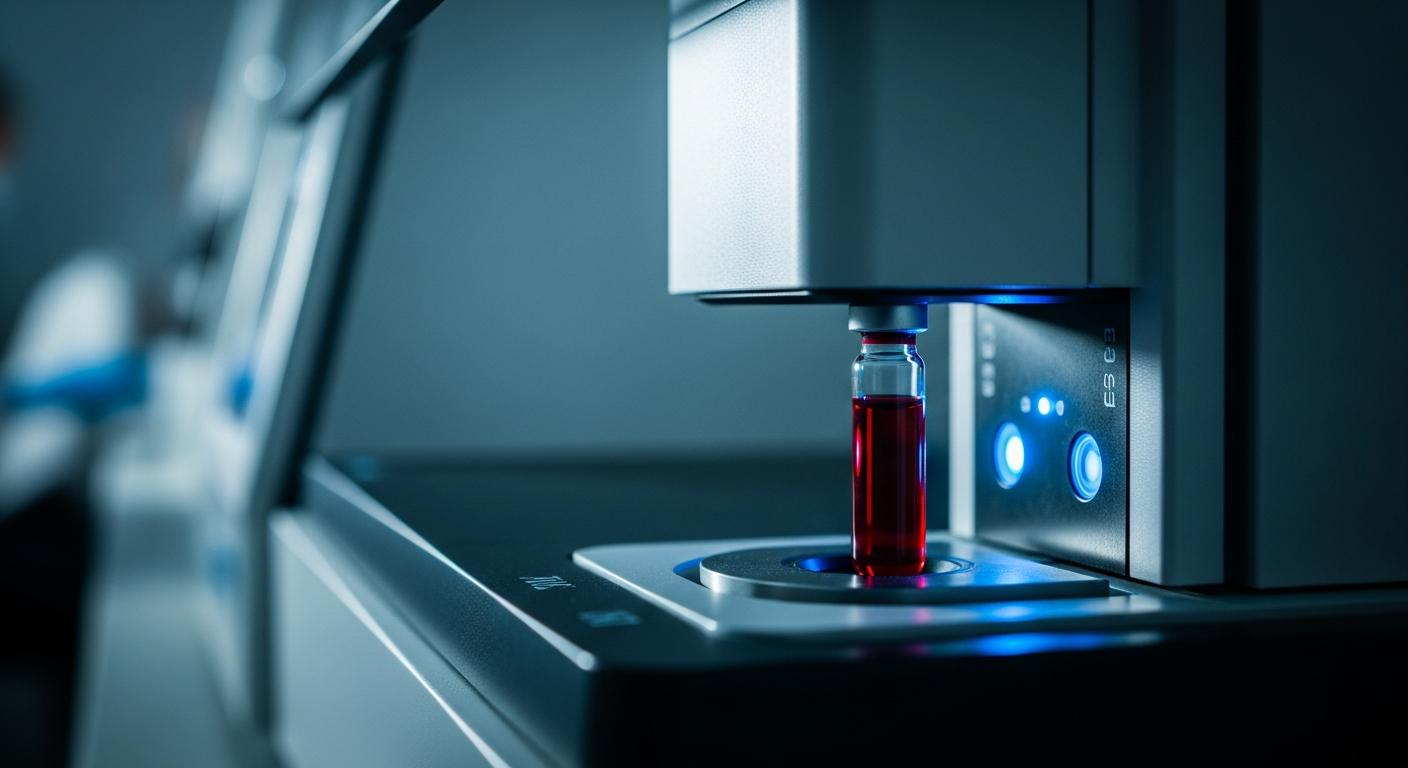
On a quiet Tuesday morning in a bustling research facility, a breakthrough quietly emerged that could change the lives of millions. Inside a lab filled with blinking monitors and whirring machines, a team of neuroscientists pulled back the curtain on a revolutionary new diagnostic tool—one that promises to identify Alzheimer’s disease years before its telltale symptoms begin to erode memory and independence. The silent march of Alzheimer’s may no longer be inevitable, thanks to a testing method that brings early detection into the realm of possibility for the first time.
The tool, built upon cutting-edge biomarker science and machine-learning algorithms, offers a quick, minimally invasive way to detect Alzheimer’s decades ahead of visible cognitive decline. While the condition has traditionally been elusive until well into its progression, this method proposes a future where patients and doctors can take decisive action with a precious time advantage. In doing so, it may finally allow society to shift its posture from reactive to proactive in the world of dementia care.
For caregivers, the elderly, and health systems alike, the potential implications are nothing short of transformative. With treatment windows extended and care strategies tailored far earlier, this might just rewrite the Alzheimer’s playbook. But how does it work? Who can benefit? And what does the future of such testing hold?
Overview of the Rapid Alzheimer’s Detection Test
| Test Name | Alzheimer’s Biomarker Rapid Detection (ABRD) |
| Test Type | Blood-based diagnostic using machine learning |
| Detection Timeline | Up to 15 years before onset of symptoms |
| Development Time | Over 10 years of research and clinical trials |
| Main Biomarkers Detected | Beta-amyloid proteins, tau tangles, neurofilament light chains |
| Availability | Expected in clinics by end of year |
| Test Duration | Under 1 hour |
| Key Benefit | Enables early intervention years before cognitive decline |
What makes this test different from earlier methods
Previous Alzheimer’s diagnostics have largely relied on observable cognitive impairment, brain scans, or lumbar punctures—costly and intrusive methods that often detect the disease after irreversible damage. The new test breaks this mold. By requiring only a blood sample and leveraging AI-trained algorithms, it traces biomarkers far earlier in the neurodegenerative timeline.
“With this test, we’re not just chasing symptoms—we’re identifying the cause before it manifests,” said project co-lead Dr. Marina Lewinsky, a cognitive neurologist with over two decades of experience.
Unlike PET scans and spinal fluid tests, which have prohibitive costs and limited accessibility, the rapid test is designed for scalability across hospitals and primary care clinics. The low-invasiveness expands its reach, particularly for vulnerable populations less likely to undergo rigorous screenings.
The science behind identifying Alzheimer’s earlier
Alzheimer’s, one of the most prevalent neurodegenerative diseases globally, roots itself in the brain long before memory lapses and behavioral changes begin. The disease typically forms clumps of beta-amyloid and tau proteins, which disrupt neuron function silently over years.
The test zeroes in on these telltale proteins in blood plasma, which echoes brain chemistry more than previously believed. Using sophisticated analytics, it converts this “invisible” footprint into a tangible diagnosis. The model, trained on hundreds of thousands of samples, boasts an accuracy rate upwards of 91% in initial applications.
“Think of it as turning whispers into warnings,” said Dr. Ron Nishimura, bioinformatics director of the development team. “For the first time, we can spot the storm brewing long before it hits.”
Who qualifies and why it matters
While the test is groundbreaking, it’s not meant as a catch-all screening tool. Its target population includes those with family histories of dementia, individuals over age 50 showing mild cognitive complaints, and those with known genetic markers such as the APOE4 variant. Clinical decisions will rest on more than just test results—lifestyle, co-morbidities, and imaging may still assist in final diagnosis pathways.
However, its true power lies in how it informs prevention. For those flagged at risk, lifestyle interventions such as Mediterranean diets, physical exercise, and cognitive training programs may be implemented years before decline—turning knowledge into defense.
“Early detection lengthens quality of life. It lets families plan, patients preserve agency, and researchers target earlier stages with new drugs.”
— Dr. Leah Arnold, University Cognitive Aging Specialist
Winners and losers as this test becomes mainstream
| Winners | Losers |
|---|---|
| High-risk patients needing earlier diagnosis | Expensive, delayed PET scan services |
| Primary care doctors expanding diagnostic ability | Late-stage pharmaceutical treatments |
| Drug developers working on early-stage interventions | Insurance carriers cautious about predictive coverage |
| Family caregivers planning ahead | Systems reliant on symptom-based diagnosis |
Implications for healthcare systems and policies
Health systems, particularly in aging societies, will need to adjust for the influx of earlier diagnoses. Though this places short-term pressure on memory clinics and neurology services, it alleviates long-term burdens by potentially reducing late-stage Alzheimer’s cases—where care is most intensive and expensive.
Insurance policies may also evolve, raising ethical considerations about when and how predictive data is used. Advocates urge safeguards to prevent discrimination based on early Alzheimer’s risk indicators.
In parallel, public health campaigns are expected to highlight brain health the way they’ve done previously with heart and metabolic wellness—a shift that could redefine preventive care norms.
How the test will be rolled out
Initial access will occur via research hospitals and select neurology clinics, with broader dissemination expected early next year. Partnerships with diagnostic labs and federated data-sharing models play a key role in scaling affordability and reach.
Patients undergoing regular annual checkups may soon find cognitive health screening added to the array of standard panels—paving the way for a more holistic understanding of aging.
“In our upcoming pilot program, over 10,000 individuals will be tested in the first six months. This is more than just a launch—it’s a launchpad to new standards.”
— Dr. Scott Inouye, Director of Clinical Integration
Why timing matters more than ever
Time has always been the greatest enemy against Alzheimer’s. This technology takes aim directly at that deficit. Intervening 5, 10, even 15 years before decline allows not just treatments, but potentially preventive measures to work at full force. Medications under current development are proving most effective when administered well before memory fades, and this test may help determine precisely who stands to benefit.
Moreover, knowing early enables emotional reconciliation, financial preparedness, and lifestyle restructuring—a priceless advantage for those determined to tackle aging with dignity.
What could come next in diagnostics
The next frontier may involve wearable biosensors, combining blood data with digital behavior tracking. Clinical trials are also exploring correlations between audio-language patterns and silent cognitive shifts. Coupled with AI and big data analytics, the long-held dream of pre-symptomatic neurological care inches closer to reality.
Continued government and philanthropic investment will be essential in ensuring this early detection movement doesn’t remain exclusive to urban hospitals or affluent patients. Equity remains the final mile of innovation, and mission-forward scientists are pushing hard to close that gap.
Frequently asked questions about the new Alzheimer’s detection test
How accurate is the new Alzheimer’s blood test?
Early studies show an accuracy rate of over 91% for detecting preclinical markers associated with Alzheimer’s. Accuracy is expected to improve as the dataset grows.
At what age should someone consider taking the test?
Most experts recommend individuals over the age of 50 with family history or early signs of cognitive decline consider screening. Those with genetic risk factors may start earlier.
Is the test covered by insurance?
Coverage policies are still evolving. Initially, some patients may need to pay out-of-pocket, but frameworks for reimbursement are under active review.
Can early detection prevent Alzheimer’s entirely?
No current method guarantees prevention. However, early detection opens a window for interventions that can slow or alter the progression significantly.
What happens after someone tests positive?
Further evaluation, lifestyle guidance, and potentially early pharmacological interventions will follow. Positive results are a cue for vigilance and planning, not despair.
Is this test available to the general public now?
It is currently being piloted in select research centers but expected to reach broader medical practices within 9 to 12 months.
What makes this test faster than others?
It only requires a blood sample and completes analysis within an hour using automated, AI-enhanced lab tools—eliminating the need for complex imaging or CSF fluid extraction.
How does this impact ongoing drug trials?
It enables trials to focus on early-stage participants, improving the odds of targeting Alzheimer’s before significant brain degeneration occurs.