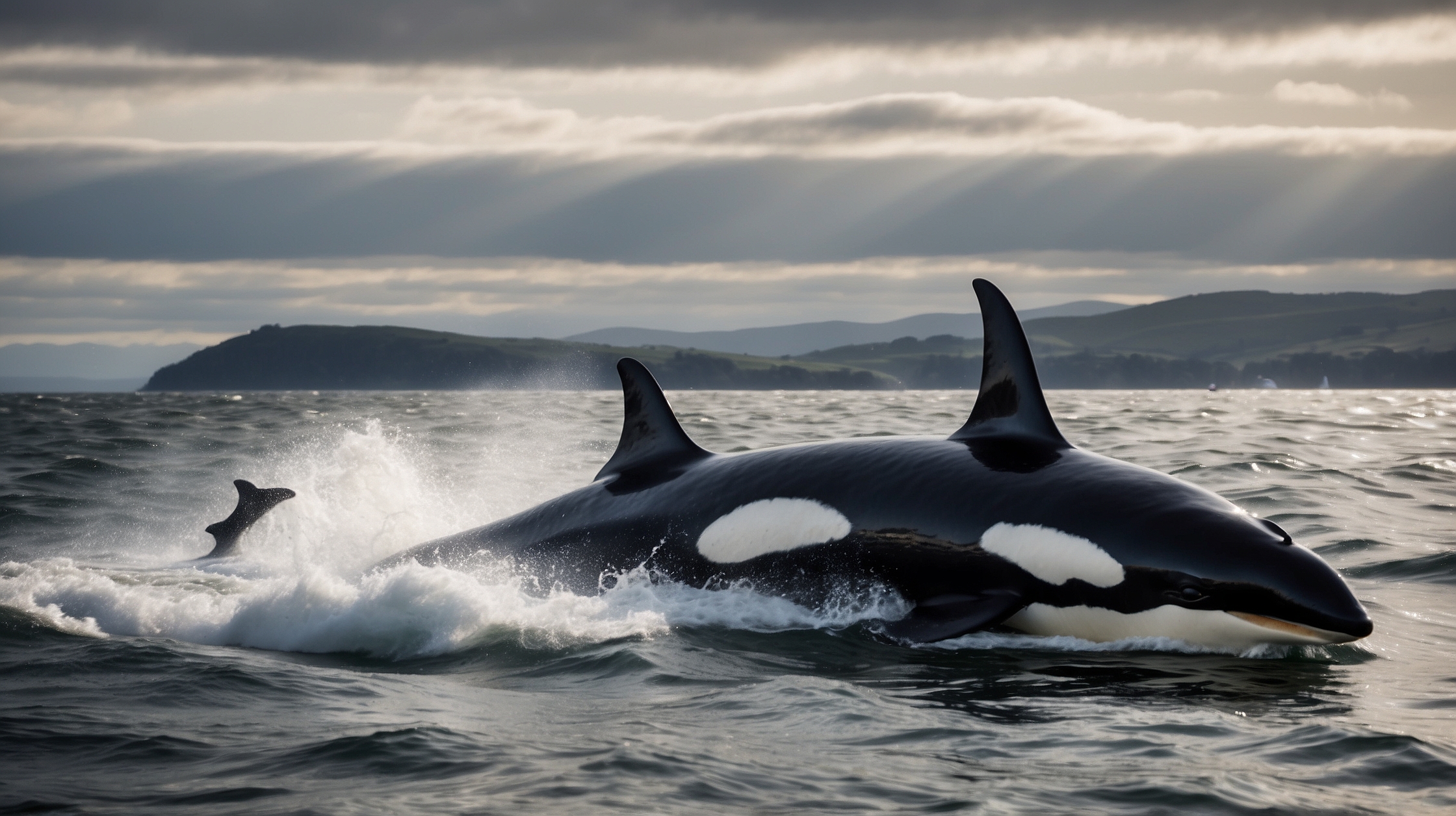
The North Atlantic’s icy expanse has long been a realm of mystery, beauty, and danger. For centuries, maritime lore has spun tales of shipwrecks, surging waves, and hidden predators. Now, a modern warning has stirred alarm and curiosity in equal measure—*orcas*, the ocean’s apex predators, are allegedly changing their behavior, and not in ways you might expect.
In an unprecedented update, multiple maritime safety organizations have issued a cautionary warning about aggressive orca interactions with sailing vessels in the region. These warnings aren’t based on ancient seaman’s tales or misunderstood natural behavior; they stem from recorded incidents and observations over the past few years that suggest an alarming shift in how a specific group of orcas is engaging with humans and their craft.
This behavioral evolution is spurring concern not only among sailors and maritime authorities but also among marine biologists who are scrambling to understand why these intelligent mammals are now exhibiting increased hostility. Whether it’s a form of social rebellion, a cognitive response to environmental stress, or something else entirely, one thing is clear: the North Atlantic is experiencing an orca uprising unlike anything we’ve seen before.
Overview of the Rising Orca Threat in the North Atlantic
| Location | Gulf of Cadiz, Strait of Gibraltar, and parts of the North Atlantic |
| Species Involved | Orcinus orca (Killer Whale) |
| Type of Incident | Deliberate ramming and damaging of boats, primarily rudders |
| Frequency of Events | Dozens since 2020; increasing yearly |
| Theories on Behavior | Learned behavior, social play, trauma response, or eco-anxiety |
| Recommended Action | Active avoidance zones and maritime rerouting |
Unusual events that caught experts by surprise
It was once relatively rare to see orcas in direct conflict with human vessels. But starting in 2020, multiple reports emerged of killer whales in the North Atlantic approaching yachts and boats—then aggressively targeting their rudders. Unlike accidental collisions or playful behavior, these encounters reveal calculated, repetitive strikes that have left vessels damaged and crews bewildered.
Initially isolated, the incidents became difficult to ignore as patterns developed. Authorities and researchers noticed that these were predominantly young orcas, often seen acting in unison, almost like a choreographed assault. Descriptions from affected sailors ranged from nervous awe to outright fear, with one captain saying,
“They knew exactly what they were doing. It wasn’t random—they targeted the same part of the ship again and again.”
— Anonymous Skipper, struck off the Gibraltar coast
What scientists think is driving the behavior
Several theories circulate among marine scientists attempting to unpack this mystery. One proposes that the orcas, being intelligent and social animals, have developed a new behavior from a negative experience—possibly a collision or trauma caused by a boat—and begun repeating it as a cautionary or retaliatory example within their pod.
Another popular theory is that it’s a form of play or stimulation. Young orcas, like teenagers in any species, engage in complex social behaviors that sometimes go awry. However, the level of coordination, precision, and repetition raises doubts about it being mere horseplay.
“It’s not aggression in the traditional sense. It’s behavioral innovation, possibly started by a single matriarchal individual and then taught to others.”
— Dr. Elena Martínez, Marine Biologist
Others worry there may be a more troubling cause—climate change and deteriorating ocean conditions that are pushing orcas into unfamiliar territory and introducing stressors that warp behavior.
Regions identified as high risk
Based on incident mapping, authorities now warn that several maritime corridors are high-risk areas for orca encounters. These include:
- Western approaches to the Strait of Gibraltar
- Southern coast of Portugal and the entirety of the Gulf of Cadiz
- Some northern stretches of the Atlantic near Galicia, Spain
To minimize risk, sailing associations and maritime boards have published emergency rerouting guidelines, tankers are advised to maintain calculated distance, and smaller vessels are required to report movements through newly created “orca monitoring zones.”
Maritime authorities respond with new protocols
The International Maritime Organization and regional coast guards are not treating these as isolated incidents. Instead, they’ve instituted a series of protocols designed to minimize risk:
- Issuing reroute advisories through known “Orca Alley” areas
- Equipping ships with noise-emitting deterrents
- Mandating faster movement through high-alert regions
- Implementing real-time tracking systems for orca activity
While these measures are proving effective in some cases, concerns remain that orcas—adaptable and capable of learning quickly—may eventually overcome or even become attracted to the deterrents in an unintended reverse effect.
Understanding orca culture and what it means for humans
To truly grasp the gravity of what’s happening, one must understand that orca societies are matriarchal, long-lived, and far more culturally rich than most marine species. They pass down hunting techniques, vocal accents, and territorial knowledge from generation to generation.
That these attacks focus on one area of a boat and are carried out with unerring precision suggests a shared knowledge base—possibly passed through family units and learned behaviors within pods. The emerging concern is whether this behavioral pattern will expand across larger orca populations or remain confined to isolated groups.
“I wouldn’t underestimate them. If this becomes a part of their culture, it may remain for decades.”
— Dr. Lin Mei, Cetacean Behavior Specialist
Winners and losers in this unfolding situation
| Winners | Losers |
|---|---|
| Marine biologists gaining insights into new behavior | Sailors and shipping companies facing delays and damages |
| Orca conservation groups garnering support | Tourism companies operating whale watching in affected zones |
| Technology companies supplying tracking and deterrent systems | Insurance providers dealing with increased claims |
What this signals about our changing oceans
Beyond the immediate concern of damage to vessels and safety risks to humans, this situation offers a stark signal about how much the oceanic environment is changing. Whether spurred by ecosystem collapse, dwindling prey, or overcrowding from heavy maritime traffic, the orcas’ evolved behavior likely stems from deeper systemic issues.
These are sentinel species—meaning changes in their behavior reflect stressors that could eventually impact other marine life and, by extension, people who rely on the ocean for their livelihoods.
As one expert put it:
“They’re reacting to a world we’ve altered. The challenge now is deciding what our response will be.”
— Dr. Johan Kröger, Oceanic Ecologist
What to watch for next
With increased incidents and global marine awareness, eyes are sharply focused on how this orca phenomenon evolves. Will new deterrents work, or will smarter coordination emerge? Will governments enact policy changes to restrict traffic through protected zones?
In the coming months, joint research missions involving European and North American marine institutes are expected to expand, aiming to track these pods using advanced sonar and tagging, offering data that may help unravel not just how, but *why* this behavior has taken hold.
Frequently Asked Questions
Are orcas attacking boats intentionally?
While not “attacks” in the traditional sense, orcas appear to be deliberately targeting vessels—specifically focusing on rudders in coordinated behaviors. The reason is still under investigation.
Where have most incidents occurred?
Primarily in the Strait of Gibraltar, Gulf of Cadiz, and nearby North Atlantic waters.
Is this dangerous for humans?
There have been no direct attacks on humans, but vessel destruction poses serious safety risks, especially in remote waters.
What should sailors do if they encounter orcas?
Maintain engine power, avoid erratic movement, and report the sighting to marine traffic authorities. Attempting to deter or harm the orcas is illegal and ineffective.
Why are orcas focusing on rudders?
Some theories suggest they’re fascinated with the movement, while others posit it’s a learned behavior designed to disable boats.
Could this spread to other orca pods globally?
If this is passed via social learning, it’s possible that similar behaviors could appear elsewhere, depending on environmental and social conditions.
Are there conservation implications?
Yes, understanding this behavior could lead to better protection policies for both marine life and maritime workers.