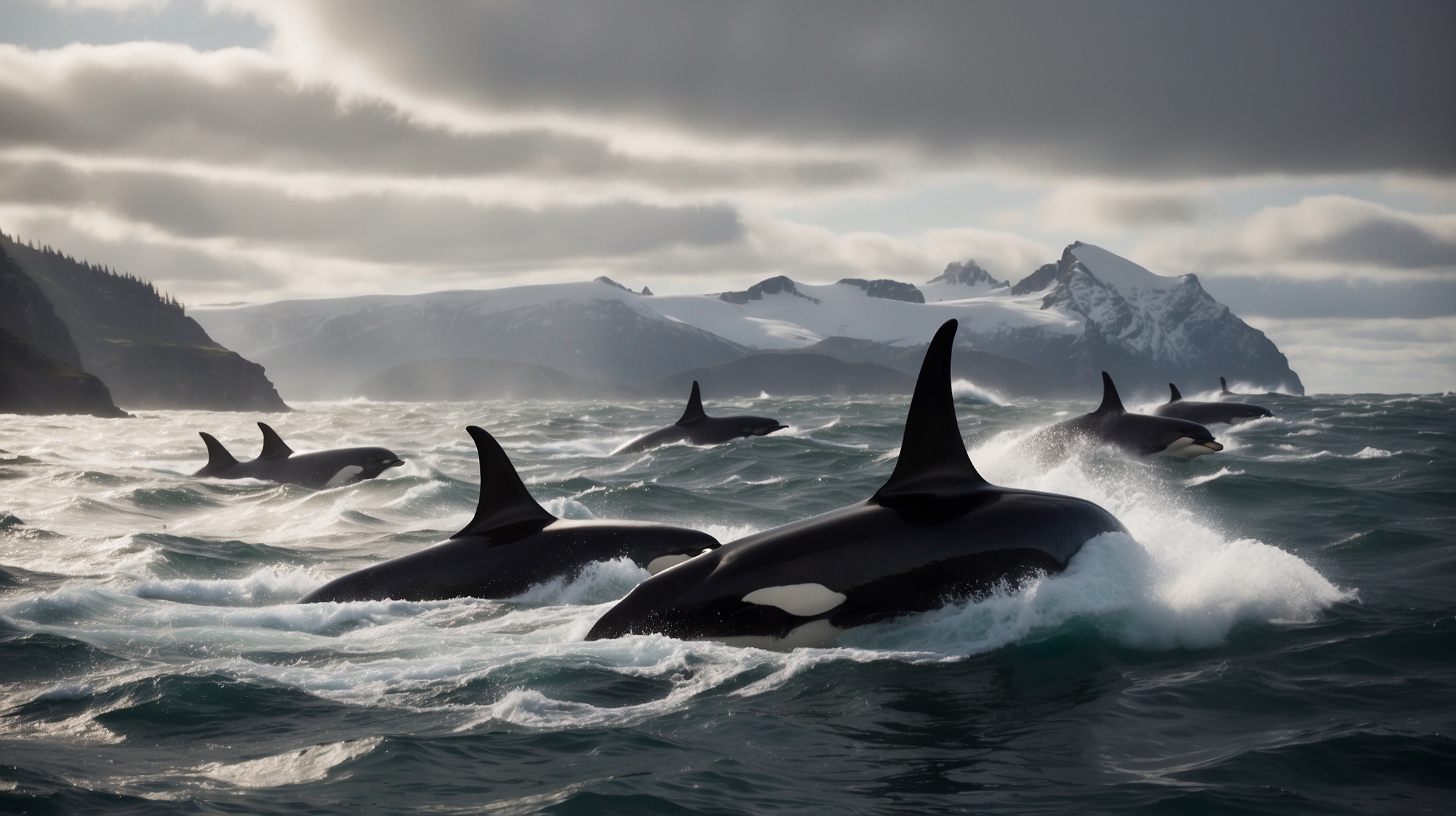
High above the churning waves of the North Atlantic, something remarkable — and alarming — is unfolding beneath the surface. Once perceived as gentle giants of the sea, orcas (also known as killer whales) are pushing boundaries in a way never seen before. For centuries, sailors told stories of the mysterious black-and-white marine predators, marveling at their intelligence and raw power. But this time, the tales are more than whispers. The orcas are not only asserting territorial dominance — they may be adapting, evolving, and sending messages humans scarcely understand.
In 2024, reports have skyrocketed across naval and shipping communities: orcas are increasingly ramming and disabling boats off the coasts of Portugal and Spain. Experts are baffled by the precision involved in these repeated orca-led attacks. While speculation spins from learned behavior to stress response or even playful mimicry, one unsettling truth remains — this phenomenon is growing more intense and frequent across the North Atlantic, including waters near the UK, Iceland, and coastal Canada.
With the stakes rising for maritime safety, marine ecosystems, and our understanding of this apex predator, it’s time to decode what’s happening beneath the waves — and what it could mean for both orcas and humans alike.
North Atlantic Orcas: What We Know So Far
| Location of Most Incidents | Gibraltar Strait, Western Iberian Coast, Bay of Biscay |
| Species Involved | Orcinus orca (Iberian sub-population) |
| First Recorded Attacks | April 2020 |
| Number of Reported Incidents (2020–2024) | Over 500 |
| Common Targets | Sailing yachts, fishing boats, occasionally motor yachts |
| Common Behavior Observed | Ramming rudders, circling boats, vocalizing underwater |
| Confirmed Boat Sinkings | At least 3 since 2022 |
Why orcas are targeting boats now
Experts suggest the rise in these targeted disturbances is due to a combination of environmental stressors and learned behavior. Since 2020, a distinct subpopulation of Iberian orcas — a critically endangered group — has been increasingly involved in aggressive encounters with boats.
According to marine specialists, the most affected populations reside along the Iberian coasts, particularly juvenile orcas that seem focused on boat rudders. One prevailing theory suggests that a disruptive incident involving a boat and an orca named “White Gladis” may have sparked the initial behavior, which others began to mimic across generations.
Orcas are extremely intelligent and social animals. If one figures out an action, others pick it up rapidly — especially if it’s fun or seen as a response to a perceived threat.
— Dr. Claudia Rios, Marine Biologist
This “prosocial reinforcement,” as behavioral ecologists term it, means each successful engagement can reinforce the behavior within orca pods. As younger orcas learn to attack rudders, possibly as a form of play or expression of stress and aggression, others appear to follow suit.
What changed this year in North Atlantic waters
In 2024, orca-boat encounters became bolder and more frequent. Several sinkings were recorded, many off the coast of Spain and Portugal, but incidents have also extended into the Bay of Biscay and further north around the UK. Boaters have reported not just rudder damage but sustained efforts by orcas to disable vessels.
The altered patterns may be due to shifts in migratory behavior or ocean temperatures driven by climate change. Coupled with reduced food supply — notably bluefin tuna, a primary prey species for Iberian orcas — the animals may be exploring new behaviors to deal with competition and territorial stress.
We’re watching a form of civil unrest unfold among orcas. Their actions could be interpreted as a protest against depleted ecosystems and ongoing maritime intrusion.
— Miguel Tomás, Oceanic Researcher
Analyzing the impact on sailors and marine systems
For boaters and fishermen, the danger is becoming very real. Insurance firms are growing wary of underwriting sailboats traversing known orca hotspots. European coast guards have issued guidelines: avoid sailing in pods’ path, turn off engines if approached, and travel in daylight.
The financial consequences are mounting. Local economies relying on marine tourism are taking a hit as boat owners cancel voyages or reroute trips out of fear. Maritime insurers are re-evaluating risk categories, and local regulation authorities are under pressure to implement preventative strategies without endangering the whales.
From an ecological standpoint, these behaviors point to a deeper malaise. Changes in orca activity, especially sophisticated coordination like disrupting vessel navigation, illustrate their advanced cognition — but also highlight the strain humans have placed on marine environments.
Could this spread to other orca communities?
Behavioral transmission in orcas is widely documented. In the Pacific Northwest, orcas have been seen adopting behaviors from other pods, including tool use for hunting and even vocal dialects. If the Iberian attack behavior is interpreted as novel and useful by other pods, there are valid concerns this could be adopted by unrelated orca groups in North Atlantic or even Pacific territories.
International marine organizations are now beginning to gather and compare data from North American, Icelandic, and Scottish research stations. The aim: determine whether this is a local anomaly or the beginning of a wider trend involving retaliatory adaptations by marine megafauna.
We must treat this as a warning. If we dismiss orca behavior as isolated aggression, we may miss crucial signs of an intelligent system reacting to socio-environmental pressures.
— Dr. Helena Varga, Cetacean Intelligence Specialist
Winners and losers as orcas reclaim territory
| Winners | Losers |
|---|---|
| Orcas asserting space, possibly gaining new ecological territory | Sailors affected by vessel damage and rerouted journeys |
| Marine biologists gaining unprecedented behavioral insights | Fishing fleets competing for prey with intelligent predators |
| Conservation organizations raising marine awareness | Travel and boat rental industries in high-risk zones |
How authorities are responding to the threat
Spurred by safety concerns and rising costs, maritime authorities in Spain and Portugal are working with researchers to devise non-lethal deterrents. Sound pulses, sonar disruptors, and protective rudder cage designs are all being tested.
Citizen science platforms have launched orca-sighting apps, helping mariners report and avoid known pod routes. The Iberian Orca Working Group is urging larger shifts — scaled-back shipping traffic in key corridors and stronger fishing quota enforcement to prevent competition between humans and these whales.
What sailors and travelers need to know
Travelers planning marine excursions through high-activity zones should take now-standard precautions: sail in groups if possible, maintain a slow speed when orcas approach, and avoid striking out in shallow routes near coastal feeding grounds.
Booking with local guides who are trained to navigate orca-populated waters and carry appropriate emergency equipment is also strongly advised. Most importantly, understanding that these animals are not “rogue” but potentially responding to a new environmental reality can inform future coexistence strategies.
Frequently asked questions about the orca incidents
Are orcas attacking boats on purpose?
Yes, reports and behavior patterns suggest intentional targeting of rudders. Experts believe it’s a mix of learned behavior and environmental response.
Is this dangerous to humans?
No fatalities have been reported, but boat damage and high-risk maneuvers pose indirect risks to human safety.
What should I do if orcas approach my boat?
Reduce speed, avoid sharp turns, switch off the engine, and remain calm. Contact coast authority if needed.
Can this behavior spread to other parts of the world?
Potentially. Orcas are capable of cross-pod learning across wide territories.
Are authorities doing anything about this?
Yes, local governments and researchers are testing deterrents and improving public marine safety education.
Do these orcas have names or identities?
Yes, some orcas, like “White Gladis,” are tracked and identified by marine research groups.
Are orcas endangered in these regions?
The Iberian orca population is critically endangered, with fewer than 50 individuals remaining.