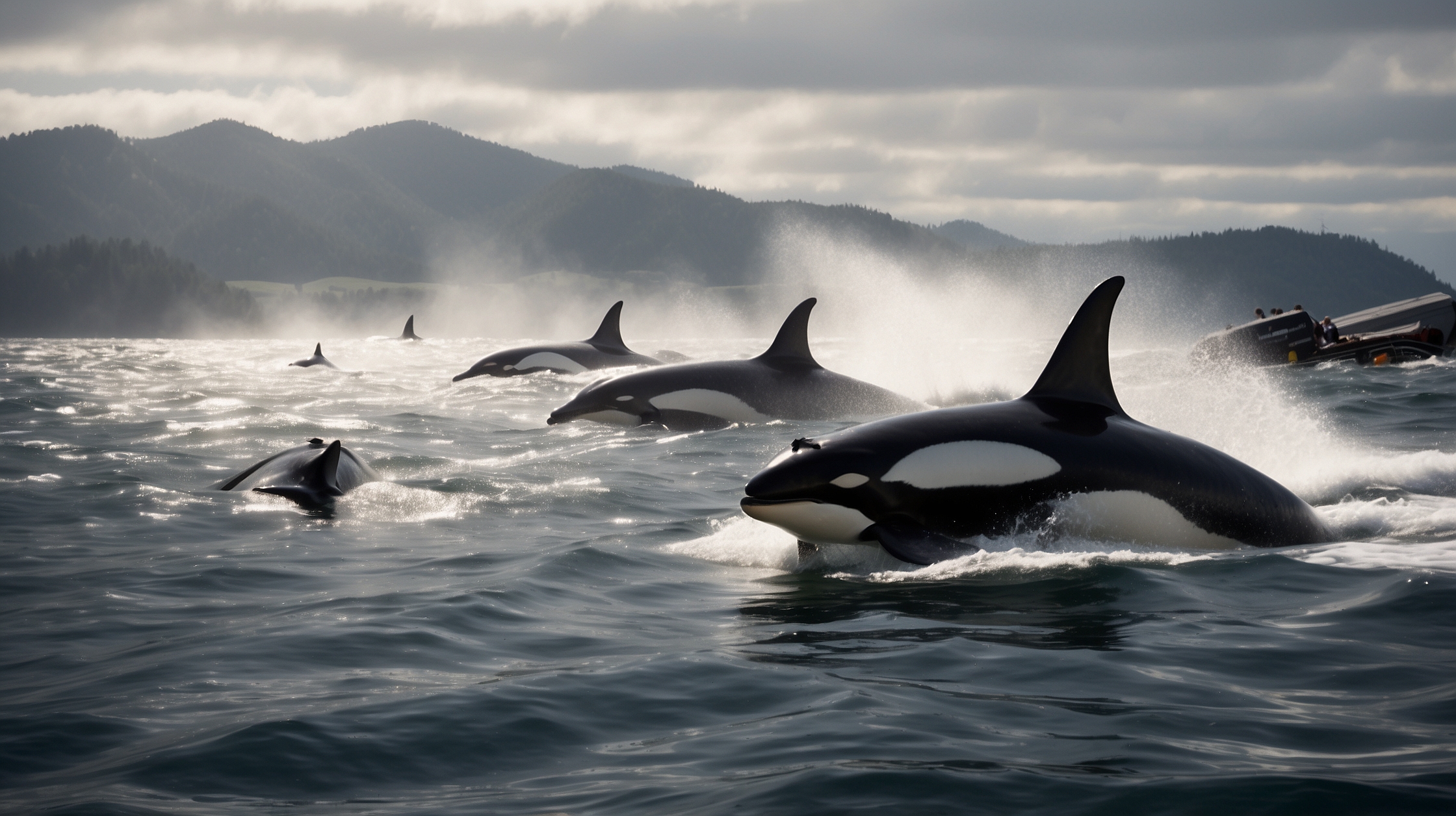
As dawn broke over the tranquil waters of the open sea, seasoned sailor Marina Bouchard recounted a harrowing experience no captain would forget. While piloting her 40-foot vessel through the Strait of Gibraltar on a routine voyage, her ship was suddenly jolted by an unseen force beneath the surface. “It was like being struck by a freight train,” she explained. Moments later, the dark, streamlined dorsal fins of orcas broke the surface in eerie unison. What followed was an increasingly frequent act of aggression: a pod of orcas ambushing and damaging watercraft with intelligence and precision.
In recent months, maritime officials and coastal authorities have issued urgent warnings about an alarming trend—orcas exhibiting aggressive behaviors towards passing vessels, especially yachts and sailboats. These aren’t isolated encounters or fleeting misunderstandings; they’re increasingly systematic attacks concentrated in specific marine zones, especially around Spain and Portugal. As the mystery deepens, scientists, sailors, and environmentalists find themselves facing an uncharted dilemma: what is triggering these apex predators of the deep to clash with human machines at sea?
Some marine biologists have postulated that these displays of aggression might be a mix of curious behavior, playfulness turned destructive, or even a retaliatory response to traumatic experiences such as past injuries from boat propellers or fishing nets. Regardless of the motivation, authorities are now urging sailors to rethink routes, follow new safety protocols, and report attacks immediately to bolster ongoing research.
Key facts about recent orca-vessel incidents
| Location of incidents | Gulf of Cádiz, Strait of Gibraltar, Northern coast of Spain and Portugal |
| Primary vessels targeted | Sailing yachts and recreational boats |
| Most common behavior | Ramming rudders and hulls, circling vessels, prolonged pursuit |
| Reported attacks in 2024 (YTD) | Over 60 confirmed incidents |
| Orca group type involved | Younger orcas in matriarchal pods |
| Resulting vessel damage | Minor to significant structural damage; some abandonments |
| Current safety measures advised | Avoidance zones, cut engine during interaction, report sightings |
What changed this year
Throughout the past decade, orcas—also known as killer whales—have built a strong reputation as intelligent and coordinated marine mammals. Traditionally observed feeding on fish or staging high-speed acrobatics to hunt, recent behavioral changes have caught researchers off guard. Since late 2023, there has been a marked increase in close-quarters interactions with boats, which have escalated into prolonged physical confrontations.
The 2024 surge of incidents follows a sporadic string of encounters dating back to 2020, but the patterns have become disturbingly consistent this year. Marine authorities in Spain issued multiple alerts between March and May as the spring yachting season intensified. Many incidents followed a similar arc: boats in motion suddenly became surrounded by a pod, often led by juveniles, before the orcas began ramming or biting the rudders, leaving them unsteerable.
Why orcas are showing aggression toward vessels
Scientists studying the phenomenon are cautious to pin a single explanation on the trend. Orcas are renowned for their adaptability and learning skills. According to researchers, it’s likely that the behavior is **being taught**, suggesting social learning within pods.
“We believe what we’re observing could be a cultural behavior initiated by a few individuals and copied by others, particularly the juveniles.”
— Dr. Javier Romero, Marine Biologist, Ocean Ecology Institute
One suspect behind it all is known as White Gladis—a female matriarch who is believed to have led the first known interactions of this kind. Some researchers theorize that White Gladis may have had a traumatic encounter with boats, leading her to initiate attacks that her pod emulated. Whether it’s revenge, social bonding, or simply play taken to new extremes, remains debated.
Most high-risk zones for boaters
The highest number of incidents has been reported along the southwestern coast of Europe, particularly in waters adjacent to or overlapping key orca migration routes. Among the most affected maritime corridors:
- Strait of Gibraltar – the gateway between the Atlantic Ocean and Mediterranean Sea.
- Gulf of Cádiz – a known hotspot for marine biodiversity and orca foraging zones.
- Northwestern coast of Portugal – several yacht crews reported interactions in these waters.
In response, marine authorities have demarcated specific “avoidance zones” along these routes, urging all non-commercial vessels to either divert or remain on high alert when transiting. The appeal is backed by AIS tracking data showing orca congregation patterns that overlap dangerously with popular sailing pathways.
How sailors are adapting to the orca threat
Mariners traversing affected routes have begun making tangible changes to their habits. Some of the newer defensive tactics include:
- Reducing vessel speed in areas of high orca activity
- Switching engines off if orcas begin engaging
- Deploying underwater noise-makers to deter interaction
- Immediate location and behavior reporting via VHF channel 16 or maritime safety apps
Boat insurance providers are also beginning to roll out new policies and clauses to reflect the risk of orca-related damages. Meanwhile, sailing schools are updating safety courses to address emergency response specific to orca confrontations.
“We’re treating these interactions very seriously. Mariners must prepare the way they would for any other navigational hazard.”
— Laura Henley, Captain & Executive Director, European Sailing Association
The psychological toll on sailors and boaters
Beyond financial damage and sailing disruption, the psychological weight of such encounters can be significant. Many sailors describe feeling “under siege” or “trapped at sea,” particularly during sustained attacks that last over an hour. The realization that what were once benign marine giants now actively target rudders and hulls is unsettling for even seasoned sailors.
Experts have begun offering counseling and stress-relief support for those deeply affected by these at-sea events, especially among solo sailors and long-distance yacht crews.
What’s being done to research and mitigate orca aggression
Conservation scientists and maritime authorities are collaborating closely to decode and respond to these behaviors. Acoustic data is being collected via submerged microphones, and drones are being used to record the pod’s movements and social interaction patterns. The ultimate aim? Understand these evolving behaviors before irreversible conflict between marine life and human ocean traffic escalates.
Spanish and Portuguese marine institutes are also seeking increased funding from their national governments and the EU to better equip response teams and deploy avoidance technology. In parallel, ethical debates continue on how much deterrence is acceptable—without causing stress or harm to these magnificent creatures.
“We must balance vessel safety with orca conservation. These animals are not malicious—they’re misunderstood.”
— Dr. Elena Souza, Cetacean Behavior Specialist
Frequently asked questions about orca attacks on boats
Why are orcas attacking boats now?
It’s unclear, but the behavior might stem from social learning or revenge-like responses to traumatic events such as propeller injuries. It may also be playful behavior that evolved into aggression.
What types of boats are they targeting?
Sailing yachts and smaller recreational vessels are being predominantly targeted, especially those with exposed rudders.
Are these attacks happening worldwide?
No, the reported incidents are largely confined to the waters near Spain and Portugal, particularly in the Gulf of Cádiz and the Strait of Gibraltar.
Can orcas really sink a boat?
In rare instances, yes. There have been cases where orca activity has compromised steering or caused hull breaches leading to abandonment, but full sinkings are uncommon.
Is it legal to deter orcas with sound devices?
Currently, yes in most areas, but operators must avoid harming whale species or violating marine protection laws.
How should a boat respond during an orca interaction?
Cut the engine, avoid erratic movements, and stay silent. Then, report the incident with coordinates to maritime authorities.
Are orcas endangered or protected?
Yes, orcas are protected under several marine conservation laws, and any action against them must comply with wildlife regulations.
Who should I contact if I experience an orca attack?
Use maritime safety channels (such as VHF 16) or contact national coast guard services. Reporting helps track and understand these encounters.