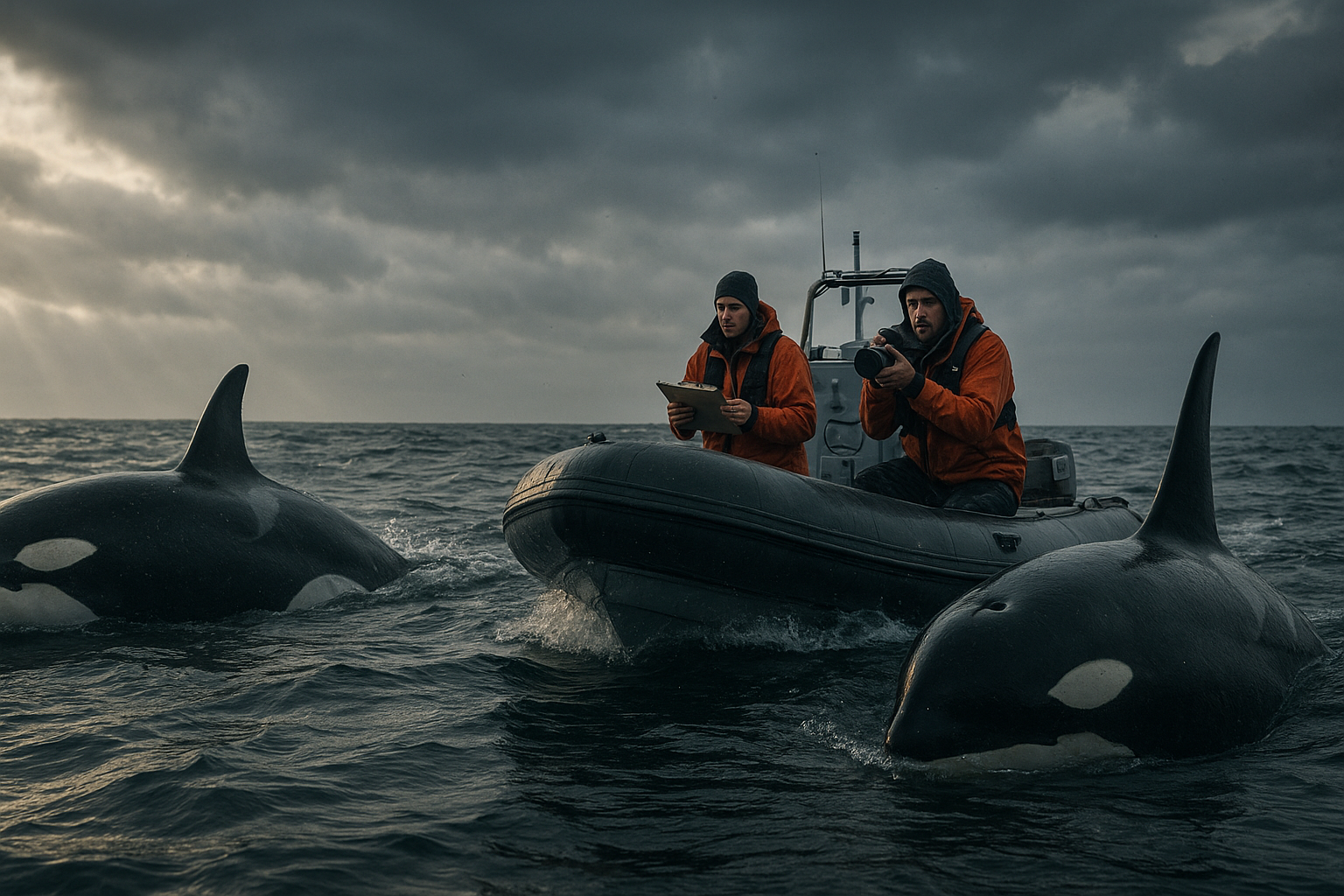
On a foggy morning just off the coast of the Iberian Peninsula, a yacht crew radioed in a chilling report: “Orcas approaching from the port side.” Within minutes, the killer whales — also known as orcas — began ramming the vessel with unnerving precision, damaging its rudder and forcing the yachtsmen to call for rescue. Incidents like this were once considered freak occurrences. Now, they are becoming alarmingly routine along parts of the Atlantic, sending shockwaves through the marine biology community and maritime industries alike.
Scientists and sailors share a growing sense of unease. For centuries, orcas have fascinated humans with their intelligence, social structures, and cooperative hunting tactics. Their reputation as powerful yet elusive predators rarely intersected with aggression toward vessels. But starting in 2020, and escalating significantly in 2023, a sudden and disturbing trend has emerged: pods of orcas, particularly in the waters near Spain and Portugal, are interacting violently with boats. These aren’t random encounters; they show indications of coordinated behavior, leading experts to believe there’s a deeper, possibly learned, motive behind them.
This behavioral shift has sparked urgent research efforts, policy reviews from coast guards, and questions from seafarers and conservationists around the globe. Are the orcas retaliating against vessel noise? Are they “playing” with boats as part of social learning? Or is this a sign of distress in a stressed ecosystem?
What changed this year in orca behavior
| Key Aspect | Details |
|---|---|
| Behavioral Shift | Increased orca interactions with sailing vessels, often involving physical contact |
| Geographic Focus | Waters near the Iberian Peninsula: Spain, Portugal, and Strait of Gibraltar |
| First Observed | 2020, with significant surges recorded in 2023 and 2024 |
| Species Involved | Orca subpopulation known as the Iberian or Iberian Peninsula orcas |
| Theories Proposed | Play behavior, learned aggression, stress response, territory defense |
| Vessels Targeted | Primarily sailing yachts under 15 meters with exposed rudders |
| Incidents Reported | Over 500 interactions by mid-2024 |
Marine biologists warn of an alarming trend
Marine researchers have been closely observing this new trend and sound the alarm on potential consequences — both for human safety and for whale conservation. The driving concern is not just about vessel damage, but what this behavior signifies about orca ecology and psychology. Many scientists believe we’re witnessing an emergent cultural behavior among a specific subpopulation of orcas.
“This isn’t random. The orcas are targeting very specific parts of boats, often the rudder. That indicates learning, intelligence, and possibly mimicry.”
— Dr. Luis Silva, Marine Ethologist, University of Lisbon
The Iberian orcas are considered a critically endangered group, with fewer than 40 individuals left. Predominantly preying on bluefin tuna, they are known for their tight-knit social structures and complex vocal communication. A significant concern is that this new behavior — which seems to be spreading within the pod — could worsen the orcas’ endangered status by inciting negative reactions from maritime operators.
Why the whales may be striking back
Numerous theories have emerged to explain the behavior shifts. One leading idea revolves around the concept of trauma or retaliation. Some marine experts suggest that a specific orca, possibly injured or frightened by a vessel in the past, initiated this behavior — and in orca society, such behaviors can be taught and passed on.
“We’re dealing with extremely social and intelligent animals. It’s not far-fetched to imagine one negative encounter influencing group behavior.”
— Dr. Simone Becker, Cetacean Behavioral Specialist
Another theory highlights play or social learning. Young orcas may be “practicing” behavior or copying adults. Attacking rudders, which move and vibrate like a fish tail, may draw the orca’s attention. Although this may seem benign, the consequences can be dangerous for both parties.
Lastly, researchers consider environmental stress. Escalating noise pollution, human maritime traffic, and declining prey availability could be causing orcas to engage with vessels out of stress-induced behavior.
Impacts on sailing and maritime industries
Yacht crews and sailors across popular routes in Spain and Portugal are facing growing concerns. Sailing groups have been forced to re-chart routes to avoid known orca hotspots. Insurance claims for rudder damage are on the rise, and some sailors have opted for harbor stays over risky crossings through affected waters.
Organizations such as the Atlantic Orca Working Group (GTOA) now actively monitor, record, and attempt to predict aggression hot spots. However, the unpredictability of the interactions makes it difficult to mitigate fully.
“We’ve started educating sailors on prevention tactics — stopping the boat, turning off the engine — but even then, it’s a gamble.”
— Javier Ortega, Marine Navigation Advisor
Efforts to understand and protect the orcas
While some voices call for ship deterring mechanisms, many marine biologists argue for a more holistic and conservation-minded response. After all, the orcas involved are an endangered species, and any action must prioritize both sailor safety and orca welfare.
Research funding has increased for real-time tracking, satellite monitoring, and behavioral studies. Conservationists urge a broader conversation about the cumulative environmental stressors affecting marine mammals.
Above all, clarity is key. Scientists believe it’s crucial to decipher the root cause of this shift so they can recommend science-based guidelines moving forward. Understanding the orca’s motives could be a turning point in marine mammal studies.
Winners and losers in the growing orca incidents
| Category | Winners | Losers |
|---|---|---|
| Marine Research Community | Increased funding and attention | Slow pace of cross-border collaboration |
| Sailing Industry | Heightened safety training | Damage costs, insurance issues, route delays |
| Orcas | Global awareness of species’ plight | Potential for retaliation or stigma |
The road ahead for humans and orcas
The mysterious and increasingly bold behavior of Iberian orcas is now more than a quirky anomaly — it’s a marine behavioral puzzle with real consequences. Researchers face the noble challenge of reconciling human maritime interests with the emotional and ecological needs of one of Earth’s most intelligent marine mammals.
What unfolds next may depend on our speed in understanding the orcas’ motivation and managing our shared ocean with greater empathy and foresight. As the waves continue to churn off the Iberian coast, the harmony of whales and humans may hang in this delicate balance of knowledge and respect.
Frequently asked questions about orca interactions with vessels
Why are orcas targeting boats now?
Experts believe the behavior could be linked to trauma, stress, or social learning. Young orcas may be copying adults, and interactions seem focused on rudders — indicating purpose rather than random actions.
What kinds of boats are most at risk?
Primarily sailing yachts under 15 meters, especially those with exposed rudders, are seeing the most interactions.
Are the orcas trying to harm people?
There’s no evidence to suggest intentional harm to humans. The behavior often stops once the rudder is disabled, pointing to a focus on the boat rather than its passengers.
Is this behavior unique to Iberian orcas?
Yes, this subpopulation is the only one currently showing this behavior. It’s unclear if orcas elsewhere will adopt similar actions.
What should sailors do if orcas approach?
Turn off the engine, stop the boat, and avoid sudden movements. Maintaining calm often discourages prolonged interaction, though it’s not a guaranteed deterrent.
Could this behavior endanger orcas further?
Yes, if vessel owners retaliate or call for harsh measures, it could put the already-endangered Iberian orcas at more risk.
What are scientists doing about this?
Researchers are investing in tracking, studying social behaviors, and educating maritime communities to promote coexistence and conservation.
How long has this behavior been observed?
It began appearing in 2020 and has significantly increased in frequency through 2023 and 2024.