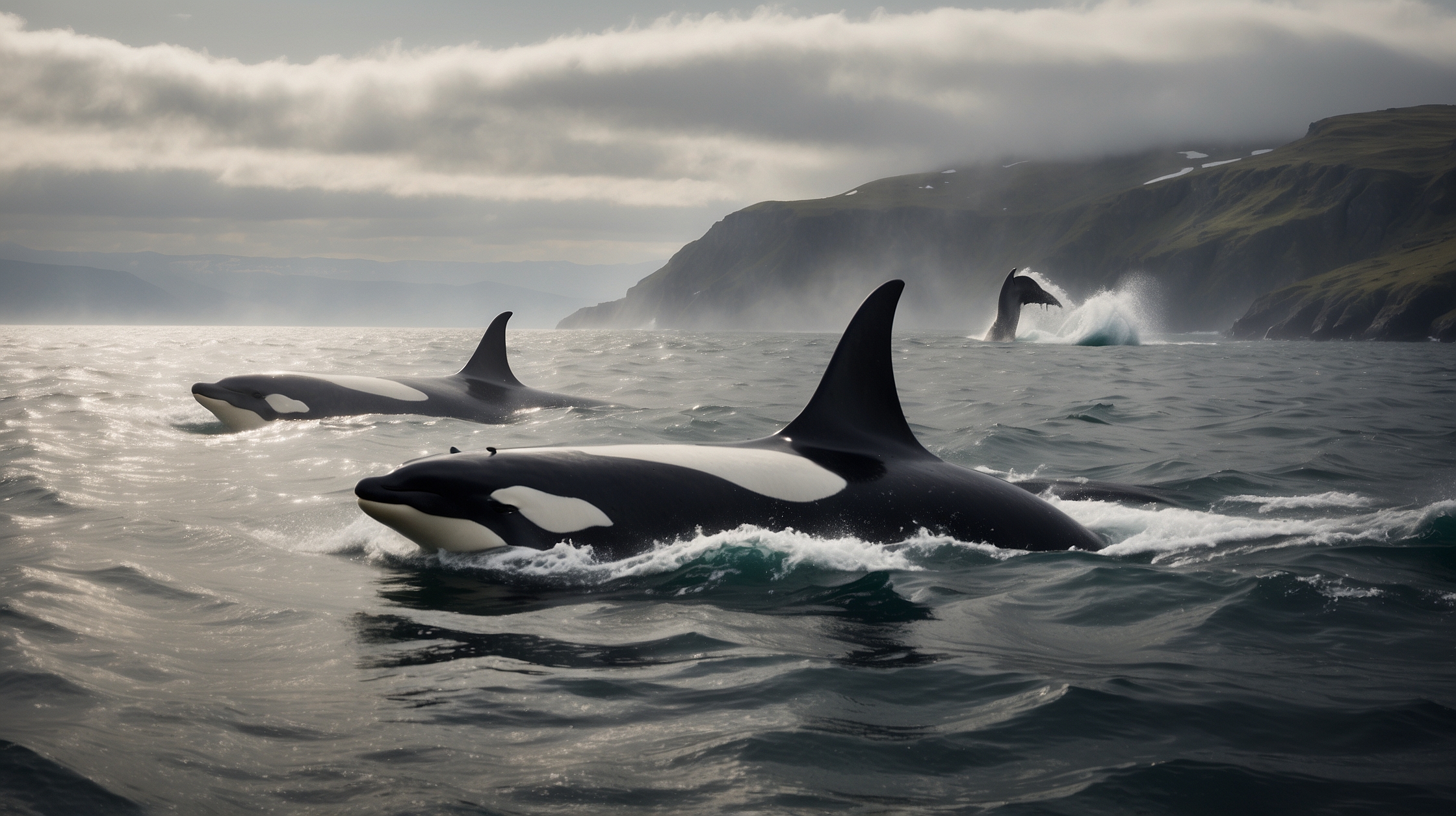
As the sun dipped toward the tundra horizon on a brisk summer evening off the coast of the Iberian Peninsula, the crew aboard a small yacht had their peaceful voyage unexpectedly shattered. A sudden jolt threw glasses from shelves, rigging swung violently, and the unmistakable motion of the vessel being rammed echoed terror through the deck. Moments later, to their disbelief, the culprits surfaced: **a pod of orcas**, moving with mysterious coordination, had initiated an attack on the boat’s rudder—the very heart of its steering mechanism.
This wasn’t an isolated incident. Maritime authorities, researchers, and sailors now find themselves adjusting to an unusual and worrying new phenomenon: **increasingly frequent and aggressive interactions between orcas and vessels** off the coasts of Spain and Portugal. Once revered by sailors as intelligent but elusive denizens of the sea, these majestic marine mammals have begun exhibiting behaviors that raise both ecological and navigational alarms. The Atlantic waters are changing—not just in temperature, but in temperament.
Let’s dive beneath the surface to understand what is unsettling the orcas of the North Atlantic, why it suddenly matters in 2024, and what can be done to stay safe at sea.
Why experts are warning about orcas in the North Atlantic
| Location of concern | Coastal waters off Spain and Portugal, particularly near the Strait of Gibraltar |
| Species involved | Orcinus orca (Iberian subpopulation) |
| Behavior reported | Repeated and targeted attacks on sailboats and yachts, focusing on rudders |
| Incidence rise | Over 200 incidents reported since 2020, peaking in 2023–2024 |
| Theorized motives | Play, stress response, learned behavior, or retaliation |
What changed this year in the orca encounter pattern
Unlike the occasional curious glide-by we’ve grown accustomed to seeing from killer whales, the recent incidents present something entirely different—**a pattern of consistent, targeted, and increasingly aggressive interactions** noted by biologists and sailing communities alike.
In the first half of 2024 alone, more than 50 vessels reported direct confrontation with orcas around the Strait of Gibraltar. These interactions typically involve orcas **targeting boat rudders with precision**, often disabling steering entirely. For crews, the experience is frightening and potentially life-threatening. While there appear to be seasonal peaks, particularly between May and October, the growing coordination among pods suggests something more organized than spontaneous curiosity.
“This is not random; this is patterned behavior,” said one marine researcher. “It’s not a few rogue individuals—it seems intergenerational and could be a social transmission of a learned response.”
Theories behind the behavioral shift in orcas
While scientists study dozens of orca pods worldwide, **the Iberian population is unique**. It is small, isolated, and critically endangered, with fewer than 50 known individuals. Among them, a few specific orcas—identified by scars, markings, and tracker data—are believed to be the main participants in the recent boat interactions.
So what’s causing this change? Marine biologists have proposed several theories:
- Playful learning: Young orcas may be treating boats like toys, fascinated by spinning rudders and moving hulls.
- Retaliation or trauma response: Some believe a traumatic event, such as a collision or entanglement with a vessel, may have sparked an aggressive response now mimicked by other orcas.
- Stress due to declining prey: Dwindling fish stocks—particularly bluefin tuna, their main food source—could be elevating orca stress, making them more confrontational.
- Social transmission: Much like humans, orcas are capable of cultural learning; behaviors, including aggression, can spread through pods.
“We are likely witnessing the formation of a new cultural phenomenon in a non-human species.”
— Dr. Elena Gonzalez, Marine Ecologist
How sailors and coastal communities are being affected
For sailing communities and naval authorities along southern Europe, the implications are serious. Yacht owners face threats to their safety and their vessels. Insurance complaints have risen from 2023 into 2024 due to rudder damages, with off-season repairs spiking in marinas from Cadiz to Lagos.
Spanish and Portuguese authorities have issued warnings, rerouted maritime traffic in hotspots, and **implemented safety zones** in the Strait of Gibraltar. Some shipping companies are even altering their routes to avoid high-risk regions. Additionally, governments are collaborating with marine institutes to monitor tagged orcas in the area, in a bid to predict their movement and reduce surprise encounters.
But not all stakeholders agree on what action to take. Conservationists warn against overreaction, arguing that misunderstood behavior could lead to vilification of an endangered species. In contrast, maritime workers push for stronger deterrents—including noise devices or even limited rerouting of orcas—to preserve crucial shipping lanes.
Winners and losers in the face of shifting ocean behavior
| Winners | Losers |
|---|---|
| Marine research institutions (gain interest and funding) | Sailboat owners facing rudder damage and increased insurance premiums |
| Conservation efforts gaining public awareness | Commercial fishermen facing interrupted routes |
| Orca protection programs with renewed urgency | Shipping industries experiencing logistical uncertainty |
What authorities recommend sailors do now
Given how quickly these encounters can escalate, authorities advise sailors to adopt a proactive approach. Here are the current guidelines provided by maritime safety officers in the affected regions:
- Report any sightings or encounters to marine authorities immediately.
- Stop the boat’s engine and drop sails if orcas approach—the stillness may discourage attacks.
- Stay calm onboard and avoid external noises or gestures that could provoke further interaction.
- Check insurance policies for orca-related coverage, and install onboard camera systems to document incidents.
- Whenever possible, **plan routes outside of high-risk zones** highlighted by real-time tracking systems.
“With proper precautions and smarter routing, we can reduce panel damage and better understand the animals.”
— Captain Luis Martin, Maritime Safety Officer
What the future may hold for human-orca relations
As scientists race against time to study these shifts in behavior, the encounters remain a powerful reminder of us coexisting on a planet where boundaries are becoming increasingly blurred. The Atlantic isn’t just a highway for human commerce—it’s also a habitat undergoing deep change.
If the orcas are speaking in the language of ramming rudders, perhaps it’s time we pause and consider: What are we doing to their home? What stressors, pollutants, and disturbances are shaping the waters they’ve called home for millennia?
This chapter of orca-human interaction tells a bittersweet story—of intelligence, frustration, and adaptation—from beings with as much stake in the ocean’s future as we have. Only by paying attention, with respect and science as our guides, can we find a safer and more sustainable path forward—for us, and for them.
Frequently asked questions
Are these orca attacks intentional or accidental?
Most scientists agree the behavior appears intentional and targeted, focusing almost exclusively on rudders. Whether it stems from play, trauma, or social behavior is still under investigation.
Have there been any human injuries reported?
So far, the attacks have caused vessel damage but no confirmed injuries to people. Crews are often frightened but unharmed.
Can orcas be deterred through non-lethal means?
Authorities and researchers are exploring sound-based deterrents and route adjustments, but these have mixed results and are still in early stages of evaluation.
Are orcas in danger near the Iberian Peninsula?
Yes, the Iberian orca population is critically endangered, with fewer than 50 individuals. Conservation efforts are high priority.
Is it legal to interact with orcas in these waters?
No. Under marine protection laws, vessels must avoid willful interaction or feeding of orcas. Violations can incur heavy penalties.
What is being done to track these incidents?
Maritime authorities and institutes are using satellite tagging and crew reports to log orca movements and identify aggressive patterns.
Can insurance cover orca-related damage?
Some marine insurance policies now include provisions for wildlife-related damage, but sailors should confirm with their insurers.
Are other species showing similar behaviors?
Currently, this pattern is unique to the Iberian orca subpopulation, though similar curiosity has occasionally been seen in dolphins and whales.