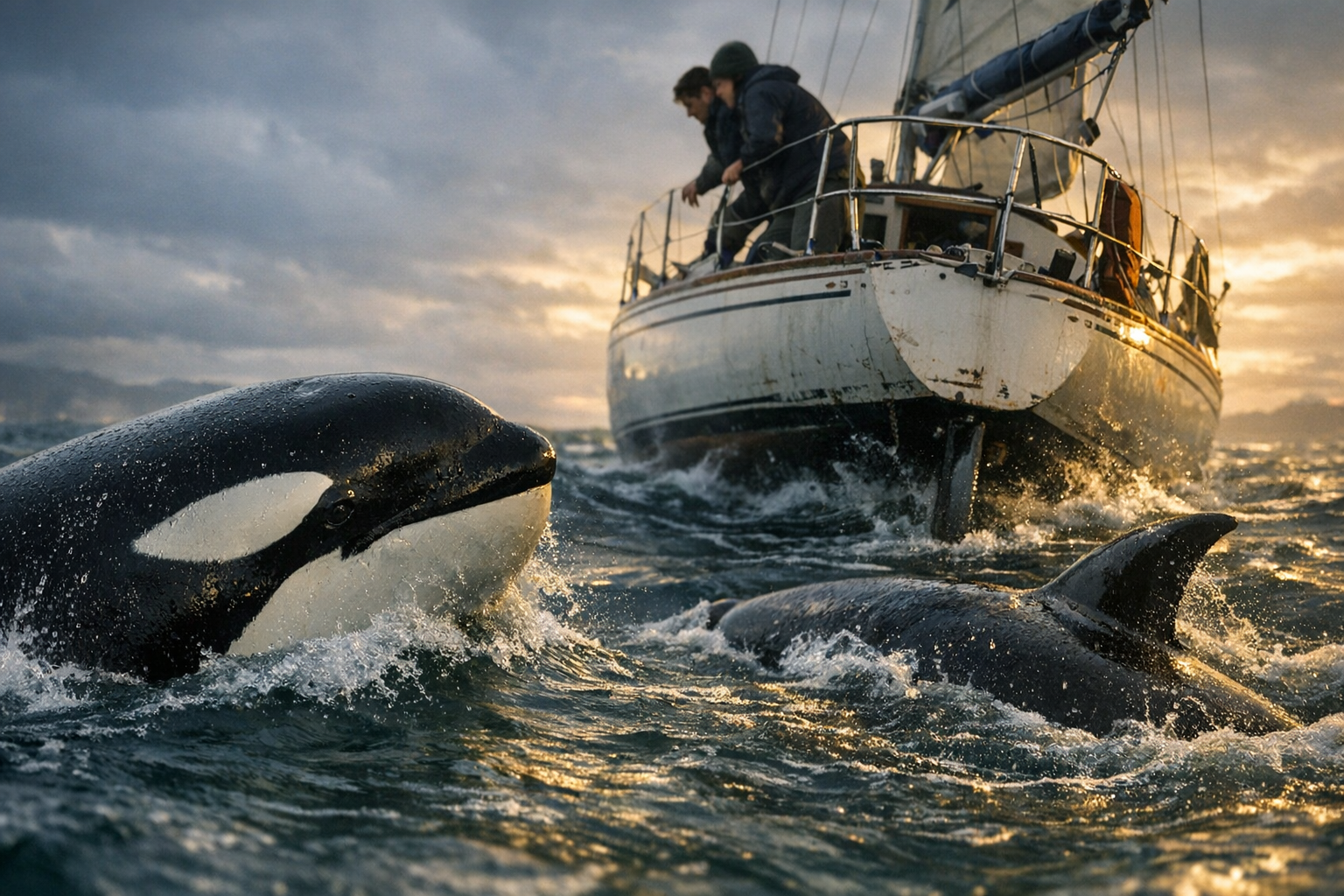
The waters off the Iberian Peninsula have long been a playground for orcas—magnificent apex predators known for their intelligence, curiosity, and complex social structures. Sailors and marine observers have often recounted magical encounters with pods of these sleek black-and-white creatures gracefully following boats or leaping dramatically into the air. But recently, what was once a peaceful coexistence has taken a worrying turn. A growing number of reports from mariners, biologists, and authorities suggest that some orcas in this region are engaging in increasingly aggressive interactions with vessels, particularly targeting boat rudders and keels.
This behavioral shift has left scientists puzzled and concerned. As these highly intelligent animals are suddenly changing long-held behaviors to interact more forcefully with human-made structures, many are asking: what’s behind this transformation? And more importantly, what does it mean for the future of coexistence between marine life and maritime activity?
Marine biologists and conservationists are now scrambling to interpret the meaning behind this unprecedented change. From theories of learned behavior and social imitation to trauma-induced aggression, experts are racing against time to understand the signal behind the orcas’ disruptive actions in the waters between Spain and Portugal. Below is an in-depth breakdown of what we know so far, what theories experts are entertaining, and most crucially—what must be done next.
What we know about the recent orca behavior change
| Topic | Details |
|---|---|
| Location | Waters off the Iberian Peninsula (Spain and Portugal) |
| Timeframe of Change | Since 2020, with sharp increases in 2023–2024 |
| Target of Attacks | Primarily sailboats’ rudders and keels |
| Frequency | Over 500 documented incidents since 2020 |
| Main Orca Group Involved | A small sub-population known as the Iberian orcas |
| Possible Causes | Trauma, learned behavior, curiosity, or playfulness |
| Response Measures | Logbooks, rerouting, and emergency protocols initiated |
What changed this year
While orca interactions with boats were previously playful or investigative, 2024 has seen a rise in coordinated behaviors that seem to intentionally disable boats. These are not random acts; marine biologists report that the orcas specifically go for a vessel’s steering system, often working as a team—circling, identifying the rudder, and taking turns applying pressure or even removing parts altogether.
Equally alarming is the increase in frequency. Between May and August 2024 alone, there were over 120 recorded incidents. Most target sailboats under 50 feet in length, particularly those moving slowly or anchoring near the coast. The damage ranges from mild to catastrophic, in some cases leaving vessels without proper steering capabilities and forcing emergency tows back to port.
Meet the orcas behind the phenomena
The orcas involved belong to what’s known as the **Iberian orca** subpopulation, an endangered and isolated group of approximately 39 individuals. Unlike their cousins in more populous pods near the Pacific Northwest, these orcas have unique diets—feeding primarily on tuna—and are genetically and behaviorally distinct.
The change appears to be led by a few young males and females within this sub-group. According to scientists tracking this phenomenon, one orca affectionately (yet ominously) nicknamed “White Gladis” was among the first to exhibit these behaviors. The rest may have quickly picked up on these actions through observation and imitation—no surprise given the orca’s legendary capacity for **social learning**.
Theories behind orca aggression toward boats
Experts are cautiously exploring a number of hypotheses to understand what could be fueling this shift:
- Traumatic incident: One theory suggests that a traumatic encounter, such as a collision or entanglement with fishing gear, may have triggered this behavior in a particular orca, leading to imitation by others.
- Social learning: Orcas are known to communicate and learn from one another. A disruptive behavior could quickly go viral within a pod, especially among younger, more playful members.
- Play behavior: Some researchers argue that this might be a form of play gone wrong — the orcas might just find boats intriguing or entertaining until their “games” result in damage.
- Environmental stress: Diminishing food sources might be contributing to agitation. The dropping tuna population in the region could be leading orcas to misdirect their frustration.
“What we are witnessing may be a form of cultural expression, which highlights just how complex orcas really are.”
— Dr. Lucia Gonzales, Marine Ethologist
What authorities and researchers are doing about it
Spanish and Portuguese authorities have issued updated alerts for sailors and boat operators moving through orca-prone zones. Several regions now require vessels under a certain length to avoid key migratory corridors during peak orca activity. Additionally, tracking systems and patrol teams have increased on the western coast to better monitor orca movements in real-time.
Researchers have also created an orca interaction log, gathering incident data including GPS coordinates, boat types, weather conditions, and photo/video evidence. This data will be pivotal in identifying common variables and predicting behavior. There is also growing international collaboration as scientists across continents compare notes and dive deep into behavioral patterns.
How sailors can protect themselves and their vessels
For sailors and yacht operators frequenting the waters of the Iberian Peninsula, several precautionary steps are now advised:
- Avoid sailing during known interaction windows, especially May–August
- Turn off the engine and stay quiet during an orca approach
- Do not throw objects or attempt to steer aggressively away
- Report all interactions with coordinates and vessel data
- Use reinforced rudders if traversing high-risk areas
These measures aren’t foolproof, but they significantly reduce risk. In tandem, authorities are pushing for real-time maps similar to those used for storm tracking, helping mariners anticipate orca “hotspots.”
Winners and losers in this unfolding narrative
| Winners | Losers |
|---|---|
| Marine biologists gaining new data on orca behavior | Sailors and yacht owners experiencing costly damages |
| Environmental awareness heightened globally | Orcas risking increased human retaliation or exclusion |
| Conservation efforts potentially receiving more funding | Tourism activity disrupted in affected coastal areas |
What the future might hold for humans and orcas
The future of orca-human interactions lies delicately in our ability to respond with empathy and science, rather than fear. As calls grow for non-lethal deterrents, modified boat construction, and enhanced research funding, it’s critical that this moment becomes a turning point—not a trigger for aggression or control.
What remains clear is that orcas, like humans, are capable of experiencing grief, curiosity, and possibly even vengeance. Each action we take now is both a reflection of our stewardship and a chapter in our shared narrative with Earth’s most intelligent marine creatures.
Frequently Asked Questions about Iberian orca behavior
What exactly are the orcas doing to the boats?
The orcas are targeting rudders, biting and shaking them forcefully, and sometimes removing them entirely. They often disable steering capabilities of boats.
Are these attacks happening globally?
No. The disruptive behavior is concentrated among a specific group of orcas off the Iberian Peninsula. Similar incidents are rare elsewhere.
Is it dangerous for humans onboard?
So far, there are no recorded cases of orcas attacking humans directly. However, disabled boats at sea pose indirect risks.
Can orcas really remember and teach each other behaviors?
Yes. Orcas are known for their exceptional memory, complex communication, and ability to pass down behaviors socially through generations.
Could this be because of climate change?
Indirectly, possibly. Changing sea temperatures and loss of food sources like tuna may contribute to increased stress among orcas.
How can one report an orca interaction?
Authorities in Spain and Portugal have set up hotline systems and digital logbooks where mariners are encouraged to report interactions with coordinates and vessel info.
Will authorities take action against the orcas?
There are currently no plans for punitive action. The species is protected and authorities are focusing on mitigation, not retaliation.
Is tourism being impacted by this behavior?
Yes, certain sailing routes are under advisory or closure, impacting local maritime tourism during high interaction periods.