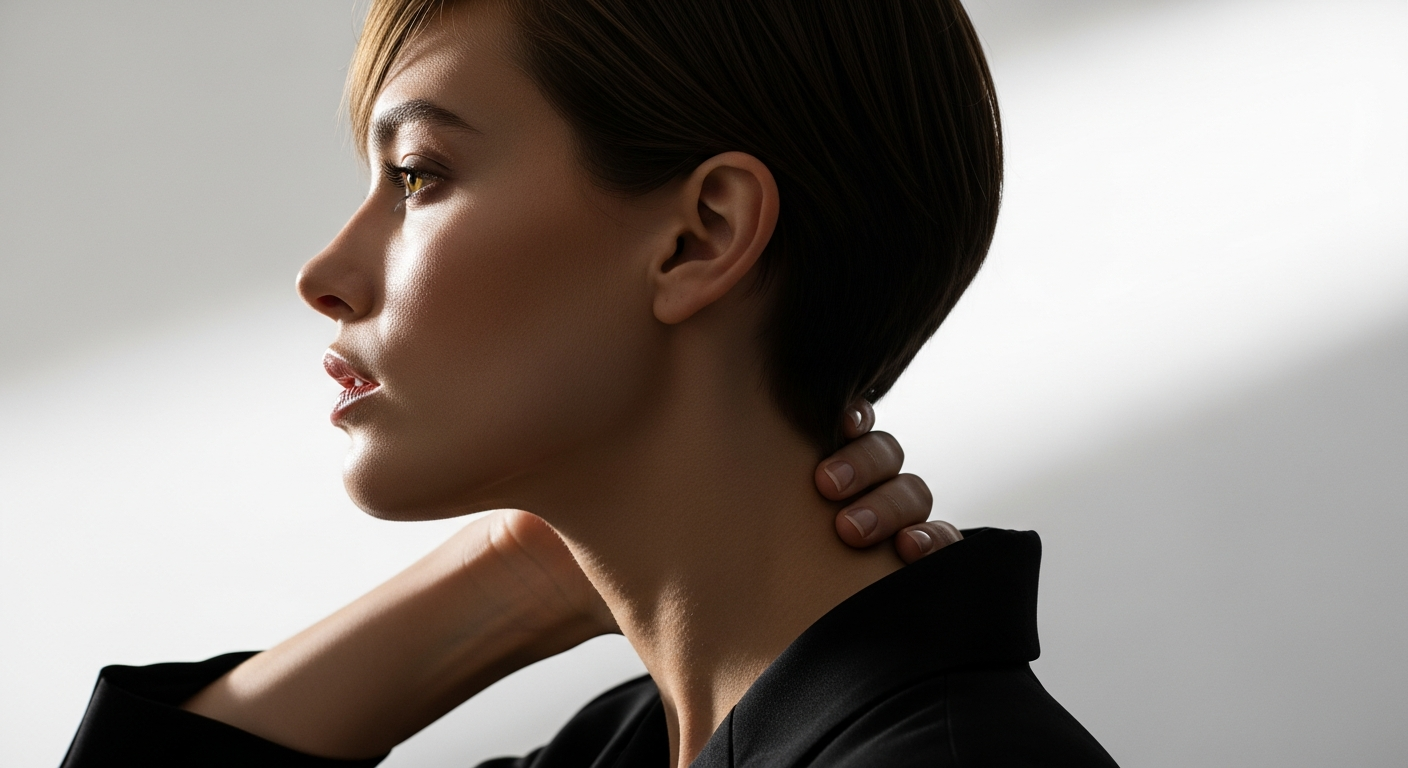
When Jane decided to go for a drastic change by trading her long, flowing locks for a chic pixie cut, she hoped it would inject youthful energy into her style. Instead, she was startled when her friends commented that she looked more “mature.” Confused and a bit disappointed, Jane began to question why a hairstyle so trendy and liberating could have the opposite effect from what she intended. In contrast, her coworker Rachel had recently done the same and received compliments about how youthful and vibrant she looked.
This intriguing contrast led to deeper exploration: why does the same pixie cut make some women look decades younger, while seemingly aging others? The answer lies not just in facial structure or fashion sense, but in a surprisingly overlooked anatomical factor — neck length. This vital element can make or break how flattering a short haircut appears, and understanding its role may be key for women considering the chop.
Many stylists and image consultants have long known that a haircut should never be a one-size-fits-all decision. Characteristics like hair texture, face shape, and color undertone are commonly discussed. But neck length? It’s rarely mentioned — yet it may be the missing clue that explains why one woman glows with youthful energy in her pixie cut while another finds it draining her vibrance.
Quick Overview: Why Pixie Cuts Affect Age Perception
| Factor | Impact on Appearance |
|---|---|
| Neck Length | Longer necks enhance youthfulness; shorter necks may accentuate facial aging |
| Jawline Definition | Sharper jawlines work well with shorter hair styles |
| Pixie Cut Length | Ultra-short cuts often emphasize neck and chin alignment |
| Posture | Poor posture with shorter hair can create a hunched, older look |
| Hair Texture | Thicker or voluminous hair adds structure; fine hair may appear flatter |
| Facial Proportions | Symmetry and high cheekbones elevate the short cut’s impact |
Why neck length changes everything
The neck acts as a visual separator between the jaw and shoulders, and when someone wears a pixie cut, that area becomes more exposed and emphasized. Women with elongated, graceful necks often find that shorter cuts illuminate these features, adding elegance and a youthful sparkle. In contrast, individuals with shorter or more compact necks may experience the opposite effect, as the exposed neckline can make the head appear more compressed, drawing attention to facial lines or sagging skin.
“When you remove volume and length from the sides of the face, everything gets highlighted — imperfections, bone structure, neck… it’s all on display,” explains celebrity stylist Elena Marques. “A long neck often acts like a picture-perfect pedestal for a pixie cut.”
Indeed, many runway models or actresses with pixie cuts benefit from a combination of chiseled features and long, ballerina-like necks. Their anatomy gives them a significant advantage in carrying off shorter styles with undeniable grace.
The science behind perceived age with short hairstyles
Perceiving someone as “young” or “old” is a deeply instinctual human tendency based on symmetry, smoothness, and proportion. When hair is long, it can obscure blemishes or draw the eye away from the jawline. However, short hairstyles remove the camouflage, revealing a more honest look at one’s bone structure.
Neuroscientific studies into beauty have found that visual elongation of the neck and jaw contributes to perceptions of youth. This is rooted in primal associations with vitality and health. The moment a hairstyle shortens that visual line — especially on a person with a short neck — it may inadvertently age them.
“In evolutionary psychology, we often associate elongated features — like the neck — with youthful vigor and elegance,”
— Dr. Mila Vasquez, Evolutionary Psychologist (Placeholder)
Who benefits most from a pixie cut?
Not all necks are created equal, and thankfully, not all pixie cuts are either. Women with the following traits are more likely to appear younger with a short haircut:
- Long, swan-like necks which enhance exposure and elegance.
- High cheekbones and defined jawlines that thrive under visibility.
- Good posture, which affects how the neck’s line is perceived.
- Healthy hair texture, especially thicker hair that holds shape well.
For these individuals, a pixie cut can be transformative — turning them into icons of modern cool or classic French chic.
Who might struggle with looking older after a pixie cut?
On the flip side, women with certain features may find that a pixie cut doesn’t deliver the rejuvenation effect they hoped for:
- Shorter or wider necks which can compress the visual line between face and torso.
- Soft or undefined jaws that gain more prominence when hair is cut away.
- Thin or flat hair types that lack volume and perimeter shape.
- Noticeable skin texture changes around the jaw or neck, which become more exposed.
| Winners | Losers |
|---|---|
| Women with long necks and angular features | Women with short necks and soft facial contours |
| Those with strong posture confidence | Anyone self-conscious about their neckline |
| High-fashion aesthetics lovers | Anyone who prefers hair as facial coverage |
Customizing your pixie to your neck and face
The good news is that not all pixie cuts are extreme. Some are modified to work better with shorter necks or different facial configurations. Asymmetrical pixie cuts, for example, leave more volume on one side, elongating the appearance of the jawline and neck. Layered versions can soften harsh lines, while styles that include longer side pieces help obscure parts of the neckline while still achieving the carefree look of a short cut.
“You don’t have to go full Mia Farrow — there are hybrid pixie-bob combos that allow for customization based on neck and face shape,”
— Jenna Krauss, Master Hair Designer (Placeholder)
Is there a “safe zone” for short styles?
If you’re uncertain whether your neck length supports a fully cropped pixie cut, a better approach may be trying transitional styles first. A very short bob, layered lob, or cropped pageboy may allow you to gauge how your features respond to the shortening of hair before committing to something more extreme.
In some cases, women even use accessories like statement earrings or collars to divert attention or enhance the vertical line of the neck — creating a more balanced silhouette that complements a new trim.
Final thoughts: confidence and compatibility
Ultimately, how a pixie cut affects your appearance isn’t just about your neck length — it’s about owning your look, understanding your features, and choosing a variation that works with what you already have. Neck length, while often overlooked, may be the silent factor tipping the scales toward “fresh and fashionable” or “unexpectedly aging.”
If you’re ready for the cut, make sure to consult a stylist who understands not just trends but anatomy. And remember: beauty, like style, thrives when smart choices meet confident expression.
Frequently Asked Questions
Does a pixie cut suit all face shapes?
No. Pixie cuts work best on oval, square, or heart-shaped faces with defined cheekbones or jawlines. Rounder faces may need length modifications for balance.
How do I know if I have a long enough neck for a pixie cut?
Measure from the bottom of your ear to the base of your neck. If it’s more than 2.5 inches, you likely have the vertical line for a flattering pixie.
Can posture really impact how a pixie cut looks?
Yes, absolutely. Slouched posture can compress the perceived length of the neck and weaken the elegant look that a pixie aims to highlight.
Are there pixie styles that work better for short necks?
Yes. Asymmetrical pixie cuts, longer sideburns, or angled layers can all enhance the illusion of length and soften facial features.
Why doesn’t my pixie cut look like the celebrity version?
Celebrities often benefit from professional styling, ideal bone structure, and tailored cuts — replicating the look exactly without customization can backfire.
How can accessories help improve a pixie cut look?
Statement earrings, neck-hugging collars, or scarves can redirect attention and elongate visual lines, helping balance shorter cuts.
Can hair texture influence how old I look with short hair?
Yes. Thicker hair adds volume and youthfulness, while very fine or lifeless hair may highlight features associated with aging.