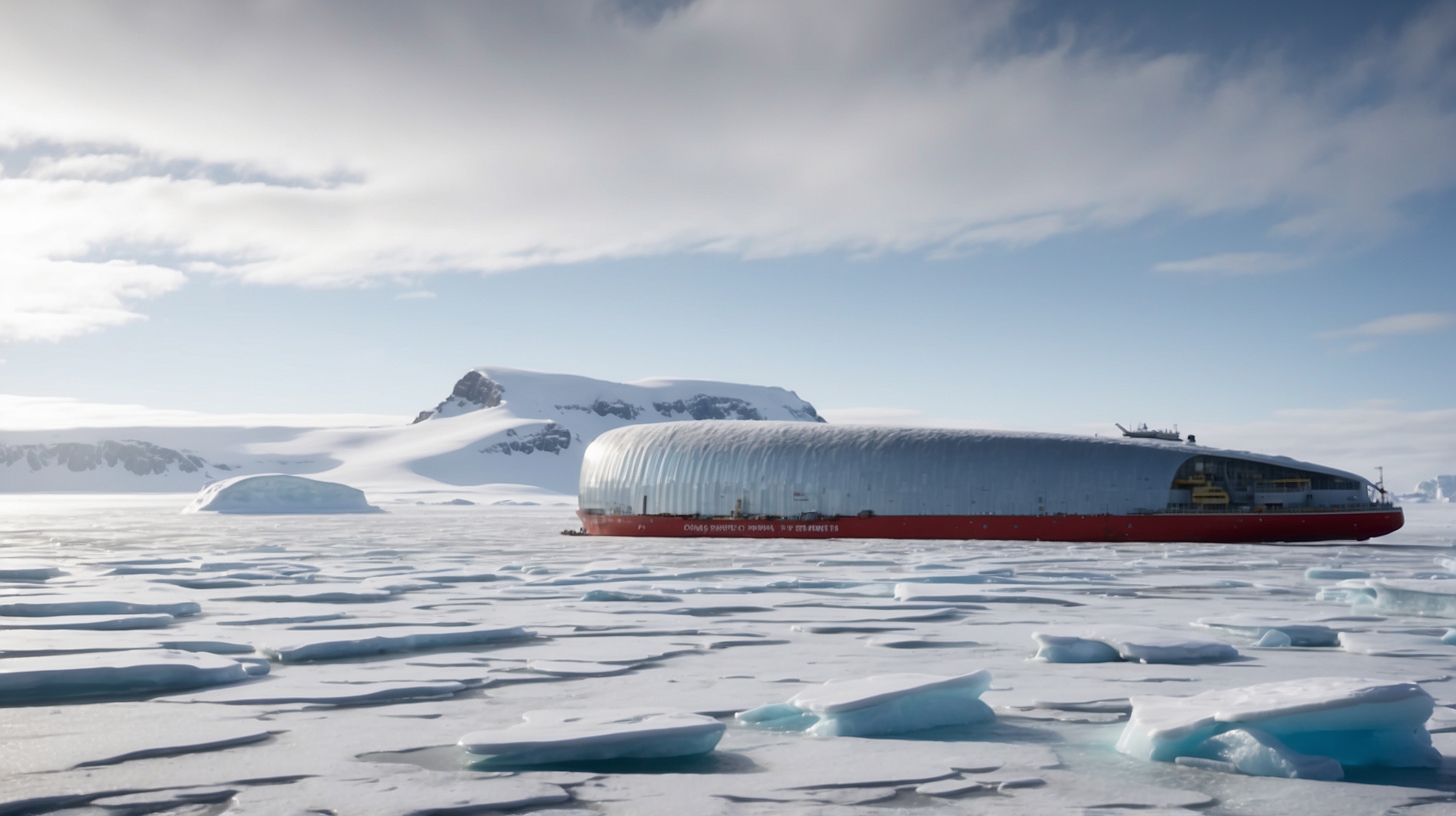
As the sun pierced through the thick clouds above Antarctica, a research aircraft skimmed over the glistening white expanse. Onboard, a team of scientists huddled around thermal monitors and ice-penetrating radar screens. What they discovered beneath the ice came as a shock—not just for its size, but for its potential to reshape what we know about the world’s most remote continent.
This wasn’t just another flight for climate measurements. Buried under over two kilometers of solid ice, a remarkable underground feature spanning more than 100 kilometers was detected. The flaw in the ice sheet, as it appeared on the instruments, turned out to be one of the most significant subglacial structures ever documented—offering unexpected assistance in understanding climate patterns, glacial behavior, and Earth’s hidden geography.
As experts begin to unravel its implications, the discovery may offer key insights into rising sea levels and global warming trajectories—bringing hope but also urgency in an increasingly volatile climate environment. Here’s how this groundbreaking find below Antarctica changes the game for climate research and what it might mean for the future of our planet.
What researchers discovered under Antarctica this year
| Attribute | Details |
|---|---|
| Discovery | 100 km-long underground channel beneath Antarctic Ice Sheet |
| Location | East Antarctica, under the ice pack near Recovery Glacier |
| Technology Used | Ice-penetrating radar, aerial thermal imaging |
| Size Estimate | 100 kilometers in length, several kilometers wide |
| Importance | Could alter sea-level rise models and climate predictions |
| Potential Role | Drainage pathway for meltwater, climate feedback mechanism |
How planes helped uncover Earth’s hidden waterways
Using advanced aerial surveillance equipment, the research team conducted atmospheric passes above East Antarctica’s icy surface. What started as a routine mapping mission quickly turned into one of the most compelling geological finds in years. The plane’s ice-penetrating radar, originally meant for studying ice thickness and subglacial bedrock, picked up patterns that revealed an enormous buried channel snaking through the continent.
The channel, estimated to span more than 100 kilometers in length and measuring several kilometers across, had remained undetected despite prior satellite scans. The shape and pattern resembled that of a massive riverbed—but unlike any currently existing waterway on Earth, it lies beneath nearly two kilometers of compressed ice, sculpted possibly hundreds of thousands of years ago.
“What we’re looking at is not just a physical feature, but a dynamic conduit that could be influencing glacial flow and ice melting from below.”
— Dr. Elsie Nakamura, Glaciologist and Lead Scientist
Why this channel could transform climate science
What makes this hidden feature so significant is not merely its scale, but its function in Antarctic dynamics. Scientists believe this underground formation serves as a meltwater superhighway, a natural drainage system that helps funnel melted ice away from central glaciers. Without it, meltwater might otherwise refreeze or build up pressure beneath the glaciers—potentially causing accelerated ice shelf collapse.
Furthermore, the presence of such a subglacial structure could indicate that melting from the interior of the ice sheet—rather than surface melting alone—is playing a far more active role in overall ice loss than previously thought. This requires updates to many existing sea-level rise predictions, especially those concerning the rate of change in Antarctica’s vast ice reservoirs.
A glimpse into Earth’s ancient climate history
The underground channel also opens a rare window into the planet’s distant past. Fossilized remains of ancient rivers, lakes, and valleys have been discovered in the sediment cores around the channel, suggesting that East Antarctica may have once harbored vast freshwater systems—akin to systems now found in Canada or Siberia. These watercourses existed long before the current Ice Age shrouded the continent in frozen silence.
This discovery therefore provides an opportunity to better understand how ancient climate cycles shaped, and were shaped by, Earth’s geography. With this channel acting as a potential paleoclimate archive, researchers can now study sediment and isotopic layers to reconstruct atmospheric compositions, temperatures, and even carbon levels from some of the oldest epochs.
“Each layer of sediment is like a paragraph in Earth’s diary. This channel might hold chapters we never thought we’d read.”
— Prof. Jerome Talbot, Paleoclimatologist
Technology finally caught up with nature’s secrets
One of the most astounding aspects of this find is how long it went undetected. For decades, high-intensity radar, seismic instruments, and satellite imaging have been used over Antarctica, but only new ultra-wideband radar arrays with finer depth resolution and aerial thermal sensors made this 2024 discovery possible.
Earlier generations of radar were often obstructed by noise, scattering from deep snow layers, or misinterpretation of amorphous sub-ice structures. The plane’s cutting-edge systems operated at multiple frequencies simultaneously, allowing dynamic 3D modeling of the terrain—including void spaces and subglacial water layers. This layered approach allowed scientists to distinguish between solid ice, soft sediment, and potentially free-flowing water lying beneath the surface.
The next steps for global cooperation and research
With data still being analyzed, international organizations are preparing joint missions to further explore and understand the structure. Deep-drilling arrays, robotic subglacial probes, and onsite laboratories are expected to be deployed by late 2025. Significant funding has already been earmarked by multiple nations due to the discovery’s enormous implications for climate modeling and sea-level tracking worldwide.
Some are even likening this find to early discoveries of ocean currents, which radically transformed our knowledge of marine ecosystems and global climate transport mechanisms. Understanding how this buried river functions could similarly reshape theoretical frameworks of terrestrial glaciology and ice/melt dynamics.
“Think of it as Antarctica’s secret tunnel system. It changes how we model ice sheet responses, which affects global coastal planning.”
— Dr. Nina Alvarez, Climate Impact Strategist
Biggest winners and losers from the discovery
| Winners | Losers |
|---|---|
| Climate researchers | Old predictive sea-level models |
| Glaciologists & Earth scientists | Coastal infrastructure relying on outdated data |
| Planetary conservation efforts | Communities vulnerable to fast sea-level rise |
| Future drilling and robotics projects | Ice stability assumptions in East Antarctica |
What this means for the global population
While the subglacial river system itself may be locked beneath miles of ice, its relevance transcends geography. Rising sea levels directly threaten low-lying nations, especially island countries and coastal megacities. Thus, understanding how fast and from where Antarctic ice may melt is essential not only for scientists, but for urban planners, agricultural developers, and emergency preparedness teams globally.
Every data point from this discovery feeds into climate models that inform flood-risk maps, zoning policies, insurance frameworks, and international environmental accords. The sooner these models include accurate representations of underground meltwater pathways, the more agile societies can be in adapting to Earth’s next phase of environmental evolution.
Frequently asked questions about Antarctica’s underground waterway
What exactly did researchers find under the Antarctic ice?
Scientists discovered a 100 km-long underground channel beneath East Antarctica, possibly formed by ancient meltwater processes and still active in controlling modern meltwater flow.
How does this affect rising sea levels?
The channel may accelerate or moderate ice melt rates by draining meltwater efficiently. This may require urgent revisions of global sea-level rise models.
Is there flowing water in the channel today?
Preliminary data suggest some areas of the channel might still contain flowing or pressurized subglacial water, but further sampling is needed to confirm this.
How old is this subglacial feature?
Geological analysis indicates it could be hundreds of thousands—even over a million—years old, dating back to before the current glacial coverage formed.
Could this lead to new discoveries beneath Antarctica?
Absolutely. This adds momentum to explore Antarctica’s deeper systems, especially since such hidden channels might be more common than previously assumed.
Why couldn’t we see this from satellites?
Satellites can observe surface ice changes but struggle to detect structures deep below. Only aerial radar with deep penetration capabilities can image such buried features.
What are scientists doing next?
Drilling missions, robotic probes, and deeper radar imaging are being prepared to further explore both this structure and surrounding regions.
Could this help us understand other planets?
Yes, Earth’s subglacial systems are sometimes used as analogues for suspected ice-covered oceans on moons like Europa or Enceladus.