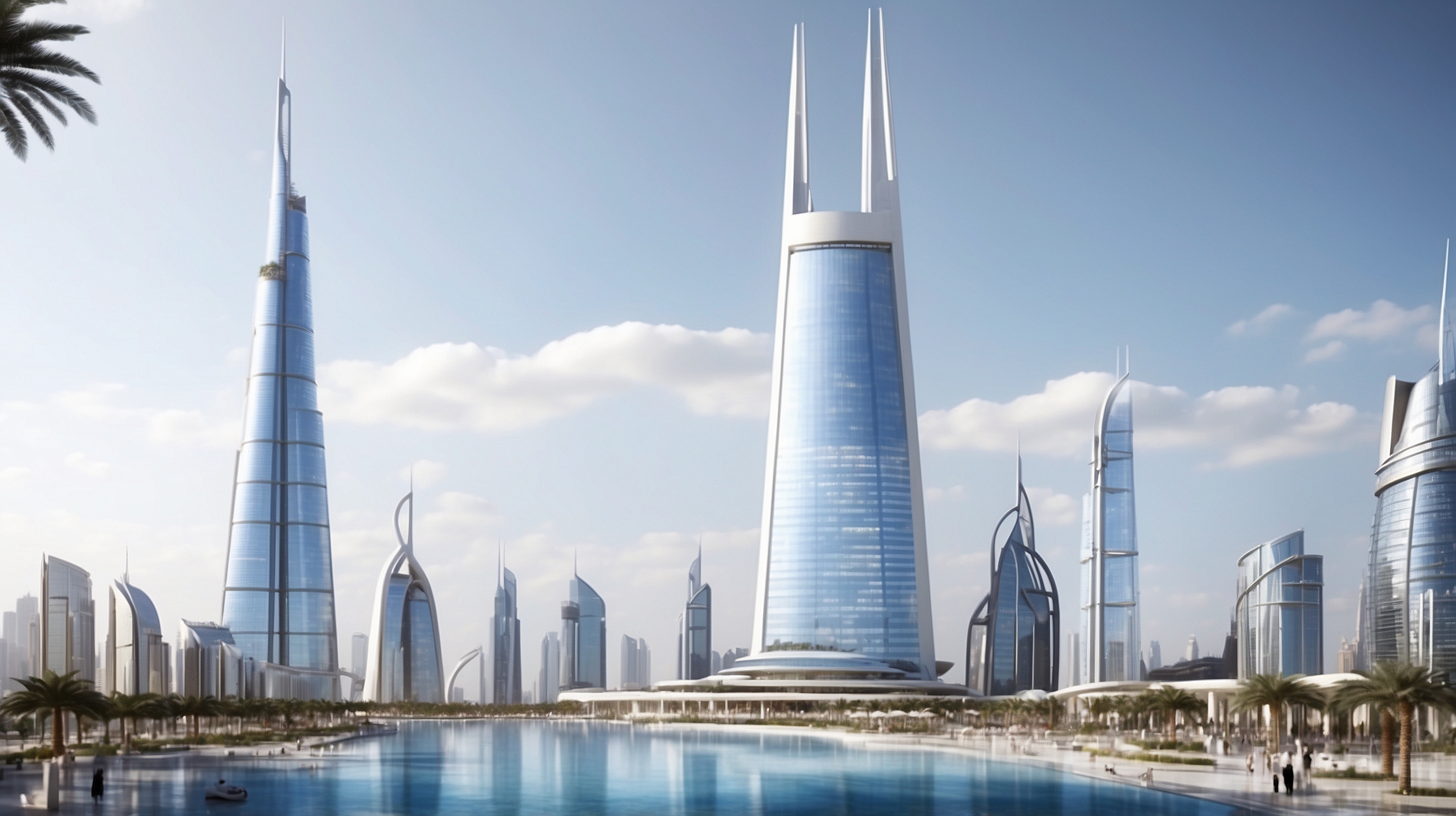
It’s the kind of dream that seems pulled straight from the pages of a science fiction novel — a glittering skyscraper soaring a full kilometer into the heavens, slicing through the clouds like a blade of ambition. But for Saudi Arabia, the vision of building the world’s tallest tower is not science fiction. It’s fast becoming a reality.
In the kingdom’s bustling urban landscape of Jeddah, a monumental structure called the Jeddah Tower — sometimes referred to as the Kilometer Tower — is reclaiming global attention. Originally envisioned over a decade ago, this megaproject lay dormant for years due to funding concerns, logistical setbacks, and political tensions. However, in a dramatic twist, construction is now restarting, driven by renewed financial commitment and Saudi Arabia’s broader mission to cultivate the world’s most modern infrastructure via its ambitious Vision 2030 plan.
So what does this skyscraper mean for Saudi Arabia and the world’s skyline? Beyond the sheer scale of the tower, it represents a bold architectural and geopolitical statement. As countries compete not only on the ground but also in vertical ambition, Saudi Arabia’s 1-kilometer-high skyscraper could redefine urban development and technological limits across the globe.
The Jeddah Tower project at a glance
| Project Name | Jeddah Tower (previously Kingdom Tower) |
| Location | Jeddah, Saudi Arabia |
| Height | 1,000+ meters (approx. 3,281 feet) |
| Construction Resumes | Late 2023 |
| Developer | Jeddah Economic Company (JEC) |
| Purpose | Mixed-use: residential, office, hotel, observation deck |
| Estimated Cost | $1.23 billion+ |
What reignited the race to the sky
The initial groundwork of the Jeddah Tower was laid in 2013, and for a time, it stirred excitement around the world. But by 2018, progress ground to a halt. Contractor disputes, funding shortfalls, and political purges within the kingdom’s elite — particularly affecting key partners — froze work indefinitely.
The recent reactivation of the project wasn’t merely a corporate decision; it was part of an ambitious socio-economic movement. Spearheaded by Crown Prince Mohammed bin Salman’s Vision 2030 strategy, the tower reflects Saudi Arabia’s broader shift from an oil-reliant economy to a diversified, innovation-led one. With stabilization in both internal politics and global partnerships, funding and investor confidence have once again poured into the project, enabling further construction.
“This tower will not only break records; it will reshape the region’s economic and architectural legacy.”
— Anonymous Senior Architect, JEC (Placeholder)
A bold claim to the tallest building ever
The planned height of the Jeddah Tower is over 1,000 meters, eclipsing the current record-holder — Dubai’s Burj Khalifa, which stands at 828 meters. If completed as planned, the tower would rise more than 170 meters higher than its closest rival.
Its proposed design includes 252 floors, a breathtaking observation deck that dwarfs all others, and the world’s highest sky terrace. The structure will also feature luxury apartments, hotels, office spaces, and a Four Seasons hospitality partnership. The architectural firm behind the design is Adrian Smith + Gordon Gill Architecture, the very same architects who co-created the Burj Khalifa.
However, building a skyscraper of this magnitude is no small feat. Engineers face unique challenges, including wind pressures at extreme altitudes, unprecedented elevator technology needs, and materials designed to endure enormous structural stress. Innovations in vertical transportation — including multi-deck elevators and pressurized high-speed systems — are being developed to meet these very needs.
Winners and losers in the global height race
| Winners | Losers |
|---|---|
| Saudi Arabia (first to breach 1-km height) | Dubai (loses title of tallest building) |
| Global skyscraper engineering firms | Environmental groups concerned with resource use |
| Tourism and business surge in Jeddah | Other mega-projects facing reduced attention |
What the Jeddah Tower means for Saudi Arabia
The Jeddah Tower holds more than just the promise of setting records. It is a symbolic and strategic pivot in the country’s long-term plans. With a focus on transforming Jeddah into a global tourism and commercial hub, the tower stands as a center for attraction that could bring millions of visitors annually.
Financially, the project could spark a boom in local investment, urban employment, and hospitality expansion. Already, surrounding developments — such as Jeddah Economic City — are rising, reinforcing the region’s shift toward becoming an international business center. For locals, the tower is a source of national pride, a marker of Saudi Arabia’s emergence on the global architectural stage.
“It’s more than just a building. It’s a beacon of our national future and a message that we are open to the world.”
— Khalid Al-Harithy, Development Analyst (Placeholder)
Environmental and engineering challenges
Constructing a building that touches the sky also means confronting the earthbound realities of limited resources and environmental strain. Critics warn that projects of this nature often consume massive amounts of steel, glass, and concrete — materials whose production is heavy on carbon emissions.
To mitigate this impact, engineers and planners are integrating green building technologies. Advanced solar panel usage, greywater recycling systems, and climate-sensitive design measures are being woven into the tower’s ecosystem to ensure sustainability plays a central role.
Yet, despite these assurances, global environmental bodies continue to scrutinize megaprojects like the Jeddah Tower for their long-term impact. The hope is that, as one of the most advanced structures on Earth, Jeddah Tower can serve not only as a record-breaker but also as a model for future eco-conscious designs.
The ripple effects on global architecture
A building this iconic sends ripples far beyond its borders. Already, architectural firms, steel suppliers, and engineering innovators across the world are attempting to leapfrog one another in design and patent development. Cities in China, India, and even Europe have reignited dormant plans for mega-skyscrapers, all seeking to reclaim prestige and draw global tourism.
The Jeddah Tower’s eventual completion might well usher in a new era of hyper-tall buildings, inspiring architects to think even bigger and challenge natural limitations. The concept of a “sky city” no longer feels so far-fetched.
“Buildings have always defined the character of civilizations. The Jeddah Tower might well define ours.”
— Fahad Al-Muqbil, Urban Development Scholar (Placeholder)
Short FAQs about the Jeddah Tower project
What is the current status of the Jeddah Tower?
As of late 2023, construction has officially resumed after being stalled since 2018.
When will the Jeddah Tower be completed?
While no firm date has been confirmed, experts estimate the tower may be completed by 2028.
Why did the project stop for years?
It was delayed due to funding issues, construction complications, and political unrest involving key backers.
What makes the Jeddah Tower unique?
It will become the world’s first building to surpass the 1-kilometer height mark, with record-setting observation decks and smart-city features.
Who is funding the construction?
The Jeddah Economic Company, with backing from private Saudi investors and strategic partnerships, is leading the funding effort.
What will be inside the tower?
The skyscraper will include luxury residences, commercial offices, a hotel, and the world’s highest observation deck.
How does the tower fit into Saudi Arabia’s Vision 2030?
It reflects the kingdom’s goal to modernize its economy, attract tourism, and create a globally competitive infrastructure sector.