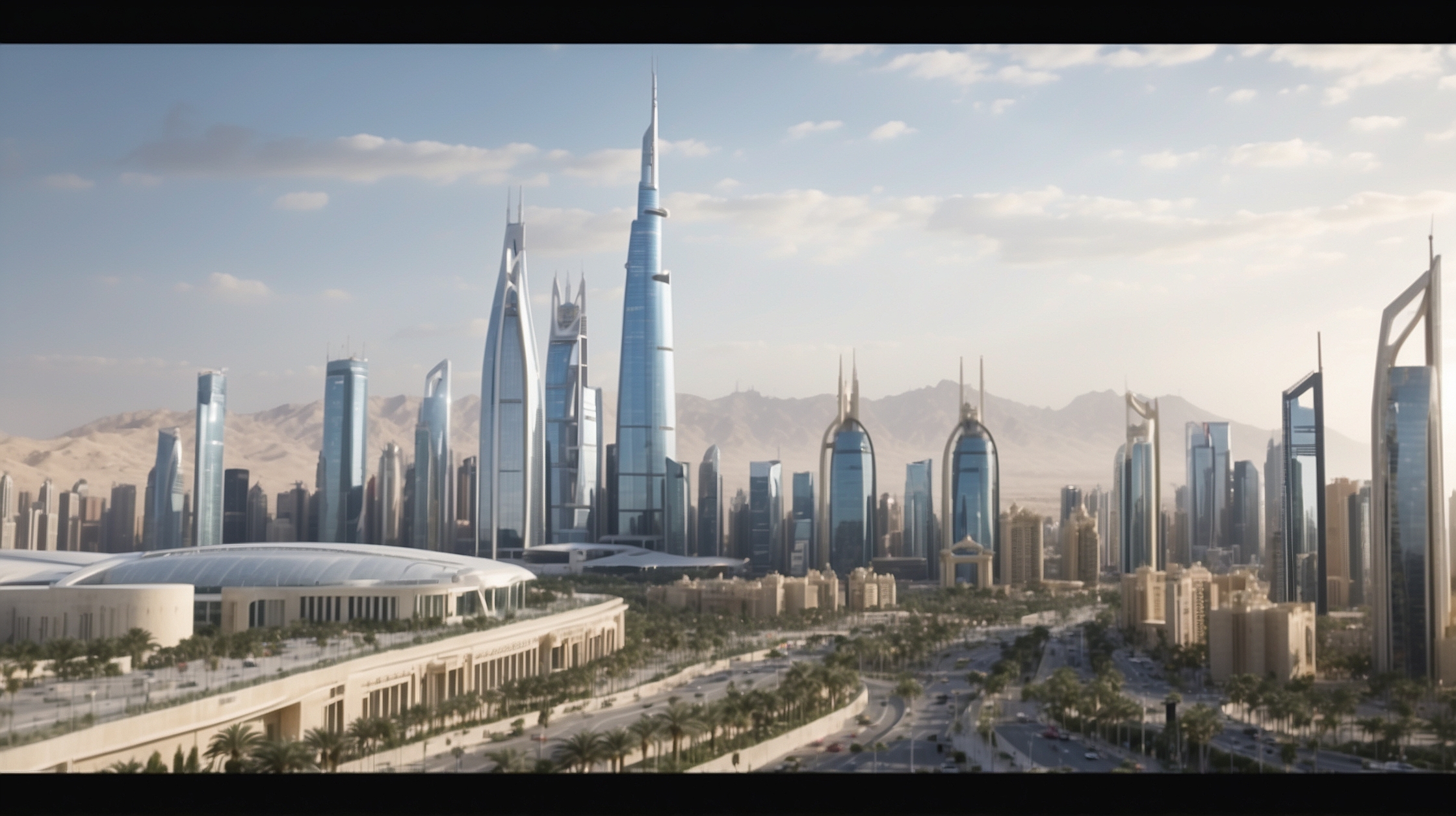
In the blistering heat of Saudi Arabia’s Red Sea coast, a towering vision is taking shape—a vision that challenges the limits of architecture and human ambition. Long imagined as a futuristic playground of megastructures, the Kingdom is now setting the stage for one of the boldest construction feats in history: the **Jeddah Tower**, a super-skyscraper planned to rise more than **1,000 meters into the sky**, poised to take the title of the tallest structure in the world.
The construction of the Jeddah Tower, formerly known as the Kingdom Tower, is not merely a race for height. It stands as a symbolic and economic linchpin in Saudi Arabia’s **Vision 2030**, an aggressive national development plan aiming to diversify the kingdom’s oil-dependent economy. Though previously stalled due to financial delays and political turbulence, the project appears to be regaining its momentum with new investors, renewed ambition, and a $5 billion blueprint that redefines what a city skyline can be.
But why now? And what makes this massive enterprise more than just a game of architectural one-upmanship? To understand that, we need to dig into what changed over the past few years, and how this mega-structure signifies far more than just engineering marvel—it suggests a reshaped future for an entire nation.
Project overview at a glance
| Project Name | Jeddah Tower (formerly Kingdom Tower) |
| Location | Jeddah, Saudi Arabia |
| Height | Estimated over 1,000 meters (approx. 1 km) |
| Estimated Cost | $5 billion |
| Purpose | Mixed-use: offices, apartments, hotels, and observation decks |
| Expected Completion | Post-2025 (TBD) |
| Main Developer | Jeddah Economic Company (JEC) |
| Architect | Adrian Smith + Gordon Gill Architecture |
What changed this year
After years of delay caused by financial strains, regional instability, and high-level political shakeups, the Jeddah Tower Project is experiencing a massive revival. What triggered this unexpected progress? According to reports, the revamped investment portfolio and a renewed focus from both private and governmental stakeholders have aligned with a broader timeline to complete major components of Saudi Arabia’s Vision 2030 initiative.
The Kingdom is positioning the tower as the crown jewel of the proposed **Jeddah Economic City**—a $20 billion development zone that aims to become a new hub for global commerce, tourism, and real estate investment.
It’s no longer just about going higher. It’s about creating an economic ecosystem that thrives vertically.
— Khaled al-Bawardi, Construction Analyst
The builders behind the behemoth
Helming this colossal undertaking is the **Jeddah Economic Company (JEC)**, supported by internationally renowned architectural design firm **Adrian Smith + Gordon Gill Architecture**, the same duo behind the Burj Khalifa in Dubai. This continuity signals serious intent—in fact, the Burj Khalifa experience has been particularly useful in guiding the challenges associated with wind loads, vertical transport systems, and utility planning.
Initially estimated at $1.2 billion, the project’s costs have now ballooned to **over $5 billion**, reflecting a more ambitious scope and the inclusion of advanced technologies for sustainability, energy efficiency, and transportation management.
We’ve learned a great deal from Burj Khalifa, but this is a completely new challenge that requires new thinking.
— Adrian Smith, Lead Architect (placeholder)
Why now: timing and transformation
Saudi Arabia has long sought to transform its global image—from an oil-rich conservative state to a dynamic destination for innovation and tourism. The resurgence of the Jeddah Tower reflects Saudi Arabia’s desire to showcase **architectural ambition** and economic diversification. There’s also a degree of urgency: Dubai’s dominance is being increasingly challenged by Riyadh’s economic reforms and cultural liberalization.
The timing aligns with mega-events like the anticipated **Expo 2030** and potentially hosting the **World Cup 2034**, if bids succeed. Saudi Arabia wants to be ready, and Jeddah Tower’s completion could coincide with these global spectacles, sending a very loud message that the Kingdom is ready for the world stage.
Winners and potential losers in the project
| Winners | Losers |
|---|---|
| Saudi construction and real estate sectors | Investors in delayed legacy projects |
| Global architecture and engineering firms | Competing cities like Dubai, Shenzhen |
| Saudi Vision 2030 branding | Environmental activists concerned with desert construction |
Inside the vertical city
Calling Jeddah Tower a **“vertical city”** is no exaggeration. The building will include over **167 floors**, housing luxury apartments, top-tier offices, and the world’s highest observation deck. Planned zones include:
- Luxury hotel suites on mid and upper floors
- Sky lobbies and observation terraces
- Commercial office spaces
- Luxury residential units
- Public entertainment and dining zones
Eco-technologies like wind turbines, high-efficiency elevators, and greywater recycling will all form part of its infrastructure. These elements aim to support a **self-sustained, ecologically mindful environment**, even within a 1-kilometer-high structure.
Challenges facing the sky
Despite the renewed enthusiasm, towers of such scale face an array of formidable challenges:
- Extreme wind pressure at upper levels
- Evacuation strategies for emergencies
- Water distribution and temperature control
- Economic volatility and investor skepticism
Moreover, geopolitical tensions and fluctuating oil prices could pose risks to completing the project within either budget or timeline.
Building a kilometer-high tower isn’t just about engineering. It’s about willpower sustained over decades.
— Miriam Al-Fadil, Urban Engineering Expert
The iconic shift in urban planning
The Jeddah Tower marks more than an architectural breakthrough. It signals an **ideological shift** in urban planning and national branding. Saudi cities, previously regarded as conservative, flat-grid settlements, are now aiming to become **global innovation architectures**. The tower is designed to anchor satellite communities, hospitals, schools, and transport systems all within its gravitational pull—literally shaping the city around a spine of steel and glass.
As global urban centers become denser, vertical innovation might become more norm than novelty. Jeddah Tower could be the prototype for high-rise living, commerce, and sustainability innovation at scale.
FAQs about Jeddah Tower and its future
When is the Jeddah Tower expected to be completed?
The exact completion date is still unclear but is expected to occur sometime after 2025, depending on construction agility and investor stability.
What will be the height of Jeddah Tower?
The tower is designed to exceed 1,000 meters, making it the first skyscraper in the world to reach this height.
How does it compare to the Burj Khalifa?
Jeddah Tower will surpass the Burj Khalifa by at least 172 meters, with more advanced sustainability technologies and mixed-use facilities.
Why was the construction delayed for so long?
Key delays were caused by economic downturns, ongoing regional conflicts, and changes in leadership that disrupted investor confidence.
Who is funding the project?
The project is led by the Jeddah Economic Company, supported by both local and international investors aligned with Saudi’s Vision 2030 strategy.
What impact will it have on Saudi Arabia’s economy?
Jeddah Tower is set to become a magnet for tourism, business, and real estate development, supporting broader economic diversification goals.
What measures are being taken for environmental concerns?
The tower will include enhanced air filtration, water recycling systems, and smart energy management to reduce its environmental footprint.
Will the public have access to the observation deck?
Yes, the tower is expected to feature the world’s highest observation deck open to the public, providing panoramic views of the Red Sea and beyond.