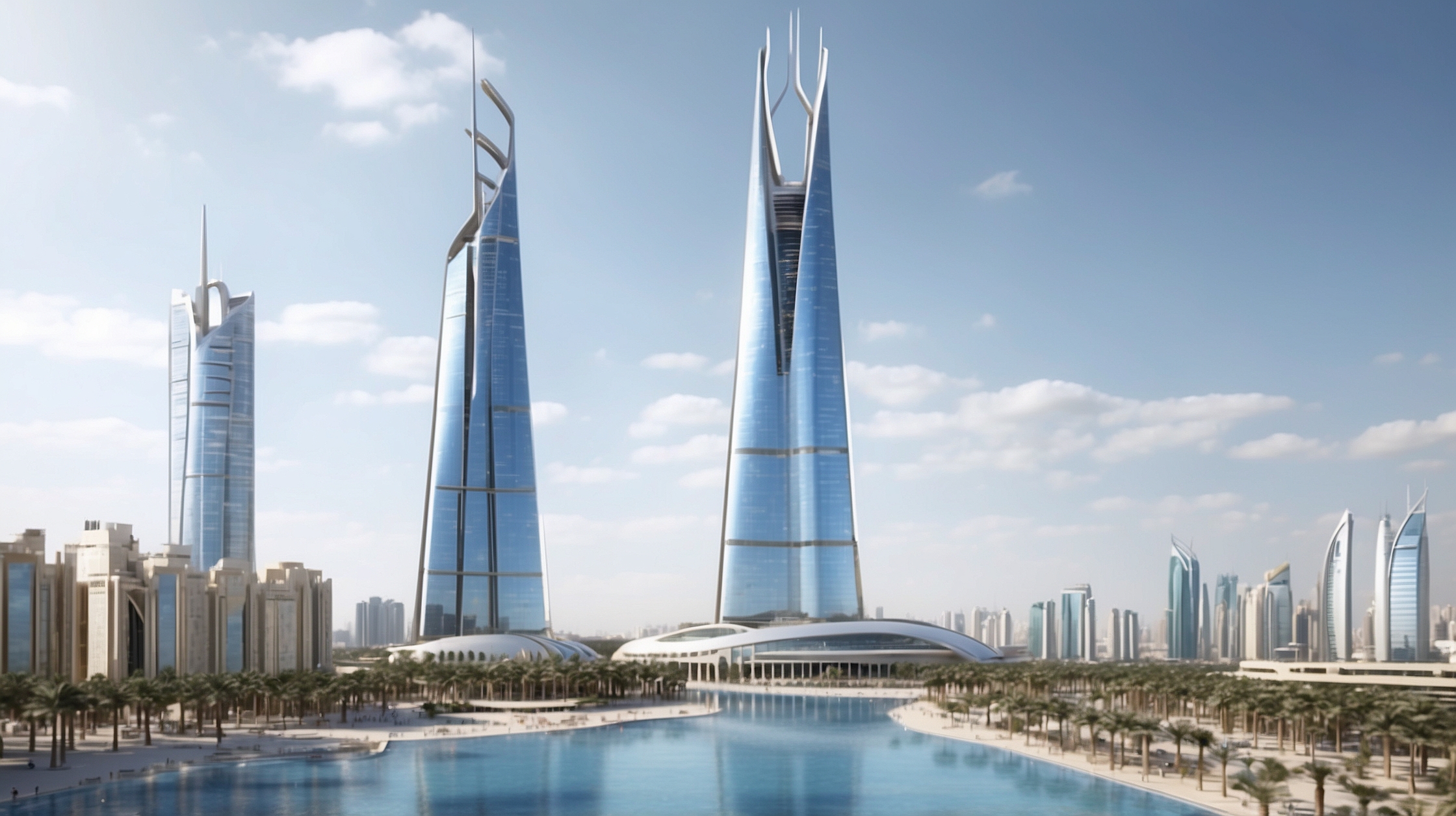
In the desert sands of Saudi Arabia, a stunning architectural marvel is poised to redefine the limits of human ambition. Rising over the Red Sea coastline at a scale that dwarfs even the world’s tallest structures, the **Jeddah Tower**—once deemed a far-off dream—is once again moving toward completion. After years of halted construction and speculation, Saudi Arabia’s massive undertaking to build the first-ever 1-kilometer-high skyscraper has regained momentum in 2024, drawing new attention globally and reestablishing Saudi Arabia’s bid to dominate the realm of iconic urban development.
This isn’t just another skyscraper. It’s a bold statement of national pride and a testament to the aspirations embedded in **Vision 2030**, the Kingdom’s strategic framework for economic diversification. The new progress on the Jeddah Tower project symbolizes more than just urbanization; it’s about reshaping regional identity, attracting international investment, and showcasing economic resilience in a post-oil paradigm. The revival of the project has been met with fresh energy, substantial funding, and a global hunt for the right construction company to bring this colossal ambition to life.
Saudi Arabia has long vied for leadership in futuristic development projects, from NEOM’s The Line to massive entertainment hubs. But the Jeddah Tower, originally known as the Kingdom Tower, may soon be the most tangible evidence of that bold vision. As the Kingdom resumes its race to the skies, here’s everything you need to know about the world’s tallest skyscraper project and why its renewed construction could be a game-changer for architecture and geopolitics alike.
Jeddah Tower at a glance
| Project Name | Jeddah Tower (formerly Kingdom Tower) |
| Location | Jeddah, Saudi Arabia |
| Expected Height | 1,000+ meters (3,281 feet) |
| Floors | 167+ floors |
| Projected Cost | $20 billion SAR (approx. $5.3 billion USD) |
| Status (2024) | Construction resuming, contractors being shortlisted |
| Key Investor | Jeddah Economic Company (JEC) |
| Anticipated Completion | By 2030 (subject to construction timeline) |
What changed this year
After a prolonged hiatus since 2018—marked by construction delays, financial scrutiny, and geopolitical hurdles—the Jeddah Tower project is seeing a major revival in 2024. A Request for Proposal (RFP) has been issued by the **Jeddah Economic Company (JEC)** to worldwide contractors, signaling a concrete step toward startup phase two of the tower’s construction. This RFP includes the ambitious objective of completing the superstructure and other key development components that had previously stalled.
It is a calculated restart aimed at leveraging improved economic conditions, renewed investor confidence, and enhanced planning capacity. Most notably, the reinitiation of the project aligns with the broader agenda of Vision 2030, as Saudi Arabia accelerates its development roadmap toward economic diversification beyond oil revenues.
“This is not just a skyscraper—it’s a symbol of Saudi Arabia’s transformation. Restarting construction is a signal to the world that we’re back, committed, and future-forward.”
— Ayman Hussein, Urban Planning Consultant (placeholder)
Ambition behind the structure
The vision around the Jeddah Tower rests on several strategic pillars. First, it aims to position Saudi Arabia as a **tourism and investment powerhouse**, capable of delivering projects on a scale unseen elsewhere in the Middle East. Secondly, the tower will anchor the **Jeddah Economic City**, a future-ready urban center spanning commercial districts, luxury residences, entertainment complexes, and business areas.
Thirdly, the project has immense symbolic weight—by surpassing the height of the current record-holder Burj Khalifa in neighboring Dubai, the tower directly challenges regional precedents and aims to place Jeddah alongside global megacities like New York, Tokyo, and Shanghai.
“Height is just a number until it becomes a vision. The Jeddah Tower will redefine urban gravity globally.”
— Dr. Layla Mansour, Structural Engineering Professor (placeholder)
Challenges faced during earlier phases
The tower’s journey hasn’t been without turbulence. Initially launched with fanfare in 2011, the construction faced repeated **delays due to financial limitations**, legal disputes, and major shifts in contractor commitments. The exit of the former construction partner, Saudi Binladin Group, after the 2015 crane accident in Mecca, significantly derailed progress. In addition, the arrest of key investors during a 2017 anti-corruption drive led to a slowdown in financing and oversight management.
Raw material procurement, as well as **engineering constraints of building one kilometer into the sky**, also posed unprecedented design challenges, particularly with wind resistance and foundation stability. These issues have been reengineered using next-generation materials, and engineering firms are now collaborating globally to finalize optimized blueprints for high-altitude vertical circulation and load management.
Who leads the current phase
The revival is being directed by the **Jeddah Economic Company (JEC)**, composed of wealthy stakeholders including Kingdom Holding Company, Abrar Holding, and other land development entities. The group has invited **international companies** to submit bids and plans to finalize contractor selection by early 2025. Leading global firms in high-rise construction from China, Europe, and South Korea have reportedly shown interest.
Interestingly, the new plans include options for **modular construction techniques**, sustainable green architecture, and AI-driven construction supervision to ensure maximum efficiency and structural integrity at such extreme altitude.
“This is more than a build; it’s a historic collaboration between human intellect and machine precision.”
— Eng. Khaled Al Soma, Lead Structural Advisor (placeholder)
How it compares to global benchmarks
Once completed, the Jeddah Tower will **exceed the Burj Khalifa by at least 172 meters**, establishing it as the tallest man-made structure on Earth. Unlike the Burj, which is largely commercial and touristic, the Jeddah Tower will incorporate a mix of luxury hotels, dedicated business floors, observation decks, and even scientific research areas for studying altitude effects on meteorology.
The tower also introduces unique features like **triple-deck elevators, wind-surge counterbalances**, and digital cranes, underscoring its commitment to futuristic construction models. The design by Adrian Smith + Gordon Gill Architecture integrates aerodynamic tapering with sustainable energy capture systems.
Projected impact on the local economy
When completed, the tower will play a prominent role as a **stimulus for economic growth** in Jeddah, drawing in global business, high-net-worth individuals, and urban tourism. The surrounding Economic City is expected to generate thousands of jobs across real estate, hospitality, transportation, and tech industries.
Moreover, with Jeddah being a port city, experts suggest the tower could serve as a delicate branding tool in Saudi Arabia’s bid to become a **logistics and trade nexus** between Africa, Asia, and the Middle East.
Winners and losers from the project reboot
| Winners | Losers |
|---|---|
| Saudi construction industry | Delayed regional competitors |
| Global engineering firms | Previously involved contractors |
| High-end real estate developers | Critics of megaproject spending |
| Tourism and hospitality sector | Local opposition fearing displacement |
Frequently asked questions
What is the current status of Jeddah Tower in 2024?
As of 2024, the project has resumed with a new RFP issued to international contractors. It is in the pre-construction planning phase with updates expected throughout the year.
When is the expected completion date?
The anticipated completion timeline is set for 2030, aligning with Saudi Arabia’s Vision 2030 plan.
How tall is the Jeddah Tower supposed to be?
The tower is expected to reach a height of over 1,000 meters (3,281 feet), making it the tallest structure in the world.
Who is behind the development of Jeddah Tower?
The primary developer is the Jeddah Economic Company (JEC), composed of various leading Saudi investment entities.
Will the tower be open to the public?
Yes, the design includes observation decks, shopping spaces, hotels, and apartments to attract both residents and tourists.
Why was construction stopped in 2018?
Construction faced delays due to contractor exit, financial issues, and legal complications following the arrests of key investors.
How does Jeddah Tower support Vision 2030?
The tower represents a flagship development aligning with goals to diversify the economy and promote foreign investment and tourism.
What makes Jeddah Tower different from other skyscrapers?
Besides its unprecedented height, it features state-of-the-art engineering, AI-enabled construction, and mixed-use functionality built into its core development plan.