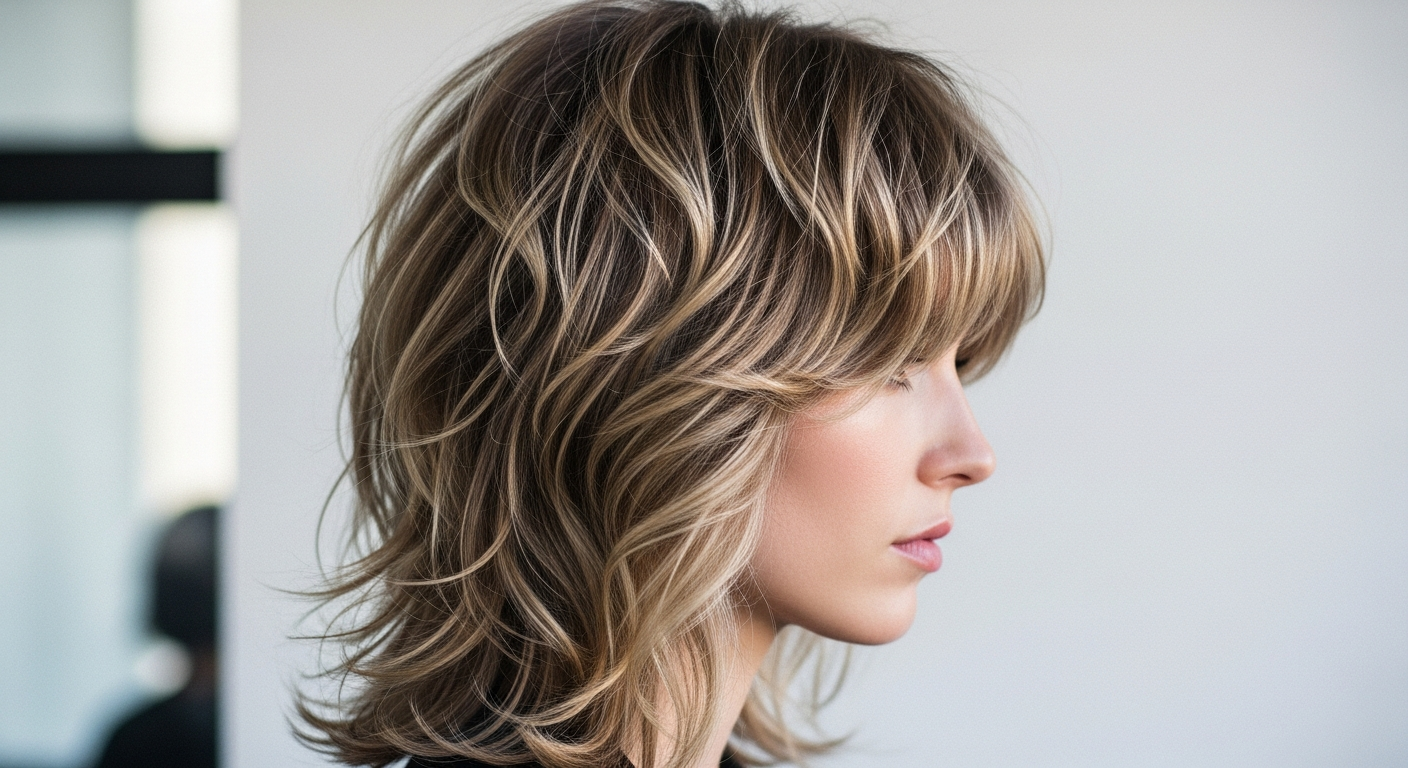
In the ever-evolving world of hair trends, there’s one style that has been stealthily reclaiming the spotlight—walking the fine line between vintage rebellion and modern chic. If you’ve spent any time on social media, chances are you’ve seen waves of soft, tousled locks gracing your feed, often tagged with buzzwords like “shag cut” and “modern mullet.” But for the untrained eye, these once-distinct looks can appear confusingly similar. What truly separates a shag from a mullet, and why is the modern shag resonating so deeply with people sporting natural waves?
To understand this resurgence, we must revisit the origin stories of these cuts, once associated with rock legends and free spirits. Today, they’ve been reinterpreted by high-fashion artisans and neighborhood stylists alike—even customized for natural texture, especially wavy hair. And therein lies the magic. The modern shag is no longer just a retro callback—it’s a fully transformational look that embraces individuality, texture, and movement. Read on to explore the subtle but critical differences and learn why the shag is winning the hearts (and hair) of a new generation.
Key differences and quick comparison
| Feature | Shag Cut | Mullet |
|---|---|---|
| Layering | Even, feathered layers throughout | Short front & sides, long back |
| Texture Suitability | Ideal for wavy and curly hair | Works best with straight or lightly wavy hair |
| Styling Flexibility | Highly versatile with minimal effort | Often requires styling to maintain shape |
| Signature Look | Tousled, natural flow | Bold contrast in lengths |
| Modern Popularity | Skyrocketing among natural hair communities | Seen increasingly in alternative style circles |
What sets a shag apart from a mullet
While both the shag and the mullet originated in the experimental haze of the ’70s, their evolution has taken significantly different paths. The classic mullet is best remembered for its polarizing “business in the front, party in the back” contrast. It traditionally features very short—or even faded—front and side sections with longer locks cascading down the nape of the neck.
The modern shag, by contrast, leans into its feathered layers and choppy volume. The style frames the face with layers that begin at the brow and continue through to the ends. It’s a cut that grows out gracefully, offering wearers the kind of effortlessly cool vibe made iconic by rockers like Joan Jett and Stevie Nicks—and now, newly claimed by younger generations looking for low-maintenance confidence.
“A shag can be tailored to anyone. It enhances your natural movement without forcing structure—it’s like your hair, but better.”
— Jessi Tran, Celebrity Stylist
How the shag cut complements natural waves
What’s igniting real excitement around the shag revival is its symbiotic relationship with natural hair textures—especially waves. For those with naturally wavy hair, the traditional struggle has always been finding a cut that doesn’t fight the curl pattern. Enter the modern shag. The strategic, airy layers allow waves to fall into place without resistance, producing shape and volume without excessive styling.
Unlike the mullet—which may appear disjointed on highly textured hair—the shag embraces the unpredictability of waves. Layers remove bulk while maintaining length, letting the natural bounce of the hair take center stage. In other words, it’s a style that works with your texture, not against it.
Why it exploded in popularity this year
Trends don’t rise in a vacuum, and the modern shag’s surge is no exception. As more people shy away from sleek, high-maintenance styles, there’s been a collective gravitation toward authenticity. This shift has manifested not only in fashion, but self-care, mental health awareness, and yes—hairstyles. The shag is expressive without being loud, edgy without being aggressive. It communicates effortlessness and creativity at once.
Platforms like TikTok and Instagram have also played a key role in the surge. Influencers, hair professionals, and effortlessly cool individuals have been showing off their shag transformations, often documenting the cut’s growth over several months. As you’ll see reflected in hashtags and comment sections, the modern shag isn’t just another style—it’s an experience.
“Clients walk out of the salon feeling like they’ve reclaimed ownership of their texture. That empowerment? That’s what the shag delivers.”
— Rafael Mauro, Senior Colorist and Cutter
Styling tips to make the most of your shag
One of the most appealing aspects of the modern shag is its low-maintenance upkeep. Still, a few insider tips can help you optimize the cut:
- Leave-in conditioners and curl creams help define texture without weighing it down.
- Diffuse-drying or air-drying both work beautifully—just avoid over-brushing once dry to maintain definition.
- Use a small round brush or your fingers to style curtain bangs or face-framing pieces.
- Pineappling your hair at night can help preserve layers and bounce in the morning.
- Regular trims every 8-12 weeks will prevent the layers from becoming too bottom-heavy.
What’s next for layered hair trends
With the success of the modern shag, expect to see further evolution in layered cuts. Hybrid styles like the “wolf cut”—a blend of shag and mullet—are pushing boundaries and inviting more customization. Stylists predict more people will ask for shag variations crafted for coily and kinky hair types, building off its inclusive potential.
The beauty industry is increasingly focused on celebrating individuality, and cuts like the modern shag signal a deeper cultural shift. The desire to look “undone,” natural, and empowered has eclipsed the era of flat-ironed uniformity. More than a passing trend, the shag’s marrying of form and freedom makes it one for the ages.
Winners and losers in the comeback of retro cuts
| Winners | Losers |
|---|---|
| People with natural waves or curly hair | High-maintenance flat-ironed styles |
| Stylists specializing in layered, textured cuts | Generic cuts lacking dimension |
| Low-maintenance hair routines | Excessive use of heated tools |
Frequently asked questions about shag vs. mullet
What’s the main difference between a shag and a mullet?
The shag features evenly distributed layers, often with volume at the crown and softness around the face. In contrast, a mullet has a stark length difference—short on the top and sides with a longer back.
Is the modern shag good for all hair types?
While particularly flattering on natural waves and curls, a talented stylist can adapt the modern shag for most hair textures, including fine or straight hair.
Can I get a shag cut if I have thick hair?
Absolutely. A skilled stylist will use layering techniques to remove bulk and enhance texture, making it ideal for thick hair.
How often should I trim a shag haircut?
For best results and shape retention, stylists recommend trims every 8 to 12 weeks.
Can I grow out a shag without it looking awkward?
Yes, one of the benefits of the shag is that it grows out gracefully, still maintaining dimensionality and movement through the awkward length phases.
Is the mullet still in style?
Yes, but it’s more niche. Today’s mullet is more stylized and often combined with other trends, like shaved sides or pops of color.
Should I use heat styling tools on a shag cut?
You don’t need to. The modern shag is designed to work with natural texture. That said, occasional use of heat tools for specific sections (like curtain bangs) is fine if done gently.
What face shape is most flattering for a shag cut?
Shag cuts can be customized to suit any face shape, but they’re especially flattering for oval, square, and heart-shaped faces due to the face-framing layers.