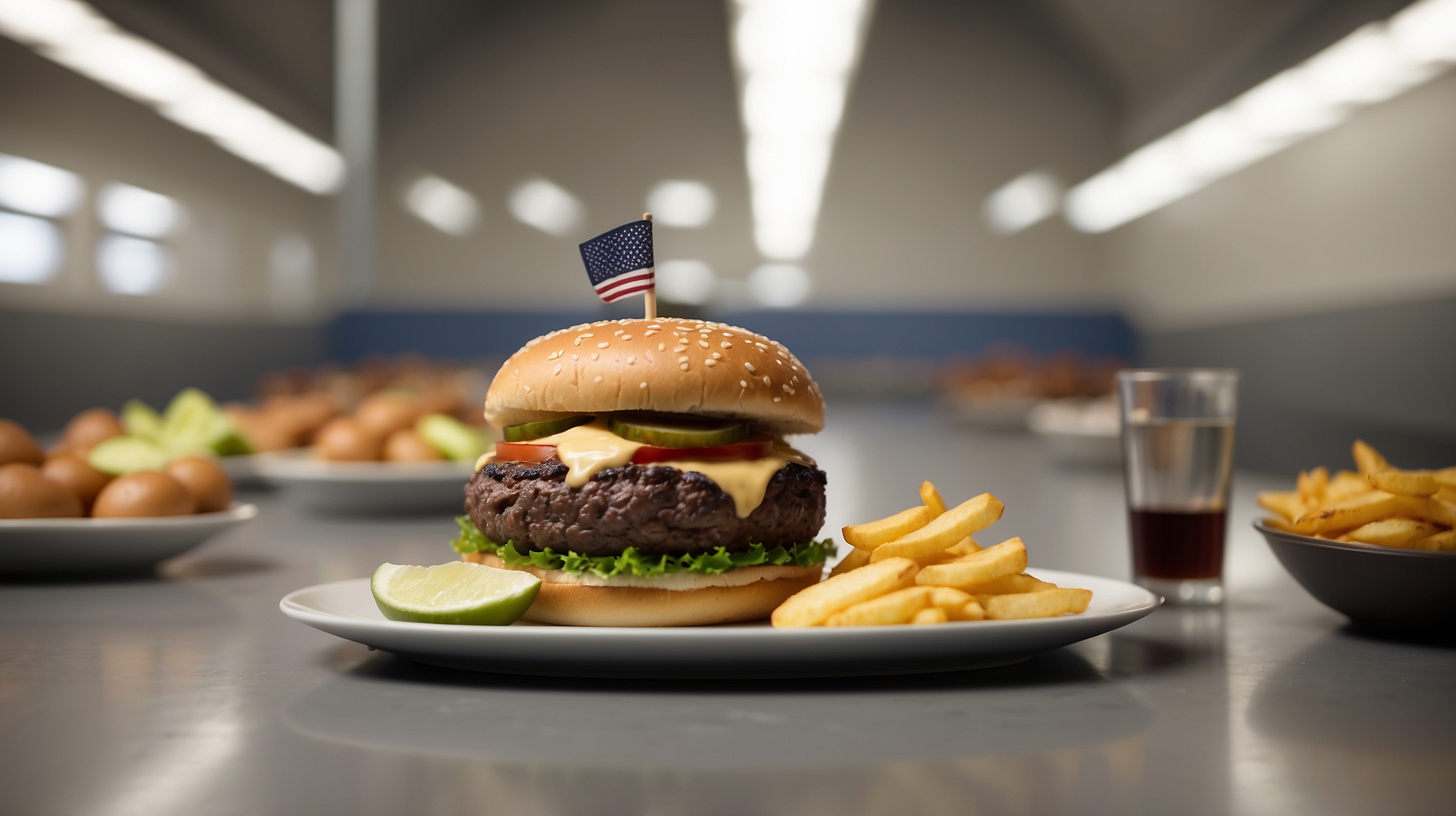
Every once in a while, a story emerges from behind bars that captures public attention far beyond the prison walls. That’s exactly what happened recently in Alabama’s Etowah County Detention Center, where a sheriff’s unusual choice of menu stirred national headlines—and a flood of opinions. Sheriff Jonathon W. Horton, who oversees the facility, found himself thrust into a swirling controversy after it was revealed he served fast food burgers dubbed “Warden Burgers” to inmates. It wasn’t the first time food safety and quality had raised eyebrows in America’s correctional institutions, but this particular incident raised the age-old question: is this justice served, or a disservice to those in custody?
The image of a jailed population eating fast food may conjure up mixed reactions. Some applaud it as a treat for inmates or a cost-effective solution, while others decry it as unhealthy, undignified, or even exploitative. But within Etowah County, this wasn’t just about burgers. It was about policy, power, and the discretion granted to elected sheriffs over inmate welfare. And when Horton defended his decision in a recent press briefing, the situation quickly escalated into a community-wide discussion about nutritional standards, operational transparency, and the ethics of incarceration.
As sheriffs across the nation face tighter scrutiny over jail conditions, Horton’s “Warden Burger” stunt—as critics are calling it—sets a precedent for how far correctional leaders can go with the authority vested in them. In many counties, sheriffs have full discretion over jail meals, even receiving funds that they can manage outside traditional oversight structures. Horton didn’t deny the allegations—he embraced them. He framed the fast food outing as a goodwill gesture, arguing that local vendors and community stakeholders were involved, and no taxpayer funds were misused. Still, the debate over whether this act was benevolent or bureaucratically problematic continues to sizzle.
Understanding the controversy over jailhouse burgers
| Key Detail | Information |
|---|---|
| Location | Etowah County Detention Center, Alabama |
| Main Figure | Sheriff Jonathon W. Horton |
| Event | Inmates served burgers labeled “Warden Burgers” |
| Source of Food | Fast food chain burgers reportedly delivered to the jail |
| Public Concern | Use of funds, nutrition, and transparency of jail meal operations |
| Sheriff’s Response | Claims gesture was positive, cost-free to taxpayers |
Why food in jails is under public scrutiny
In the broader criminal justice landscape, **inmate meals** are a persistent talking point. Poor food quality, limited portions, and insufficient nutrients are common complaints among incarcerated individuals. Across the country, investigations in various counties have spotlighted health issues tied to jail food, including cases of food poisoning and reports of moldy or expired items being served. Etowah County had already been under scrutiny before this story broke, with its kitchen contractor facing evaluations from state health officials.
What makes jail food such a sticky issue is the intersection of **cost-saving measures** and **human rights obligations**. Jails operate on tight budgets, and many officers view low-cost menus as fiscally responsible. However, arming sheriffs with unchecked control over funds—especially meal budgets—can lead to abuse or unintentional neglect. A 2018 law in Alabama allowed sheriffs to personally retain leftover funds from meal budgets, unless explicitly prohibited by local lawmakers, raising concerns in watchdog circles.
Sheriff Horton’s defense and clarification
When called upon to address the matter, Sheriff Jonathon Horton did not shy away. At a press conference, he openly confirmed that the “Warden Burgers” were indeed served, but insisted they were *donated* with the support of local businesses. According to Horton, not a single dime came from public coffers. The aim, he said, was to offer a rare morale booster to inmates and staff alike, particularly following a successful week of jail improvements and clean inspections.
“People are quick to judge, but they don’t see the broader picture. We’re doing our best to raise standards within the facility, and sometimes, a simple gesture like a burger can go a long way.”
—Sheriff Jonathon W. Horton
That hasn’t stopped critics from pointing out difficulties with his narrative. Transparency over who provided the burgers, whether all inmates received them equally, and if nutritional standards were met remain opaque. Moreover, his past statements about operating within “the letter of the law” echo a long-standing debate in Alabama about whether such discretion creates room for corruption or inequality.
Community reaction splits opinion
The community’s response has been far from monolithic. On social media and local forums, reactions range from applause to outrage. Some residents appreciate the gesture, suggesting that positive reinforcement can help with inmate behavior and motivation. Others found the move **tone-deaf** given the facility’s recent repairs and troubling audits.
“I think it’s a decent gesture, particularly if no taxpayer money was spent. Far worse has been done with public dollars.”
—Angela Wright, Community Advocate
“Feeding fast food to people in custody sends the wrong message. Are we rehabilitating or rewarding?”
—Marcus Bell, Public Health Educator
The bigger picture of food, funding, and power
This event draws attention to a higher-level issue that Alabama and other states have been wrestling with: the **distribution and oversight of jail budgets**, particularly food-related expenses. With a unique combination of law, tradition, and elected authority at play, Alabama sheriffs have historically held expansive powers over detention facilities—including considerable discretion over how to use allocated food money.
In several counties, excess jail food funds have reportedly been used for personal gain or pet projects unrelated to inmate welfare. Although legal reforms are slowly pushing for tighter regulations, advocates insist that more proactive auditing and structural oversight are required. Transparency and ethical consistency, they say, should not be subject to individual interpretation or media outcry.
Winners and losers from the Etowah jail burger story
| Winners | Losers |
|---|---|
| Sheriff Horton (among loyalists) | Inmate advocacy groups |
| Local fast food business | Public trust in jail transparency |
| Jail staff receiving positive PR | State-wide reform efforts on jail governance |
What comes next in Etowah County
In the weeks following this story, Etowah County commissioners may hold meetings to assess continued community concerns and evaluate funding structures. Legal analysts suggest that future incidents like this could lead to formal policies regarding **gifted foods**, **meal quality monitoring**, and **inmate dietary reporting** standards. Meanwhile, Horton’s office has hinted at publishing a public breakdown of all meal-related expenses, though no timeline has been confirmed.
For now, the image of a “Warden Burger” will live on as a symbol of the curious and contentious intersection between correctional policy and public expectation. The hope for many advocates is that it becomes a catalyst—not just for conversation, but for change.
Frequently Asked Questions
Why were the burgers called “Warden Burgers”?
The term “Warden Burgers” appears to be a colloquial nickname referencing fast food burgers served in the jail, purportedly as a gesture from the Sheriff’s office.
Did taxpayers pay for the burgers?
According to Sheriff Horton, the burgers were donated by local businesses and no public funds were used for the initiative.
Is feeding fast food to inmates common practice?
Generally, fast food is not a standard part of the prison diet. Most jails use institutional food services due to budget and regulation constraints.
Are Alabama sheriffs legally allowed to control food budgets?
Yes, Alabama law permits sheriffs to manage jail food budgets, though reforms are underway to improve accountability and oversight.
Have other sheriffs faced scrutiny for similar actions?
Yes, several sheriffs in Alabama have previously faced investigations for misuse or mismanagement of inmate food funds.
What are the nutritional standards for jail food?
Standards vary by state, but generally, jails must meet basic caloric and dietary needs, though compliance can vary based on oversight.
What reforms are being proposed for jail meal funding?
Advocates call for audits, funding caps, and removing the ability for sheriffs to pocket unused food funds without restriction.
Can inmates choose their meals or decline fast food?
Meal choice in jails is extremely limited. Most facilities provide standardized meals; special accommodations are generally for medical or religious reasons only.