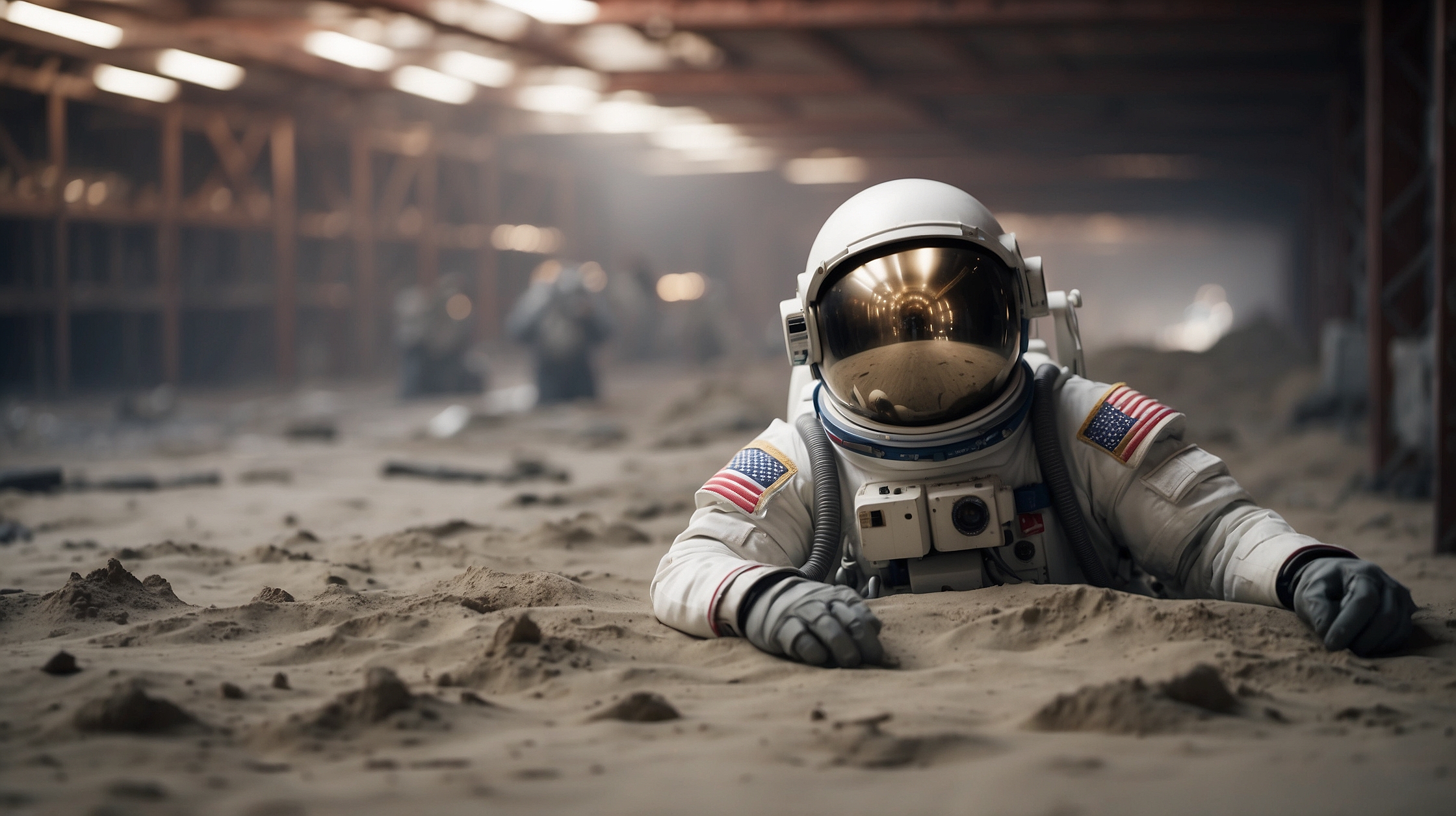
On a quiet afternoon in mid-2021, as most of the world remained focused on terrestrial crises and pandemic uncertainties, a near-catastrophe unfolded high above the Earth—silent, invisible, and potentially explosive. Two space modules, one American and one Chinese, came dangerously close to colliding in low Earth orbit. For a few haunting moments, global power dynamics and high-speed orbital mechanics intersected in a way that could have sparked the first major international conflict sparked from outer space.
Although the near crash didn’t make global front-page headlines, insiders within space and defense communities recognized the gravity of the situation. Governments scrambled to interpret data, trace orbital paths, and issue quiet diplomatic communiqués. What nearly happened that day wasn’t just a run-of-the-mill mishap—it was a stark reminder that outer space, once a remote and peaceful expanse dominated by scientific endeavors, has become contested geopolitical terrain filled with sovereign stakes and strategic vulnerabilities.
The world avoided an international incident by mere kilometers. But this moment signaled an inflection point. It wasn’t an exaggeration to say that space, the tranquil province of stargazers and astronauts, was inching perilously close to becoming the next battlefield. This article delves into this rare, almost-disastrous event to explore what it reveals about modern geo-orbital relations, the shifting balance of power between China and the United States, and what needs to change—urgently—before the next close call ends in disaster.
What happened in low Earth orbit that nearly sparked a crisis
| Key Details | Summary |
|---|---|
| Event Type | Near-collision between U.S. Starlink satellites and China’s Tiangong space station |
| Involved Parties | China National Space Administration (CNSA), SpaceX/Starlink, and indirect involvement of U.S. government |
| Date | Two separate incidents in July and October 2021 |
| Orbital Region | Low Earth orbit (~400–550 km altitude) |
| Public Disclosure | Reported by China to the United Nations Office for Outer Space Affairs in December 2021 |
In two separate but similar incidents, China’s new Tiangong space station had to conduct emergency evasive maneuvers to avoid spacecraft from Elon Musk’s Starlink constellation. These incidents occurred in July and October 2021, with the orbital paths of Starlink satellites getting alarmingly close to the Chinese module.
China’s Foreign Ministry accused the U.S. of endangering astronauts’ safety and failing to meet international treaty obligations. The reports, filed by Beijing to the United Nations Office for Outer Space Affairs, stressed how the lives of Chinese taikonauts were placed at unnecessary risk due to uncommunicated satellite trajectories and inadequate coordination from the U.S.-based commercial space operator.
Why this moment matters in space diplomacy
This near-miss wasn’t about a simple miscalculation. It unveiled a much deeper vulnerability—**the absence of effective international coordination mechanisms** in an increasingly commercialized and militarized space environment.
The incident re-highlighted gaps in the 1967 Outer Space Treaty, which governs space activity and accountability but lacks enforceable mandates on communication or trajectory transparency among satellite operators. With **more companies launching mega-constellations** and an increasing number of national space agencies actively operating in orbit, the sky is becoming both crowded and contested in unprecedented ways.
How China responded and global reactions that followed
China’s report to the United Nations triggered a flurry of media reports and forced national space agencies to acknowledge the deficiencies in current space traffic management protocols. Although the U.S. did not make an official apology, pressure mounted on regulatory agencies like the Federal Communications Commission (FCC) and National Aeronautics and Space Administration (NASA) to strengthen their engagement with international partners.
The U.N. documents filed by China sparked a global conversation about whether **commercial space operators**—like SpaceX—should be held to the same diplomatic standards as government space programs, especially when their assets operate in shared orbital corridors.
What changed this year: regulations and protocol updates
Since the incidents, there’s been an uptick in global efforts to enhance **space situational awareness (SSA)**. Agencies like the European Space Agency (ESA) and United Nations Committee on the Peaceful Uses of Outer Space (COPUOS) have started to push harder for creating a comprehensive database of satellite paths and launching schedules to minimize the likelihood of collisions or hostile interactions.
Additionally, the U.S. Space Command expanded its tracking and public notification systems, hoping to foster more real-time data sharing with both allies and rivals. Whether China views this as sufficient remains debatable. However, observers agree that these incremental measures show a move in the right direction.
Winners and losers in the space near-miss incident
| Winners | Losers |
|---|---|
| None in clear terms, but advocates of space safety gained momentum | Global space trust, U.S.-China diplomatic rapport, SpaceX’s image in China |
What experts are saying about future risks
“This wasn’t just a technical glitch—it was a diplomatic flare ignored at our own peril. Space needs traffic rules, urgently.”
— Dr. Neil Ashton, Aerospace Policy Advisor
“We’re rapidly transitioning from the space race to the space scramble. Coordination isn’t optional anymore—it’s a critical survival factor.”
— Lin Zhu, Professor of International Space Law
“The lack of real-time deconfliction protocols between nations and private companies is a ticking time bomb.”
— Dr. Sarah Coleman, CTO, Orbital Dynamics Group
What’s next for space governance
The close encounter near Tiangong has given fresh urgency to long-standing calls for **space traffic management agreements**. Experts emphasize the need for global operators to report satellite positions, speed, and trajectory changes in near real-time. The demand is also increasing to update international laws to include both private and public sector accountability in orbital operations.
Ironically, the current surge in satellite launches—partly driven by global internet ambitions—may eventually necessitate a **UN-level regulatory regime** to avoid future missteps. Although politically precarious, such frameworks could be essential in preventing not just accidents, but war.
Short FAQs about the space near-miss incident
What exactly happened during the near-miss?
China reported that its Tiangong space station had to conduct evasive maneuvers twice in 2021 to avoid close encounters with U.S.-launched Starlink satellites.
Why is this considered a major incident?
Because it involved human lives aboard a sovereign space station and highlighted the lack of coordination protocols between nations and commercial satellite operators.
Did the U.S. respond officially?
There was no formal U.S. apology, though agencies have since increased awareness and satellite tracking mechanisms.
Is SpaceX to blame?
While not declared at fault, SpaceX’s involvement in two near-incidents has raised questions about commercial accountability in space operations.
What changes have been made since the incident?
International efforts have increased to enhance space situational awareness and coordination, although enforceable global rules remain lacking.
Could such an incident start a conflict?
Yes, under the wrong circumstances, a space collision involving human life or critical infrastructure could trigger diplomatic or even military responses.
How common are such near-collisions?
As satellites multiply, near-misses are increasingly common—some experts believe thousands of risk events may go underreported annually.
What’s needed to improve space safety?
Binding international agreements, real-time communication protocols, and universal traffic coordination standards are critical to avoid future crises.