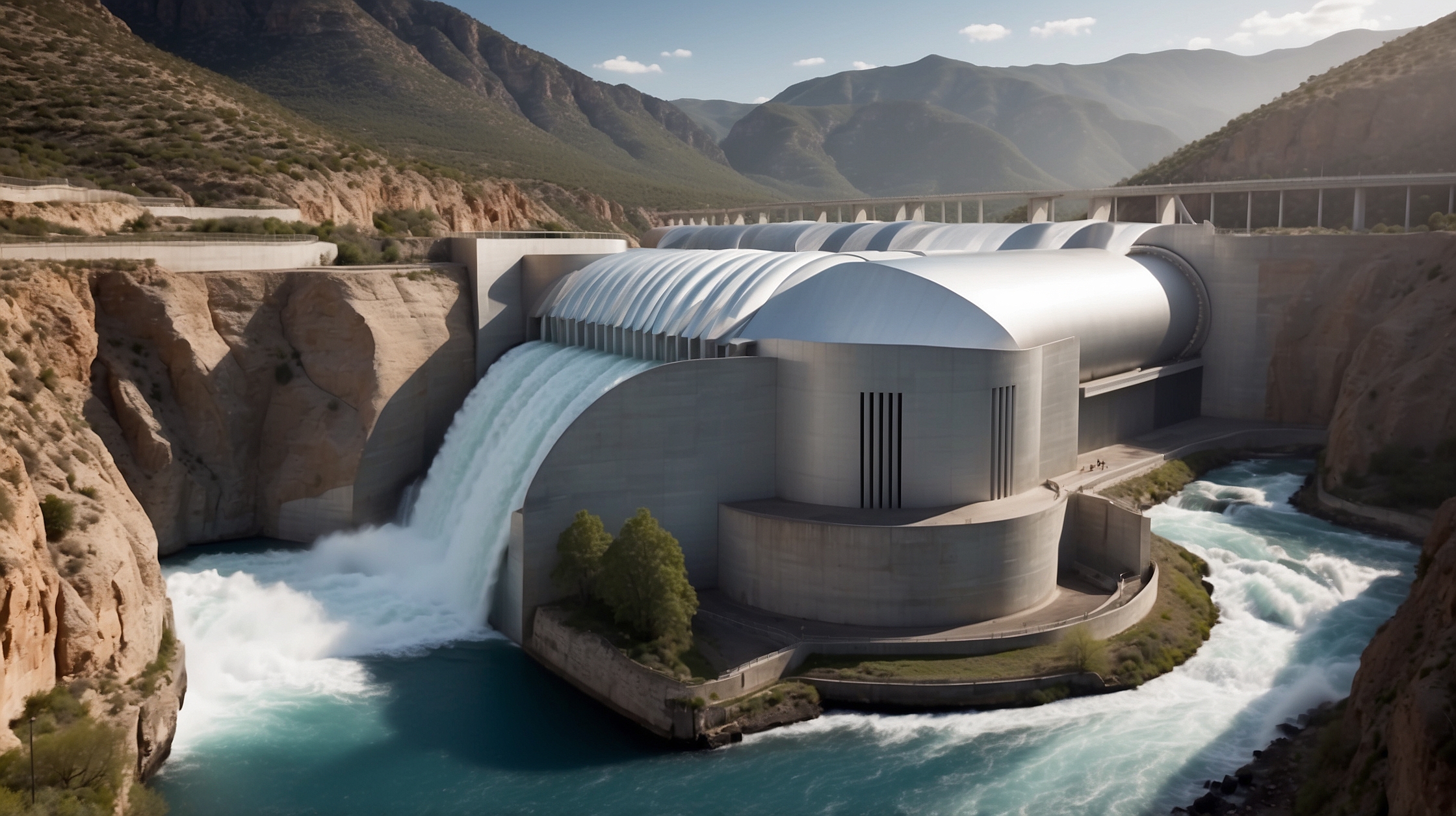
In the sleepy, sun-drenched hills of Spain’s Extremadura region, an unexpected revolution in **renewable energy** is quietly taking place. It isn’t powered by the roaring winds of the Atlantic or the intense solar rays that bake the Iberian Peninsula. Rather, it comes from a **simple discovery deep inside a water system**, where a decades-old engineering headache has been turned into a game-changing opportunity for the global hydropower industry.
For years, Spain’s infrastructure teams had struggled with excessive water pressure in a vast network of pipes — a problem built into the design of the nation’s irrigation and water distribution systems. These systems were too efficient, channeling water with such steep gradients that the resulting pressure caused damage and risked rupture. But instead of spending millions on wasteful pressure-reduction valves, Spanish engineers asked: What if the system could **use the pressure, rather than fight it**? The answer has already begun to inspire countries around the world.
This new approach doesn’t rely on massive, costly turbines or require massive damming of rivers. Instead, this development focuses on **micro-hydropower generation**, creating a cleaner, smarter approach to sustainable energy in areas far from traditional power sources — an innovation with the potential for transformational impact across emerging economies.
What makes this hydropower model different
| Project Location | Cáceres, Extremadura, Spain |
| Innovation Type | Micro-hydropower using gravity-fed irrigation canals |
| Technology Difference | No traditional turbines; uses water pressure naturally occurring in piping systems |
| Power Output | Enough to power towns of thousands of people |
| Cost and Maintenance | Significantly lower than standard hydropower systems |
| Environmental Impact | Minimal; does not alter river flows or ecosystems |
The invisible energy buried in water networks
Spain’s irrigation and potable water systems have been engineered over decades to be efficient, funneling water across great distances and challenging terrain. But this efficiency created unintended consequences — **gravity-fed water flows** created such intense kinetic energy that equipment would routinely break down due to over-pressurization. For years, utility teams managed this issue using **pressure-reducing valves**, which dissipated energy as heat and wasted vast amounts of potential power.
The leap came when engineers realized they could replace these valves with **small hydroelectric generators**, converting that hazardous water pressure into clean electricity. First piloted in Cáceres, the project has successfully produced thousands of kilowatt-hours, all without interfering with existing water usage for farming or homes.
We were sitting on invisible energy, literally throwing it away. Now, we have a model that uses what already exists—gravity and water infrastructure—to power homes. It’s elegant and efficient.
— María Sánchez, Hydrological Engineer, Cáceres Project
No turbines, no dams: Why this matters
Traditional hydropower often comes with a hefty environmental and financial price tag—**massive infrastructure**, including dam construction, reservoir management, and long-term ecosystem changes. This Spanish invention flips the conventional model. It installs **compact, turbine-free generators** directly into existing water pipelines, especially at pressure “black spots” where flow is strongest.
These systems do not need fish ladders, do not flood fertile land, and do not displace communities. They simply slot into what already functions, turning a once-destructive force into a **positive and productive asset**.
It’s a model of sustainability that doesn’t demand sacrifice. You can irrigate your farm and light your house with the same drop of water.
— Jorge Blanco, Environmental Policy Advisor
From a local fix to global export
What began as a regional fix has already caught the attention of international development agencies and climate economists. This **low-cost, low-barrier-to-entry solution** is especially promising for rural areas in developing countries that lack access to large-scale energy infrastructure but possess gravity-fed irrigation systems or urban water networks under pressure.
Countries in Africa, Southeast Asia, and Latin America are reportedly showing interest. Spanish engineering firms have begun prototyping similar installations in Kenya, where **seasonal water transport systems** create identical pressure environments. The opportunity to deliver electricity independent of solar variability or wind speeds makes this micro-hydro model an attractive **third pillar of local renewable grids**.
Winners and those who might lose out
| Winners | Losers |
|---|---|
| Rural farmers seeking low-cost electricity | Valve manufacturing industries |
| Municipalities managing water pressure | Fossil fuel power plants |
| Green energy investors in developing markets | Large-scale dam construction firms |
Scaling the idea beyond Spain
The challenge moving forward is scale. These devices are easy to replicate but still need **tailored engineering** to each pipeline’s specifications. European startup accelerators are beginning to take interest, and academic institutions across Spain and Portugal are working on **algorithmic pressure mapping software** to identify other hotspots where this technology can be deployed.
Government grants and climate innovation funds are also lining up. The Spanish Ministry of Ecological Transition has flagged the technology as exportable IP, while private equity firms involved in green tech have begun early-stage funding rounds for development teams working on adaptable versions of the system for Africa and the Andes.
The future of micro-hydro energy
As the world races toward net-zero emissions and looks for **clean, scalable, and affordable** power sources, Spain’s invention may represent part of the answer. It repurposes what was once an engineering flaw into an energy solution. It can be deployed in old cities and brand-new farming communities alike. And most importantly, it works with nature—not against it.
The future is unlikely to consist of a single solution to the global energy crisis. But this micro-hydropower breakthrough could become a pivotal piece in the **mosaic of renewables**, one that closes the gap — especially for the 770 million people still living without electricity today.
We’ve long believed renewables meant disrupting landscapes. This project shows it can be different. It’s not only cleaner — it’s smarter.
— Dr. Isabel Ferrer, Director, European Institute of Renewable Energy
Frequently Asked Questions (FAQs)
What is turbine-free micro-hydropower?
It’s a form of hydropower that generates electricity using the natural water pressure in pipelines without traditional turbines or dams. Instead, it captures and converts excess energy from gravity-fed water systems.
How much energy can these systems generate?
Each installation’s output varies based on local water pressure and flow, but some systems can power entire small villages or urban neighborhoods.
Is there any environmental risk?
Very minimal. Since these systems don’t alter river flows, build dams, or affect aquatic ecosystems, the environmental impact is far less than traditional hydropower projects.
Why is this approach considered revolutionary?
It turns a costly infrastructure problem—high water pressure—into a clean energy source, with minimal investment and zero operational emissions.
What areas can benefit from this the most?
Rural communities using irrigation canals or cities with old yet pressurized piping systems. This is especially useful where electrical grids are underdeveloped.
How can a country or city implement this technology?
Local engineers must assess pipeline systems for pressure zones where inserting generators is feasible and cost-effective. Many of these assessments can now be supported by software tools.
Is the technology protected or open-source?
The core concepts are being shared widely, but specific hardware implementations and pressure-mapping tools may be patent-protected or licensed by Spanish engineering firms.
What funding is available for international deployment?
Several European and international climate grants, as well as investment from firms focused on green tech in emerging markets, are beginning to support the adoption and scaling of this technology.