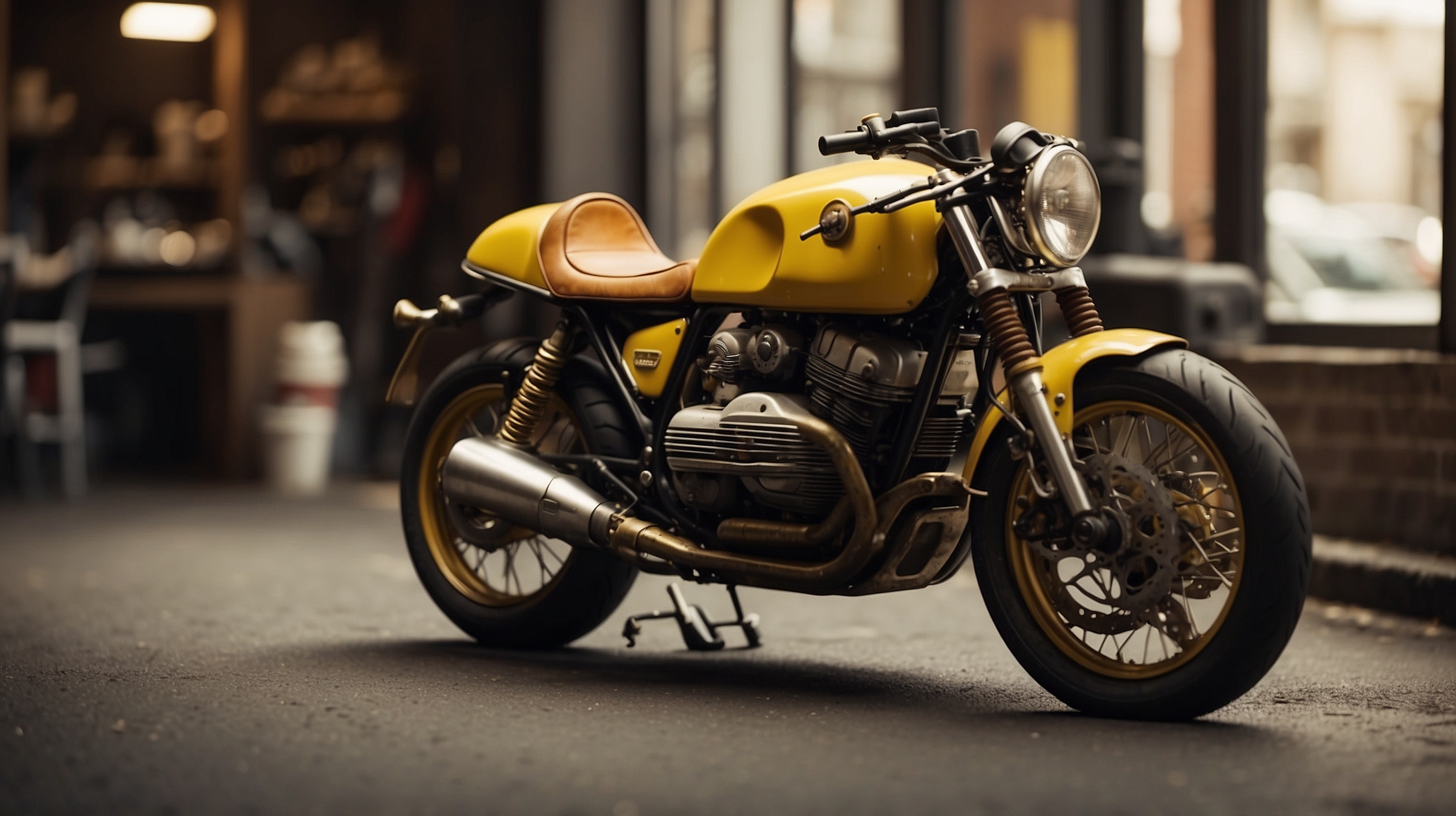
Beneath the thrilling roar of motorbike engines that fill Thailand’s roads, a small yet mysterious accessory has puzzled many for years — the **yellow cloth ribbon** tied discreetly to a motorbike’s handlebar. While tourists may overlook it as a decorative accent or even a random piece of cloth, locals know it carries a much deeper, spiritual significance. This symbolic piece isn’t about fashion or function; it’s about **faith, protection**, and tradition in a country where **Buddhism intertwines deeply with everyday life**.
From bustling Bangkok streets to the winding roads in Chiang Mai, the yellow rag is a common sight on all types of two-wheelers — from delivery scooters to high-performance motorcycles. But where did this tradition come from? What purpose does it serve in one of Asia’s most spiritually rich nations?
The story behind the yellow rag isn’t just cultural — it’s personal. It comes from a collective experience among riders who believe the cloth can bring safety and blessings. For many, it represents a prayer, a loved one’s hope, and ultimately, **guardian protection** against the vulnerabilities of open-road travel. But there’s more to this humble cloth than you might expect.
Let’s unravel the meaning, origins, and practices around the symbolic yellow rag on motorbike handlebars across Thailand.
Quick summary of what the yellow cloth represents
| Item | Yellow cloth on motorbike |
| Common location | Tied to handlebar or mirror of motorcycles |
| Color symbolism | Yellow is associated with Monday, the day of King Rama IX’s birth |
| Spiritual significance | Symbol of protection and blessing, often blessed by monks |
| Why bikers use it | To seek spiritual protection while riding |
| Origin | Rooted in Buddhist customs and tied to Thai reverence for the monarchy |
Why the color yellow is so meaningful in Thailand
In Thai culture, colors are more than aesthetic choices — they symbolize **days of the week**, emotions, and royal affiliations. The **color yellow** is especially meaningful as it represents **Monday**, the birthday of the late **King Bhumibol Adulyadej (Rama IX)**. Because of his immense popularity and revered status, yellow has become a color of respect, unity, and protection throughout Thailand.
For many motorcycle riders, wearing or displaying yellow acts as a nod to the beloved monarch and a request for his protection or spiritual guidance. In some cases, the cloth isn’t just randomly picked — it’s specifically yellow to evoke positive blessings and strong celestial associations.
Wearing yellow means more than support. It’s spiritual armor taken on the road.
— Somchai Yutthanarong, Cultural Anthropologist
How monks and temples bless these yellow cloths
Before these yellow cloths are tied to handlebars, they often receive **blessings from Buddhist monks**. Riders may take the cloth to **local temples**, where monks will chant protective verses (Parittas), sprinkle holy water, and imbue the cloth with good luck and safety intentions.
Sometimes the cloth itself comes from **discarded monk robes**, which adds a deep level of spiritual importance. These pieces, known in Thai as “pamsak,” are believed to carry the merit of the monk’s practice — making them ideal for reflecting protection during travel, which is considered a risky activity in Buddhism.
For many motorbike users, particularly those who ride long distances or face dangerous traffic daily, the blessed cloth becomes a daily talisman — a simple way to bring **peace of mind** before setting off on a journey.
I never ride without it. It’s like my mom’s prayer, carried by the wind.
— Napat Jirakul, Taxi Motorbike Rider
What the cloth tells others on the road
To the trained observer, a yellow ribbon or cloth on a bike speaks volumes. It reflects that the rider values **spiritual well-being**, that they’ve taken time to preserve karmic safety, and that they maintain **respect for cultural traditions**. For older Thai people, seeing a yellow cloth may even offer reassurance — a subtle sign of faith and humility in an era of fast-paced modern life.
In some cases, other riders may even acknowledge the cloth — not unlike a biker wave or nod — as a sign that they too share an unspoken respect for the **spiritual realm** that governs life’s unpredictabilities.
What changed the perception in recent years
While once only used by devout or older riders, the yellow cloth has seen an uptick in use among **young motorcyclists**, social media influencers, and even delivery riders. As road accidents unfortunately remain a serious concern in Thailand, symbolic actions of protection like this have gained popularity again.
There’s also a growing consciousness towards cultural identity and heritage, especially among younger Thai people. In regions with high traffic fatalities, community-focused campaigns supported by monks have encouraged bikers to receive blessings and tie the cloth to their rides. For some, it’s a return to roots in an increasingly hectic world.
Do tourists and foreigners adopt this practice?
Interestingly, tourists who rent motorbikes during their stay in Thailand might encounter bikes with yellow cloths already attached. While many don’t know the meaning at first, some end up asking locals or Googling the purpose, eventually embracing the practice out of respect or as a gesture of cultural appreciation.
However, spiritual leaders discourage using the cloth purely as a fashion statement without understanding its **deeper roots**. Tourists genuinely interested are encouraged to visit a temple and receive proper explanation (and perhaps a blessing) to honor the tradition appropriately.
The yellow cloth isn’t an accessory — it’s a permission slip from the divine to ride carefully.
— Phra Pongsak, Head Monk of Wat Chang Temple (placeholder name)
Does it really protect riders?
Physically, the cloth doesn’t offer actual protection — it’s not a helmet or safety gear. But emotionally and spiritually, it gives riders a sense of **calm, focus, and internal preparedness**. The practice of receiving the blessing, tying the cloth, and mentally preparing before travel genuinely impacts rider behavior. It creates a moment of mindfulness that can make all the difference.
In this way, the yellow cloth becomes more than an amulet — it’s a ritual of **intention and awareness**, qualities that arguably do keep bikers safer in real terms.
FAQ about the yellow rag on motorbike handlebars
Why do Thai motorcyclists tie a yellow cloth to their handlebars?
It symbolizes spiritual protection and is often blessed by monks to safeguard the rider during travel.
Does the color yellow have a specific meaning in Thailand?
Yes, yellow is associated with Monday and King Rama IX, representing respect, peace, and royal reverence.
Can foreigners tie a yellow cloth on their bikes in Thailand?
Yes, but it’s encouraged to do so respectfully and with understanding of its cultural significance.
Where do these cloths typically come from?
They are often cut from old monk robes or offered at temples, making them blessed and spiritually potent.
Are there cloths of other colors used for similar purposes?
Occasionally, but yellow is the most common due to its deep cultural and spiritual meaning.
Do monks still bless motorbikes and riders today?
Yes, it’s a common ceremony in local temples, especially before long trips or for new motorcycles.
Is the yellow cloth considered religious or cultural?
It’s both — tied to Buddhist practices and broader Thai cultural traditions related to safety and spirituality.
Is this cloth used only in Thailand?
While common in Thailand, similar practices exist in other Southeast Asian cultures with Buddhist roots, but the yellow cloth specifically is most prominently Thai.