A refrigerator might seem like the simplest kitchen appliance — just plug it in and start storing. But what if a small tweak in how you organize its contents could extend the shelf life of your food significantly, save money, and reduce household waste? That’s exactly what a growing number of households are discovering thanks to one simple, strategic change in small fridge organization.
Whether you live in a cozy apartment, an urban studio, or simply use a compact fridge — organization becomes more than just aesthetic. It’s functional. The layout, airflow, and consistent temperature control in a small refrigerator matter more than you’d think. And with inflation affecting grocery prices worldwide, every little hack to make food last longer counts.
This organizational shift isn’t about buying more containers or fancy gadgets — it’s about leveraging what you already have in smarter ways. Here’s how understanding your refrigerator’s cooling zones and reorganizing shelves accordingly can be one of the most cost-effective upgrades to your kitchen routine.
Why fridge organization matters more than you think
| Aspect | Details |
|---|---|
| Food Shelf Life | Improper storage reduces lifespan of perishables |
| Cooling Zones | Top, middle, and bottom shelves offer varying temps |
| Food Safety | Correct placement helps prevent contamination |
| Energy Efficiency | Organized storage allows for better air circulation |
| Time & Money Saver | Less spoilage means fewer grocery trips and less waste |
The common fridge mistake you’re likely making
Many people instinctively use the top shelves of their refrigerator for perishables like meat, dairy, or leftovers, believing those spots are the coldest. But in smaller fridges — particularly those with top-mounted freezer units — cold air tends to settle at the bottom. That means your meats and fish, which require the coldest storage conditions, are often being placed too high and risk quicker spoilage.
Similarly, storing leafy greens or ethylene-sensitive vegetables near fruits like apples or bananas (even within the fridge) accelerates their decay. When we aren’t organizing with purpose, we’re inadvertently contributing to food waste — a problem that’s easily fixable with just a touch of spatial awareness.
Understanding your fridge’s cold zones
Your fridge isn’t uniformly cold. Each section serves best for specific types of food based on how the cool air flows:
- Bottom shelf: Generally the coldest area — best for fresh meat, poultry, and seafood.
- Middle shelves: Ideal for dairy, eggs, and leftovers.
- Top shelves: Great for ready-to-eat foods like snacks, drinks, and cooked items.
- Crisper drawers: Designed to retain moisture; use high-humidity settings for leafy greens and low-humidity for fruits.
- Fridge door: Warmest area — best for condiments, jams, or pickles, but not milk or eggs!
“Most of the complaints I see about food going bad too fast are linked to poor placement inside the fridge, especially in small units where airflow is more restricted.”
— Jenna Lee, Nutritionist & Food Safety Consultant
The simple reorganization method that works
Start by emptying your refrigerator completely. Then take the following step-by-step approach:
- Clean surfaces with a natural or food-safe disinfectant.
- Group items by type — meats, veggies, condiments, dairy, etc.
- Place raw meats sealed tight on the bottom shelf to prevent cross-contamination.
- Move dairy like cheese and yogurt to the middle shelf, where temperatures are consistent.
- Assign one crisper drawer for high-moisture items (spinach, lettuce) and the other for fruits.
- Use bins or trays for small or frequently used items.
Labeling shelves or bins can help household members follow the new organizing system — making maintenance easier over time.
Visible vs. hidden: The psychology behind food usage
We’re visual creatures. Studies show that food we can see is food we are more likely to use. In cramped fridges, it’s easy for something to get shoved to the back and forgotten. The new organization system enhances visibility by reducing clutter and grouping items intuitively.
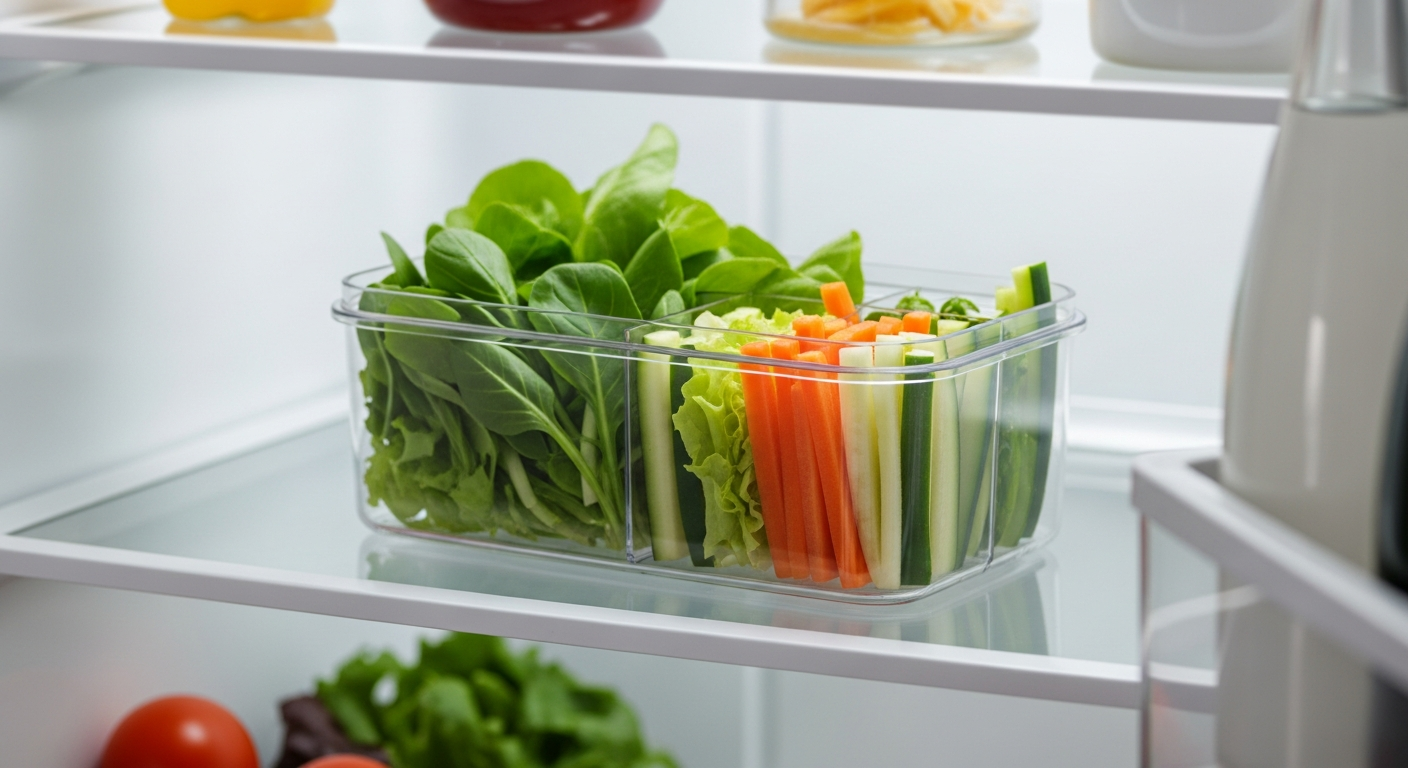
A clear bin can group together fast-expiring snacks, leftovers, or pre-cut ingredients, acting as a visual reminder: “Use these first.” This alone helps avoid unnecessary waste and encourages healthier snacking habits.
The role of fridge temperature in food longevity
The FDA recommends refrigerator temperatures of 37°F (3°C) and freezers at 0°F (-18°C). However, in small fridges — especially older or compact models — temperature can fluctuate more than expected.
Use a basic appliance thermometer to confirm your fridge’s internal climate. If you notice inconsistencies, consider relocating it away from heat sources like ovens or direct sunlight, and avoid overpacking, which blocks cold air circulation.
“Small fridges are more prone to temperature swings, particularly in summer. Proper organization helps stabilize internal climate and protect perishable goods.”
— Miguel Torres, Appliance Technician
Key wins from rearranging your fridge
| Winners | Losers |
|---|---|
| Foods with longer shelf life | Unlabeled leftovers buried in the back |
| Households saving money on food waste | Those relying on incorrect cooling zones |
| Health-conscious meal planners | Random-stuff-in-the-fridge crowd |
How food containers and storage tools support the process
Simple BPA-free containers can optimize space. Choose stackable models with labels to help identify contents and usage dates. If your fridge has limited door space, magnetic containers or add-on baskets can create room for lightweight seasoning packets or tubes.
For items like herbs or greens, wrapping them in paper towels and storing them inside breathable bags extends freshness by absorbing excess moisture. Mason jars or glass containers are another great addition for storing sauces, dressings, or chopped fruit — plus, they make your fridge look beautifully organized.
How to maintain the system over time
Implementing a fridge routine helps maintain long-term organization:
- Weekly clean-out: Set a calendar alert to discard expired or unused items each week.
- Inventory list: Keep a magnetic dry-erase board showing what’s inside and needs to be consumed soon.
- Meal plan pairing: At the start of each week, plan meals around what’s already in the fridge.
“We saved roughly $40 a month just by organizing our fridge. We waste less and eat out less since we’re actually using what we buy.”
— Dana Moss, Busy Parent & Meal Prep Enthusiast
FAQs about small fridge organization
How do I know which part of my fridge is coldest?
Use a fridge thermometer to measure different sections over 24 hours. Typically, the bottom shelf is coldest in top-freezer models.
Should eggs go in the fridge door?
No. The door experiences frequent temperature changes. Eggs should be stored on middle shelves for consistent temperature.
Can I store vegetables and fruits together?
It’s best to separate them. Fruits like apples emit ethylene gas, which causes nearby vegetables to spoil faster.
How often should I reorganize my fridge?
Do a quick check weekly and a full clean-out monthly. This prevents clutter and spoilage.
What foods should never be stored in the door?
Milk, eggs, or raw meat — these require stable, colder temperatures.
Are clear bins better than opaque ones?
Yes. Clear bins make it easy to see what you have, which helps reduce food waste and improve usage.
What temperature should my fridge be set at?
The ideal refrigerator temperature is 37°F (3°C), and the freezer should be set at 0°F (-18°C).
Do I need special containers to organize my fridge?
No, but using stackable and labeled containers can help make the most of limited space and improve visibility.