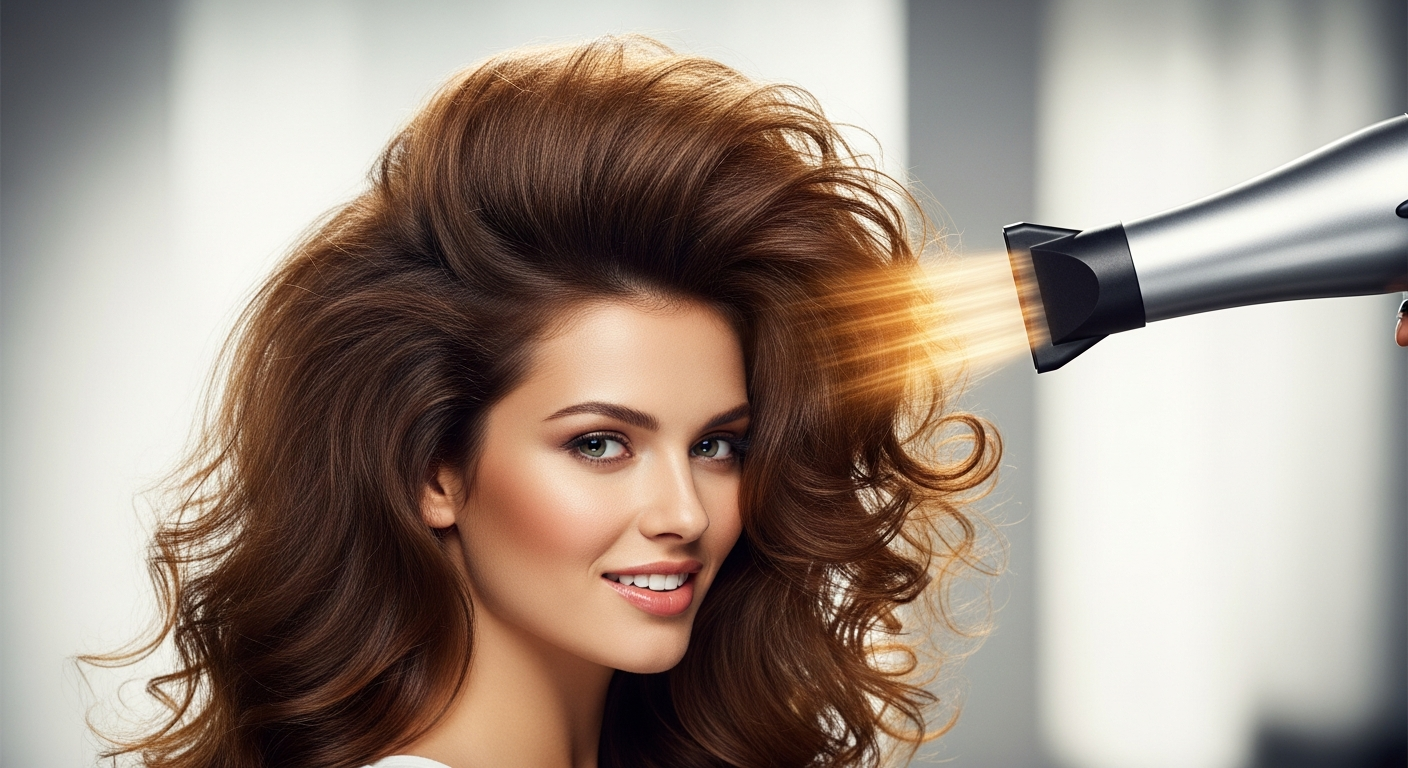
For many of us, achieving voluminous hair in the crown area without piling on sticky hairsprays or copious amounts of mousse has been a long-standing struggle. Whether it’s for a night out, a professional meeting, or just to feel a bit more confident on a regular day, crown volume makes a dramatic difference in your overall look. Yet, the solutions often involve heavy product buildup, leaving your hair stiff or greasy. Others resort to teasing or complicated styling tools that promise lift but fail to deliver sustainable volume.
Enter a simple but highly effective blow-drying technique that has taken the beauty world by storm. It’s the kind of skill hair stylists have known for decades—but now the secret is out. With the right method, you can add noticeable lift and bounce to the crown area—all without using a single spray, mousse, or pin. This game-changing approach requires nothing more than a blow dryer, a round brush, and a little technique. Here’s what you need to know to master this at home.
Key takeaways on the volume-boosting technique
| Technique Type | Blow-drying with targeted sectioning and lift |
| Products Required | None (optional heat protectant) |
| Tools Needed | Blow dryer with nozzle, large round brush or vent brush |
| Ideal Hair Types | All hair types; especially effective on fine or flat hair |
| Benefits | Natural volume, less product dependence, smoother hair |
| Time Required | 10–15 minutes |
The root of the problem: why volume at the crown is tricky
The crown area is one of the toughest places to add volume naturally. Hair tends to lay flat due to gravity and the way follicles grow in that area of the scalp. Many people turn to layering products—like volumizing mousse, texturizing sprays, or dry shampoo—to give their roots that needed lift. But these often leave residue behind and can weigh hair down even more over time. It’s a cycle that creates dependence on products rather than empowering you with technique.
The technique stylists swear by
The trick is in how you *lift and direct* the roots during the drying phase. By altering the angle of the hair while blow-drying, you allow the roots to “set” in an elevated position. This technique uses basic principles of styling physics—heat and directional airflow—to manipulate the way your hair lays as it dries. When done correctly, it can add visible height to the crown and keep it from falling flat throughout the day.
“You don’t need layers of product to get volume—you need the right direction of tension and airflow during your blow dry.”
— Jamie Tran, Celebrity Hairstylist
Step-by-step: how to execute the method
Step 1: Start with damp, towel-dried hair
Make sure your hair is about 70–80% dry before using any tools. Towel dry to remove moisture, but avoid rubbing the scalp aggressively as it can reduce the hair’s ability to hold volume. Apply a light heat protectant spray if desired.
Step 2: Section the crown area
Using a comb or your fingers, divide the crown area into three horizontal sections from forehead hairline back to the crown. Clip the rest of the hair out of the way. Having this area isolated helps you focus airflow and motion.
Step 3: Use a round brush to lift and curl
With your blow dryer set to medium heat and speed, place a **large round brush** under a 2-inch section of crown hair. Lift it vertically up from the scalp while directing the dryer’s nozzle at the roots. Roll the brush slightly while holding for 5–8 seconds. Repeat for each layer.
Step 4: Alternate directions for extra lift
As you move through each section, change the direction you’re lifting the strands—some toward the front, others back, and then straight up. This prevents hair from settling into one flat shape and encourages more natural-spread volume at the roots.
Step 5: Allow the sections to cool
This step is critical. After each section is dry, keep it lifted in the brush or with your fingers for 10–15 seconds to allow it to cool in the raised position. Hair “remembers” the shape it cools in, locking the volume into place.
Step 6: Light tease for added drama (optional)
If you want a more dramatic lift, you can do a **gentle backcomb** at the root level after blow drying. But in most cases, this technique provides enough volume on its own, especially when done regularly.
Why this method works better than products alone
Products like volumizing mousse or thickening sprays coat the hair to artificially create lift. While they provide initial benefits, they often break down due to oils or humidity throughout the day. Heat-styling techniques, by contrast, change the hair’s shape temporarily through airflow and drying direction. This leads to a more natural, longer-lasting volume without adding weight to strands.
“Think of your hair like fabric—it can be pressed and lifted with tension and heat, no chemicals needed when done right.”
— Dr. Tara Lin, Trichologist
How often can you use this technique safely?
Daily use is possible if you’re cautious with heat settings and always apply a heat protectant. However, most people find doing this **2–3 times per week** is sufficient, especially if they maintain the volume with dry shampoo between washes.
Ideal hair types and adjustments
The beauty of this method is that it’s versatile. It works on:
- Fine hair – phenomenal results, adds life and bounce
- Thick hair – helps shape and disperse natural heaviness
- Curly or textured hair – works best when blow-dried straight or partially straightened
“Even with curly hair, lifting the roots vertically while drying changes everything—it sets the motion from the scalp outward.”
— Susan Lowe, Texture Specialist
Minimal tools, maximum effect
This approach embraces the concept of hair styling minimalism. No need for a drawer full of products—just a **well-angled blow dry and a good round brush**. For those looking to preserve hair health, reduce product usage, or simplify their routine, this method is a revelation.
Tips to extend your volume throughout the day
- Sleep with your hair in a loose topknot secured with a silk scrunchie
- Use dry shampoo to refresh volume without additional styling
- Avoid touching your crown area too much—this can flatten the lift
Common mistakes to avoid
- Using too much heat too close to scalp—can damage follicles
- Drying hair straight down toward scalp—flattens roots
- Neglecting the cooling phase—essential for shape retention
Frequently asked questions about the blow-dry volume technique
Can I use this technique on wet hair?
No, starting with very wet hair can overexpose it to heat. Partially air-dried or towel-dried hair works best.
Does this method work for short hair?
Yes, even pixie or bob cuts can benefit. Use a smaller brush and lift from the root to create crown height.
What type of brush gives the best results?
A large round brush with boar or mixed bristles works best for smoothing and lift. Vent brushes can also help with quicker drying time.
Should I use mousse or spray with this method?
Not necessary, but if you want extra hold or are dealing with humidity, a light texturizer can be added after drying.
How long does the volume last?
Typically 1–2 days, especially if you avoid touching your crown and maintain the lift with dry shampoo.
Can I use a diffuser instead of a nozzle?
Diffusers are better for curly textures aiming to retain curl. For straight or lifted sections, a nozzle is more precise.
Will this damage my hair over time?
When done properly with medium heat and protectants, it’s safe. Avoid excessive tension and use natural bristle brushes to minimize breakage.
Is this suitable for men’s hair too?
Absolutely. Men with medium to longer top sections can use the same technique to create stylish volume without extra product.