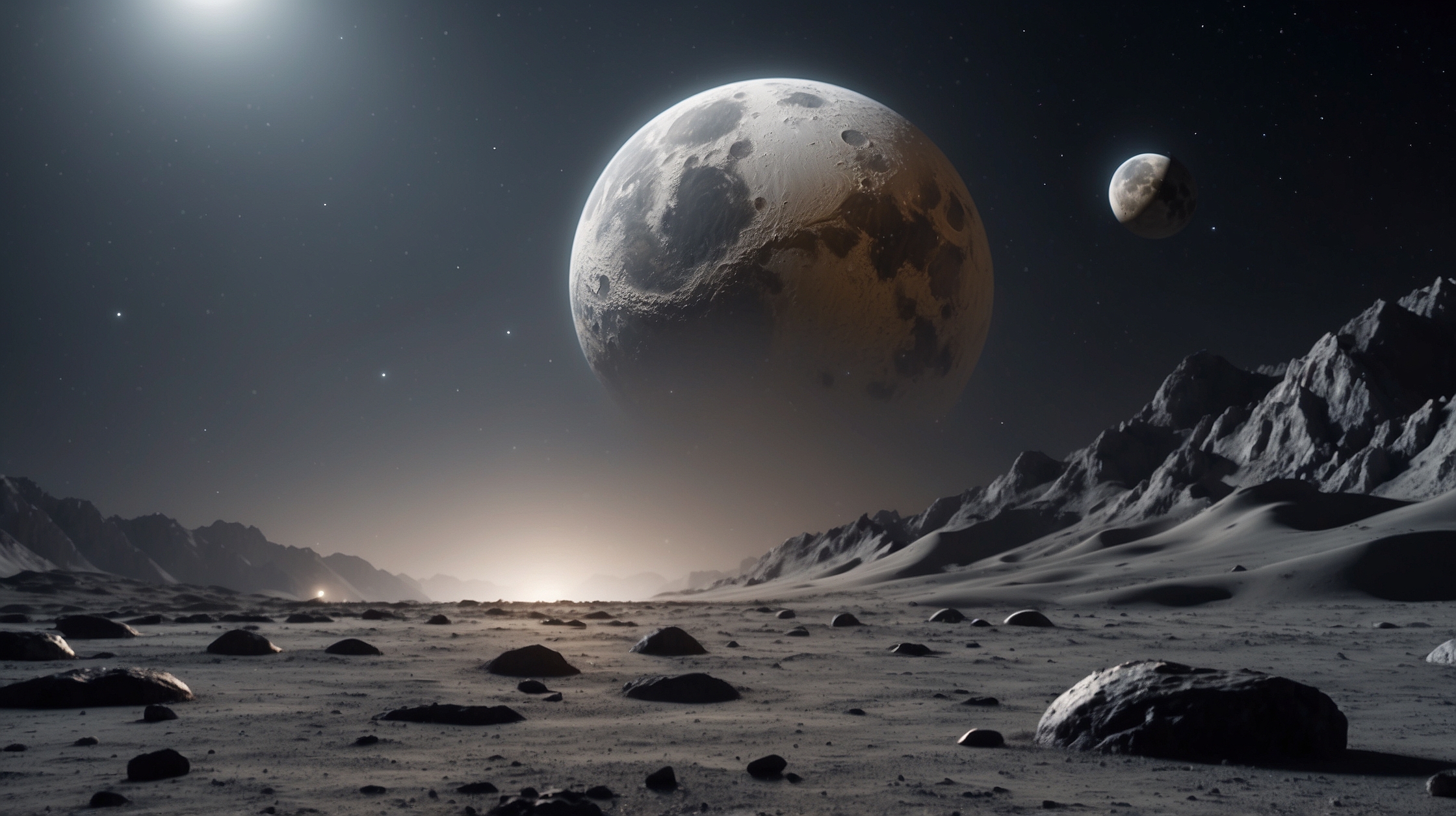
On an otherwise serene December night, the Moon played host to a cosmic flurry rarely witnessed by even veteran astronomers. Between December 14 and 15, within the span of less than an hour, three separate impacts lit up the lunar surface like celestial fireworks. The phenomenon unfolded during the peak of the **Geminid meteor shower**, one of the most anticipated annual meteor events, adding an exclamation point to the already star-studded sky. For skywatchers and scientists alike, this was not only a visual spectacle — it marked a significant scientific event that deepened our understanding of meteoroid activity and lunar vulnerability.
Observers across the globe exhilarated in the spectacle. But beyond the mesmerizing glow of the meteor impacts on Earth’s satellite, serious inquiries have followed: How often does the Moon get hit so rapidly? Are these occurrences more frequent than previously believed? And could this tell us something new about how debris flows in our solar system? The nature of these impacts — captured from Earth by amateur and professional astronomers alike — has generated renewed attention to the Moon’s role as a window into deeper cosmic processes.
Here’s a deep dive into what happened on that extraordinary night, what it means for lunar science, and how the Moon continues to reveal stories from the darkest corners of space.
Quick facts about the Moon impacts on December 14–15
| Date | December 14–15, 2023 |
| Number of impacts | Three |
| Duration | All within 47 minutes |
| Cause | Likely Geminid meteoroids |
| Observed from Earth? | Yes, using video analysis |
| Significance | Rare triple lunar impact recorded |
| Technology used | Telescopic imaging, light-curve analysis |
What made this Moon event so unusual
The Moon is no stranger to impacts. Without an atmosphere to shield it, space debris — from tiny pebbles to small asteroids — can smash into its surface at breakneck speeds. However, what stunned researchers and enthusiasts during the December Geminids was the **rapid succession of three distinct impacts**, all within less than an hour. On average, such noticeable flashes on the Moon are observed only a few times per year. To see three in such a short window is exceedingly rare.
The observed flashes — brief, sudden glows of light marking each impact — were not only detectable with standard telescopic equipment, but their **timing and origin seemed to align precisely** with the peak of the Geminid shower. This meteor shower, originating from the asteroid 3200 Phaethon, is known for its bright and consistent activity. What’s less expected, however, is for several meteor fragments to be on a trajectory to strike the Moon in such quick succession.
How the impacts were detected and verified
While enthusiasts and professionals were scanning the skies for Geminids, telescopic cameras aimed at the Moon began picking up sudden, pinpoint flashes. These were brief — sometimes lasting no more than fractions of a second — but intense enough to stand out. A team of astronomers reviewing real-time video feeds and conducting data analysis confirmed that three individual impact events occurred, backed by time-stamped imaging and **precise light-curve measurement**.
“Capturing three lunar impacts in such a short span suggests a far more dynamic meteoroid environment than we previously thought.”
— Dr. Leena Vasquez, Lunar Geologist (Placeholder)
The confirmation relied on comparing the position, brightness, and decay rate of the light flashes, ruling out Earth-based light noise or anomalies. These rigorous standards help ensure that the events were indeed **extraterrestrial impacts**, not false positives.
Why the Moon gives insights Earth can’t
One of the reasons lunar impact research is so valuable lies in the Moon’s stark conditions. Lacking both atmosphere and weather, the Moon remains static, preserving **impact scars for millennia**. These conditions make it an excellent record-keeper of solar system activity. While Earth’s dense atmosphere vaporizes most meteors before they strike ground, the Moon takes them all — and shows the marks.
Therefore, studying lunar impacts offers a glimpse into what Earth might be experiencing were it not for atmospheric shielding. Additionally, it provides real-time data on **space debris movement**, particularly during major meteor showers like the Geminids, and helps scientists fine-tune models of debris flow around our planet.
The role of meteor showers in lunar impact rates
Meteor showers dramatically increase the risk of lunar hits. During showers like the Geminids, Earth and the Moon pass through clouds of ancient cosmic detritus — some of which inevitably gets pulled toward the Moon’s low gravity. The precision timing of these impacts — occurring during the **peak hours of the Geminids** — strengthens the correlation between such events and increased meteoroid activity.
“It’s highly likely these impacts originated from the same meteor stream. Their trajectories and timing are too specific to be coincidence.”
— Dr. Nori Hamada, Astrophysicist (Placeholder)
Although Earth sees hundreds of Geminid meteors per hour during peak times, most burn up harmlessly. In contrast, **even small pebbles strike the Moon with great intensity**, as seen in the December flashes. This underlines the difference in celestial risk exposure and showcases why lunar observations during showers are so critical.
What this means for future lunar missions
With multiple space agencies planning long-term lunar bases and crewed missions, understanding impact risks becomes more than academic. These incidents throw light on the **frequency and intensity** of meteoroid collisions — essential data for designing habitat shielding, satellite protection, and mission timing. In particular, it reopens conversations on how lunar orbiters and stationary units should be protected during known meteor storms.
“We used to think of the Moon as quiet and dormant. Events like this show it’s still an active participant in the solar system’s drama.”
— Geoff Mitchell, Aerospace Systems Analyst (Placeholder)
Winners and losers of the December lunar impacts
| Winners | Losers |
|---|---|
| Amateur astronomers capturing rare footage | Future lunar habitats facing design challenges |
| Scientific understanding of meteoroid activity | Assumptions of lunar impact rarity |
| Lunar impact-monitoring technologies | Satellite operators unprepared for impact rates |
Looking ahead to the next opportunity
While what happened this December was rare, it’s not isolated. With multiple meteor showers annually — including the Perseids, Leonids, and Quadrantids — astronomers now have clearer justification for frequent lunar surveillance, particularly at peak shower times. Future events will likely be studied with **higher-resolution equipment**, possibly from lunar orbiters themselves, paving the way for a deeper understanding of how such impacts evolve over time.
Frequently asked questions about the lunar impacts
What caused the December 14–15 lunar impacts?
The impacts are believed to have been caused by debris from the Geminid meteor shower, which consists of fragments from the asteroid 3200 Phaethon.
How many impacts were recorded on the Moon?
Three visible lunar impacts were observed within a 47-minute span, a rare occurrence linked to the Geminid meteor shower peak.
Can these impacts be seen from Earth without a telescope?
No, the impacts created brief flashes that require telescopic imaging to detect. They are not visible to the naked eye.
Why is the Moon more vulnerable to meteors than Earth?
The Moon lacks an atmosphere, so meteoroids do not burn up before hitting the surface. This makes it more exposed to impacts.
Do these impacts pose any danger to Earth?
No, the impacts occurred on the Moon, and none of the meteoroids were headed toward Earth’s surface.
How do scientists confirm a lunar impact from Earth?
They analyze video and image data for light flashes, duration, and trajectory signatures to determine if an observed flash was a true lunar impact.
Is this the first time multiple lunar impacts were seen in quick succession?
Yes, this is one of the few recorded instances where three impacts happened within such a short window, making it a significant event.
Will future missions to the Moon increase lunar impact monitoring?
Absolutely. Future lunar missions will likely include systems that can monitor and possibly even predict impact events for astronaut safety and scientific study.