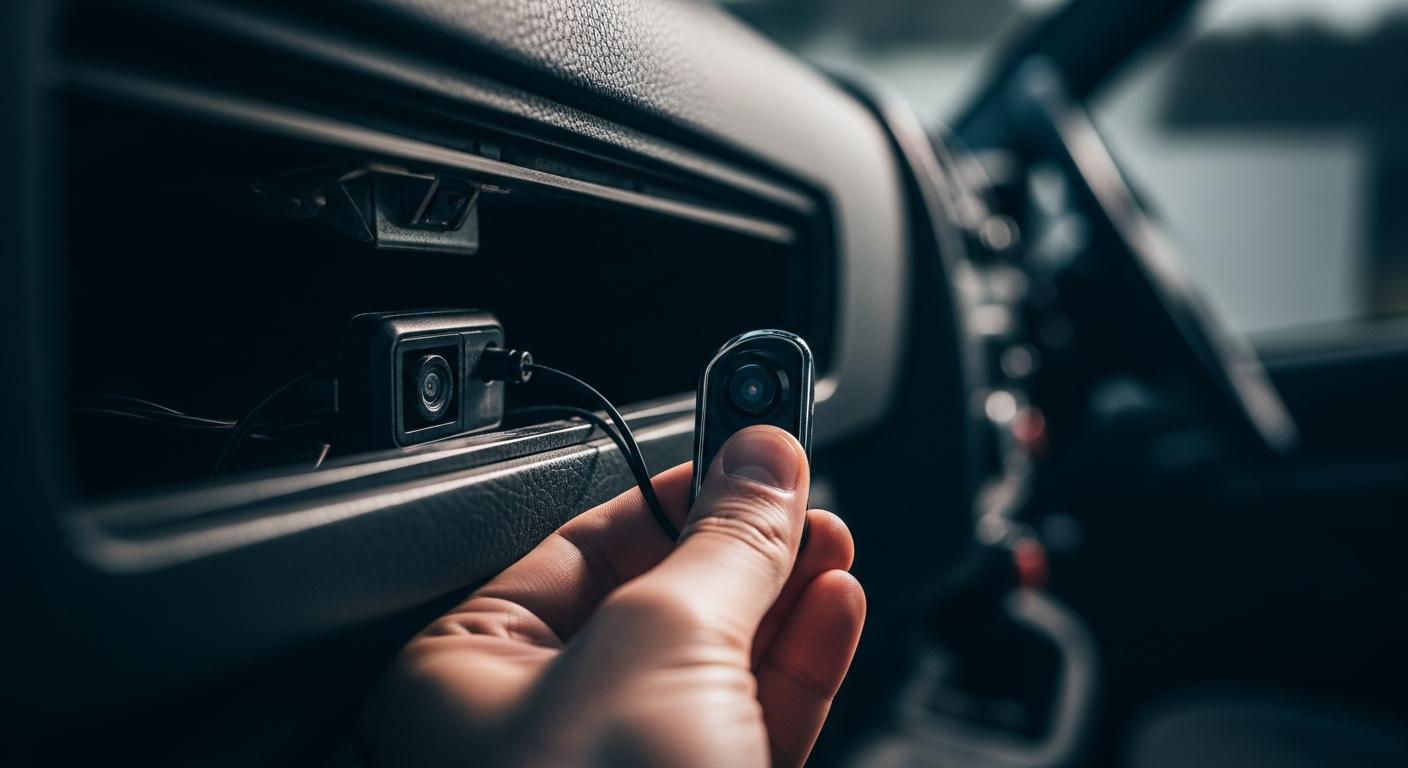
When Jordan Harper bought a used Chevrolet Express van from a private seller, he thought he was getting a great deal. A content creator with a penchant for van life and road trips, Harper was thrilled at the prospect of converting the spacious vehicle into a cozy mobile home. But just days into owning it, he discovered something that would send a chill down his spine—a hidden tracking device neatly wired and tucked away behind the dashboard.
What started as a joyful van conversion project quickly spiraled into a digital-age mystery that left Harper—and his growing base of TikTok followers—with more questions than answers. In a series of now-viral videos, he detailed his step-by-step discovery of the tracker, sparking a wave of online discussions about privacy, vehicle surveillance, and the hidden dangers of buying used vehicles.
This is more than just an unusual consumer story; it’s also a cautionary tale for the millions of people who buy second-hand cars every year. As personal technology becomes more deeply integrated into even the most mundane aspects of life, the line between convenience and vulnerability continues to blur.
Overview of the hidden device discovery case
| Incident | Hidden tracking device found in a used van |
| Owner | Jordan Harper, TikTok content creator |
| Vehicle | Chevrolet Express Van |
| Where | Truck purchased from a private seller in the U.S. |
| Discovery | Tracker was wired behind the dashboard near power sources |
| Public Reaction | Widespread concern about used vehicle surveillance |
How the device was discovered inside the van
Harper’s unraveling of the mystery began with something oddly mundane—an electrical quirk. He noticed that the van’s battery would occasionally drain faster than expected, even when all systems appeared to be off. As someone familiar with car mechanics and electrics, Harper decided to investigate further. Upon removing panels near the dashboard, he found an unfamiliar black box connected to a series of wires leading to the van’s power supply.
“At first, I thought it was an obsolete car alarm system,” Harper explained in one of his TikTok updates. “But when I looked closer, I saw an antenna and a SIM card slot tucked inside. That’s when I knew this wasn’t just any electrical gadget—it was a GPS tracker.”
Why the tracker may have been installed
The most likely explanation, according to automotive experts, is that the GPS tracker was installed by a previous owner—or by a dealership—as a tool either to recover stolen property or monitor fleet use. In some cases, lenders use these devices to track vehicles involved in financing or leases, ensuring that delinquent borrowers can be located.
However, when such a device remains active after the legal ownership changes, it becomes a major ethical and legal gray area. “Once the ownership is transferred, continued monitoring without consent could constitute an invasion of privacy,” says digital security consultant Maria Lopez.
Using a tracker after transferring ownership isn’t just shady—it’s legally questionable. Always disclose such devices to the new owner.
— Maria Lopez, Cybersecurity Consultant
“In many jurisdictions,” she adds, “this could violate privacy laws, especially if the new owner was never informed that such a device existed or remained functional.”
The legal implications of post-sale tracking
Legal experts point out that the installation of surveillance devices in vehicles owned by others without explicit consent might not only be unethical—it could also be illegal. Unlike dashcams or onboard diagnostic systems that serve a clear purpose for the vehicle owner, a GPS tracker installed by a former party can constitute “unauthorized surveillance.”
“There’s a growing gray area when it comes to digital tracking and physical property,” explains Stephen Choi, a professor of Technology Law. “Many laws are still catching up to technology, but this kind of case exposes the urgent need for better transparency in private vehicle sales.”
We’re seeing the convergence of physical ownership and digital surveillance, and it’s creating legal gaps that need urgent resolution.
— Stephen Choi, Professor of Technology Law
Could this be happening more frequently than we think?
Jordan Harper’s case struck a chord with thousands of viewers not just because it was unique—but because it might not be unique at all. In the comments of his TikTok videos, users shared similar stories of finding strange devices wired into their second-hand purchases or experiencing unexplained technical issues linked to power drain or data transmission.
“It’s one thing to worry about malware or cookies tracking you online,” said one commenter, “but realizing your physical movements could also be monitored without consent? That’s next-level disturbing.”
How to check your vehicle for hidden devices
Experts offer a few steps anyone can take to protect their privacy after buying a used car:
- Conduct a thorough visual inspection of the dashboard, glove box, and under seats or carpets.
- Use an RF (radio frequency) detector to scan for unauthorized signal-emitting devices.
- Hire a professional mechanic or technician to do a full electronic audit, especially if you plan on using the vehicle for long travel or business use.
“Modern trackers are small and hard to spot,” notes Angela Reid, an automotive technician. “But they often need power, so watch for unmarked wires or strange connections to fuse boxes.”
If something looks added on or wires go somewhere unexplained, that’s your red flag to dig deeper.
— Angela Reid, Automotive Technician
What to do if you find a GPS tracker in your car
If you do discover a GPS tracker in your purchased vehicle, here is a step-by-step recommendation:
- Do not remove it immediately—take photos and document its location and wiring first.
- Contact local law enforcement to report the discovery, especially if you suspect malicious intent.
- Consult a lawyer regarding any potential legal actions or privacy violations.
- Have a professional remove the device to avoid damaging wiring or onboard computers.
The growing concerns about personal data and ownership
This story is just the latest in a growing body of incidents that highlight the problematic intersection of technology and personal privacy. Whether it’s smart homes, wearable tech, or cars embedded with GPS units, the question of who controls the data—and who has the right to monitor movements—is becoming increasingly urgent.
Harper has since removed the tracker and continued with his van conversion journey, but the experience served as a wake-up call—not just for him, but for tens of thousands of viewers questioning their own assumptions about tech privacy.
Winners and losers in the story
| Winners | Losers |
| Consumers who now feel more empowered to check for hidden devices | Unethical sellers or institutions who install undisclosed trackers |
| Digital privacy advocates highlighting real-world concerns | Trust in peer-to-peer used vehicle sales |
Short FAQs about finding tracking devices in used cars
How common is it to find a GPS tracker in a used vehicle?
While it’s relatively rare, it’s not unheard of. Many trackers are used by lenders or fleet services and sometimes are not removed during resale.
Is it legal to leave a GPS tracker in a sold vehicle?
No, in many areas this could violate privacy laws, especially if the new owner was not informed of the device’s existence.
What signs suggest my car might have a tracker?
Battery draining, unfamiliar wires in the dashboard, or unusual data signals detected by RF scanners are common signs.
Can I remove a discovered tracker on my own?
It’s better to have a professional do it to avoid electrical damage or potential tampering with on-board systems.
Should I report finding a tracker to the police?
Yes, especially if you suspect someone is using it to monitor your movements without consent.
Are there tools to detect hidden GPS trackers?
Yes, RF detectors and professional bug-sweeping gear can help identify signal-emitting devices.
What should I do before buying a used car?
Have a mechanic inspect not just for mechanical issues but also for added electronic devices that might raise privacy concerns.