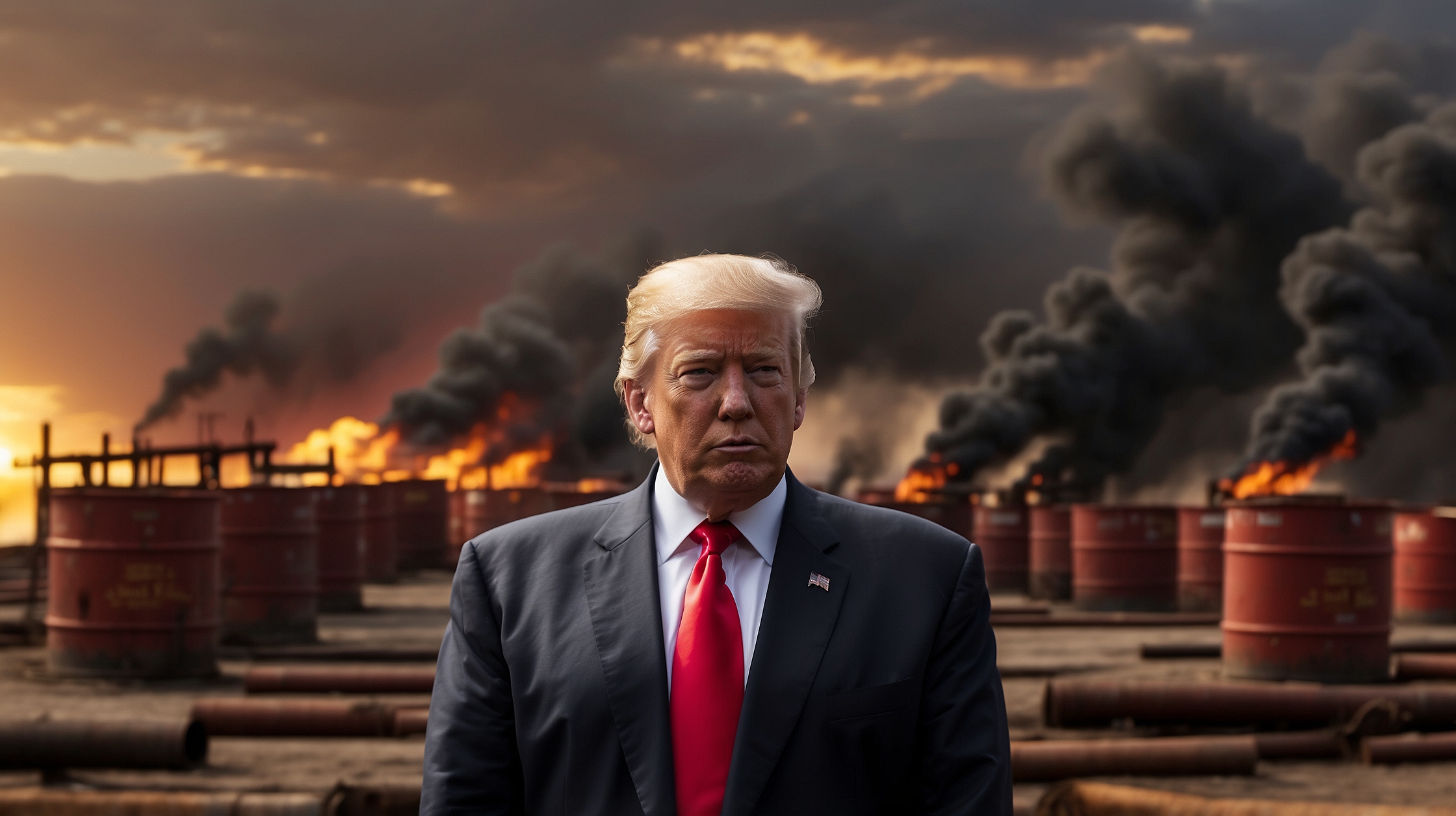
In a surprising turn of events that has reshaped energy discourse across the Americas, former U.S. President Donald Trump stirred controversy and renewed geopolitical debate over Venezuela’s abundant oil reserves. In a bold public statement, Trump claimed that Venezuela, a country long entrenched in economic turmoil and international sanctions, has agreed to “hand over millions of barrels of oil” to the United States. The announcement, which was not immediately confirmed by Venezuelan officials or current U.S. government representatives, has set off a wave of speculation, skepticism, and strategic maneuvering in energy and diplomatic circles.
The claim, couched in a speech that touched on America’s energy independence and criticisms of the current administration’s foreign policy, captured headlines and triggered sharp reactions from analysts and political rivals alike. Trump framed the alleged deal as a “massive energy win” for the U.S., asserting that it reflected his unparalleled ability to negotiate favorable outcomes, even outside of public office. However, the details surrounding how such an arrangement was reached — or if it exists at all — remain murky at best, with many observers urging caution before drawing any definitive conclusions.
To understand the broader implications of Trump’s claim, we must unpack what such an oil handover means in real political terms, how this fits into the larger dynamic of U.S.-Venezuela relations, and what this could signal for global energy markets moving forward. Here is a closer look at the issue from multiple angles, including political context, energy sector impacts, expert insights, and potential ripple effects across economies and alliances.
Key developments at a glance
| Topic | Details |
|---|---|
| Announcement | Trump claims Venezuela will transfer millions of barrels of oil to the U.S. |
| Date of Speech | December 2023 |
| Status of Agreement | Unconfirmed by official government channels |
| Strategic Importance | Potential shift in U.S. energy sourcing strategy |
| Political Context | Occurs in the lead-up to 2024 election campaign |
What changed this year in U.S.-Venezuela relations
For much of the past two decades, U.S.-Venezuela relations have been characterized by deteriorating diplomacy, economic sanctions, and mutual hostility. The U.S. government has imposed repeated rounds of sanctions on Caracas, aimed at regime change by weakening its oil revenues. However, a subtle but significant shift began in late 2022 when global energy prices spiked due to the war in Ukraine and the subsequent curtailment of Russian exports.
This forced the U.S. and other Western economies to cautiously reconsider their relationships with oil-producing rivals. Backdoor meetings, hosted in neutral locations, began to thaw the long-frozen dialogue between American and Venezuelan officials. By mid-2023, reports emerged of partial easing of oil sanctions tied to democratic guarantees in Venezuela. Against this backdrop, Trump’s announcement appears as both unexpected and strategically timed.
Trump’s framing and strategic narrative
In his address, Trump leveraged the announcement to critique the Biden administration’s handling of energy dependency. He suggested that only through “strong leadership and real leverage” can Americans secure stable fuel prices and reclaim energy sovereignty. Claiming personal credit for the alleged oil handover, Trump positioned himself as the only viable steward of America’s infrastructure and geopolitical positioning.
Whether or not Trump was directly engaged in these negotiations remains unproven. Analysts suggest his remarks may be part of a broader election strategy rather than a reflection of an actual deal. Still, the political impact of such a narrative is undeniable. Energy security resonates deeply with voters and often becomes a proxy for economic confidence and national influence.
Economic implications for the oil market
Even the whisper of a new major oil deal between the U.S. and Venezuela can have tangible impacts on international markets. Venezuela holds the world’s largest proven oil reserves, though its output has been hampered by decades of mismanagement and sanctions. If any meaningful volume of Venezuelan crude were legally allowed into U.S. refineries, it could shift import dynamics substantially.
However, logistical and regulatory obstacles abound. Experts note that even if sanctions were lifted overnight, Venezuelan infrastructure would need serious upgrades before it could resume large-scale exports. Moreover, U.S. refiners would need to recalibrate to accommodate Venezuela’s heavy crude, which differs markedly from Middle Eastern or Texan oil grades.
“Even a symbolic agreement could apply pressure on global oil prices by signaling new sourcing flexibility for the U.S.”—Janet Bishop, Global Oil Strategist
Winners and losers in the wake of the announcement
| Winners | Losers |
|---|---|
| Venezuelan government (if deal confirmed) | Competing oil producers (like Saudi Arabia, Nigeria) |
| U.S. refineries needing heavy crude | Political rivals with less aggressive foreign policy platforms |
| Trump’s 2024 campaign narrative | Sanction supporters and human rights critics |
How the international community is responding
Global reaction to Trump’s claim has been muted but wary. European energy watchers have signaled concern that American unilateralism could further complicate multilateral strategy toward Venezuela. Meanwhile, countries like China and Russia — long-time backers of President Nicolás Maduro — are closely observing to see whether institutional American recognition of the regime is quietly materializing.
For Maduro’s government, even a hint that the U.S. may need their oil again presents validation on the world stage. If Trump’s claim finds daylight through formal policy shifts under future leadership, the geopolitical landscape in Latin America could pivot significantly.
“This kind of posturing has immediate diplomatic consequences — allies and adversaries alike recalibrate based on perception of U.S. consistency.”
— Marcos Tillan, Energy Policy Professor
What to watch in the months ahead
The road from claim to crude delivery is long—and paved with legal, political, and technological complexity. Sanctions cannot be reversed overnight, and any deal of this magnitude typically involves months of oversight and interagency discussion. Additionally, current diplomatic ties remain fragile, with Venezuela heading into uncertain electoral territory in 2024.
Observers will keenly follow whether the Biden administration comments on Trump’s statement or moves to formalize any aspect of the supposed oil exchange. A quiet update to the Treasury’s Office of Foreign Assets Control (OFAC) licenses would be the first technical clue that negotiations are advancing behind the scenes.
“That Trump is even talking about Venezuela oil again shows how urgent energy messaging is for the American voter in 2024.”
— Rina Callow, Senior Election Analyst
Frequently asked questions about Trump’s Venezuela oil claim
What exactly did Trump claim about Venezuela’s oil?
Trump claimed that Venezuela had agreed to hand over “millions of barrels of oil” to the United States in what he described as a strategic energy partnership.
Has the U.S. government confirmed this agreement?
No official confirmation has been made by either the U.S. State Department or the Venezuelan government regarding such an oil deal.
Why is Venezuelan oil important to the U.S.?
Venezuela holds the largest proven oil reserves in the world. Its heavy crude suits certain U.S. refineries, particularly along the Gulf Coast, which were historically configured for such imports.
What are the geopolitical risks of engaging with Venezuela?
Engaging with Caracas involves complex political and ethical considerations, including concerns about legitimacy, human rights, and Russian-Chinese involvement.
Could this announcement affect gas prices in the U.S.?
In the short term, not likely. However, increased future supply potential might pressure prices downward, depending on follow-through and infrastructure readiness.
Is this related to Trump’s 2024 election campaign?
Yes, the timing and framing of the announcement suggest it plays into Trump’s broader strategy to position himself as an energy-savvy leader during his presidential run.
Will Venezuela actually deliver oil to the U.S.?
This remains uncertain. No logistical or contractual evidence has been made public to support the claim of an imminent oil delivery.