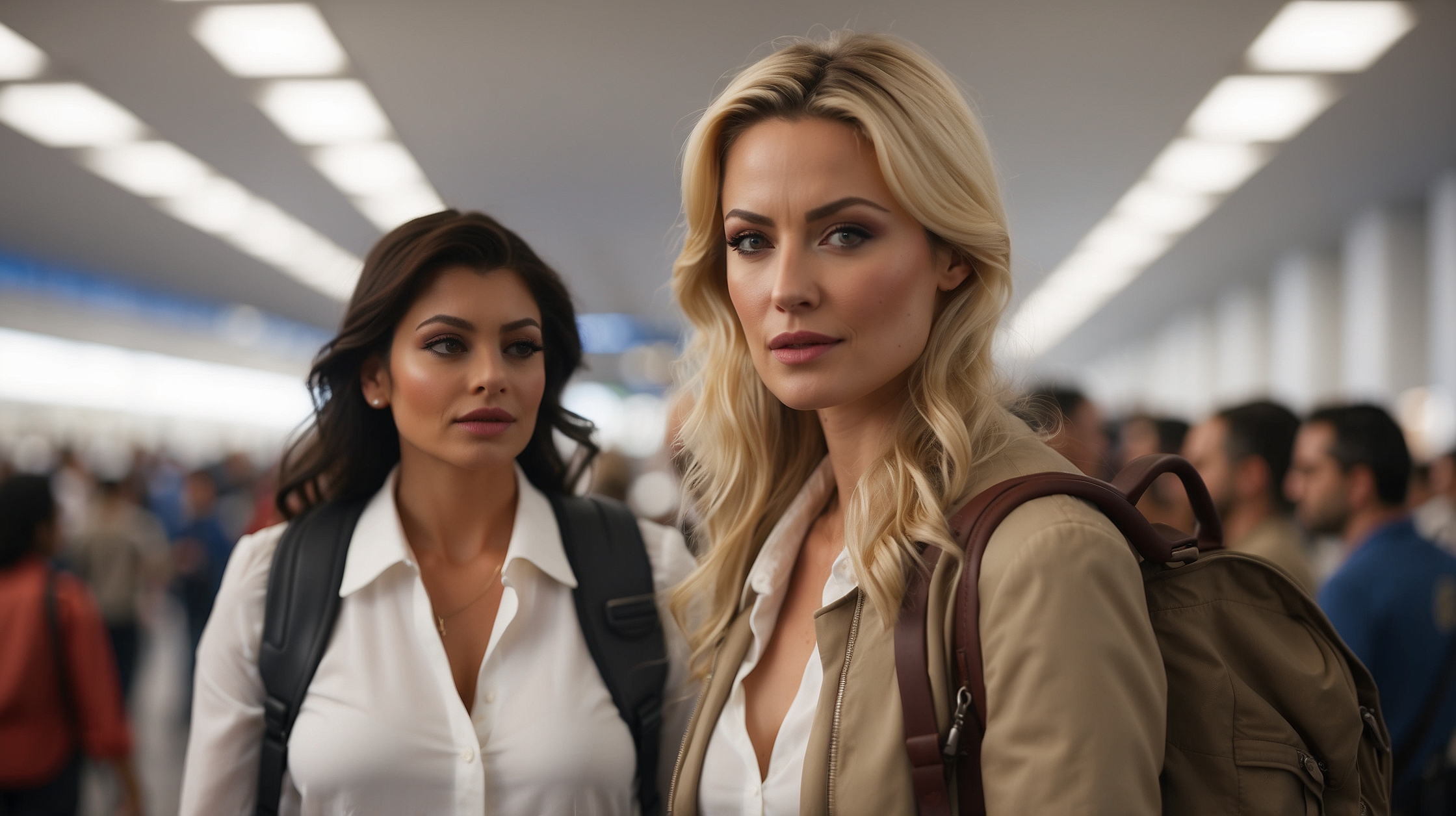
Passengers hustled through the gates of Chicago O’Hare International Airport, many eager to begin their winter travels. But among the excited travelers moving through Terminal 5 in December 2023, two women walked with an unusually quiet demeanor and heavy bags. What followed would result in one of the largest airport drug seizures in the city’s recent memory—unraveling international drug trafficking ties and prompting broader questions about airport security and the growing role of women in complex narcotics networks.
Federal agents at the airport had marked the women’s flight from the Dominican Republic for special screening, and when the two suspects approached customs with matching oversized pink suitcases, Homeland Security officers were ready. What they found inside was stunning—over 22 kilograms of cocaine, with a street value that could climb well into the seven-figure territory. With handcuffs secured and trafficking charges looming, the story gripping the nation unfolded in a terminal where thousands fly under the radar daily.
This bust was not just another entry in Chicago’s long list of drug-related arrests. It served as a stark reminder of how international cartels evolve their tactics, blending in among the very systems created to detect them. It also spotlights the roles women increasingly play—both voluntarily and under coercion—in global trafficking operations.
Key facts about the O’Hare airport cocaine bust
| Incident Date | December 11, 2023 |
| Location | Chicago O’Hare International Airport (Terminal 5) |
| Suspects | Two female passengers from the Dominican Republic |
| Drugs Found | 22 kilograms (approx. 49 pounds) of cocaine |
| Estimated Street Value | Up to $1.2 million |
| Law Enforcement Agencies Involved | Homeland Security Investigations, U.S. Customs and Border Protection |
| Charges | Conspiracy to import a controlled substance, drug trafficking |
How law enforcement intercepted the smugglers
According to authorities, the women arrived on a direct flight from Punta Cana, Dominican Republic. Their flight raised red flags due to prior intelligence surrounding increased trafficking activity along Caribbean routes. Law enforcement officials had been monitoring specific travel patterns, and these passengers matched the profile—young female travelers with little to no luggage beyond large checked bags.
After initial questioning aroused suspicion, agents sent the women’s luggage through a secondary screening process. Using mobile scanning technology, officers noticed unusual density patterns in the suitcases. A physical inspection revealed that each roller bag was lined with vacuum-sealed bricks of white powder. Field tests confirmed it was cocaine.
“The packaging was professional, heat-sealed, and layered in a way designed to avoid x-ray detection. This wasn’t amateur hour. Someone knew exactly what they were doing.”
— Federal Homeland Security Officer
The changing face of drug trafficking demographics
While women have long played peripheral roles in smuggling rings, this case highlights their growing involvement as primary couriers. Analysts believe cartels increasingly recruit or coerce women to transport drugs, betting on societal stereotypes that make them less likely to attract scrutiny.
“We are witnessing a systemic shift. Women, especially from economically vulnerable areas, are being targeted due to their perceived low-risk profile.”
— Dr. Alicia Montoya, Criminology Professor
In some cases, coercion and manipulation play major roles. Traffickers may use financial promises, threats against family, or romantic involvement to lure women into smuggling operations. Whether willingly or reluctant, the consequences remain the same under U.S. federal law: long-term incarceration and loss of immigration privileges.
Why airports remain hotspots in global drug networks
Airports like O’Hare are key entry points for international trafficking because of their high daily passenger volume and the complexity of monitoring diverse flights. Authorities say cartels often use human couriers—or “mules”—to carry drugs in luggage, internal bodily concealment, or even prosthetic devices.
The Dominican Republic has been flagged by several border enforcement agencies as a key transshipment point for South American cocaine. With direct routes into the U.S. and lax port security, it offers a viable launching pad for drug routes targeting stateside markets.
“Every successful smuggling attempt strengthens these cartels. Every failure, like this one, is a win for public safety.”
— Special Agent Michael Reeves, DEA Chicago
Criminal charges and what comes next for the accused
Both women now face serious federal charges including conspiracy to import a controlled substance and possession with intent to distribute. These crimes carry mandatory minimum sentences of 10 years and can escalate to life imprisonment depending on criminal history, cooperation, and further investigation outcomes.
Prosecutors are working to determine if the suspects were acting independently or as part of a larger network. Their arraignment will include examination of their travel histories, financial records, and any links to cartels or trafficking intermediaries. If convicted, deportation proceedings and asset seizures are almost certain.
How authorities are improving airport security
Following the bust, Homeland Security has pledged renewed focus on Caribbean and Latin American travel routes. Enhanced screening measures, behavioral pattern detection training, and AI-powered x-ray systems are among the improvements introduced since the operation.
Chicago O’Hare’s leadership is also working to strengthen cooperation with international airlines and foreign airports to monitor passenger manifests, luggage metrics, and travel behaviors. Over time, the goal is not just to intercept drugs, but to dismantle the network supply chains fueling them.
The broader implications for trafficking trends in 2024
This case is just one in a series of high-profile smuggling attempts intercepted in early 2024, indicating that traffickers continue to adapt quickly and diversify their methods in response to enforcement efforts. Analysts warn that as land border enforcement tightens, more drugs will come through the skies.
It also underscores the importance of border officer training, public intelligence tips, and international intelligence-sharing agreements, which collectively closed the loop on this specific case.
Winners and losers from the major bust
| Winners | Losers |
|---|---|
| Homeland Security & Customs Agents | Drug Trafficking Network |
| Public safety advocates | The two accused individuals |
| Airport security stakeholders | Street supply dealers |
Frequently asked questions about the O’Hare cocaine seizure
How much cocaine was seized at O’Hare Airport?
Over 22 kilograms, or approximately 49 pounds, of cocaine were seized by Homeland Security officials from the luggage of two women arriving from the Dominican Republic.
Where were the suspects traveling from?
The suspects were on a flight from Punta Cana, Dominican Republic, arriving into Terminal 5 at Chicago O’Hare International Airport.
What charges do the accused face?
The women face federal charges including conspiracy to import a controlled substance and possession with intent to distribute, both carrying severe minimum penalties.
How did authorities identify the trafficking attempt?
The flight was flagged through intelligence tracking, and secondary baggage screening revealed inconsistencies. A search then uncovered cocaine packed in vacuum-sealed bricks.
Are women regularly used as drug couriers?
Increasingly, yes. Drug cartels often target women due to stereotypes about lower suspicion, but also use coercion, financial baiting, and manipulation.
What is the approximate street value of the intercepted cocaine?
The haul’s estimated street value exceeds $1.2 million, depending on market variables and purity levels.
What happens to the suspects next?
After arraignment, they will face trial or may be offered a plea deal. Deportation and asset seizure proceedings are likely if convicted.
How is airport security being improved in light of this?
Expectations include better behavioral detection training, more intelligent scanning technologies, and international cooperation between air hubs flagged for smuggling risks.