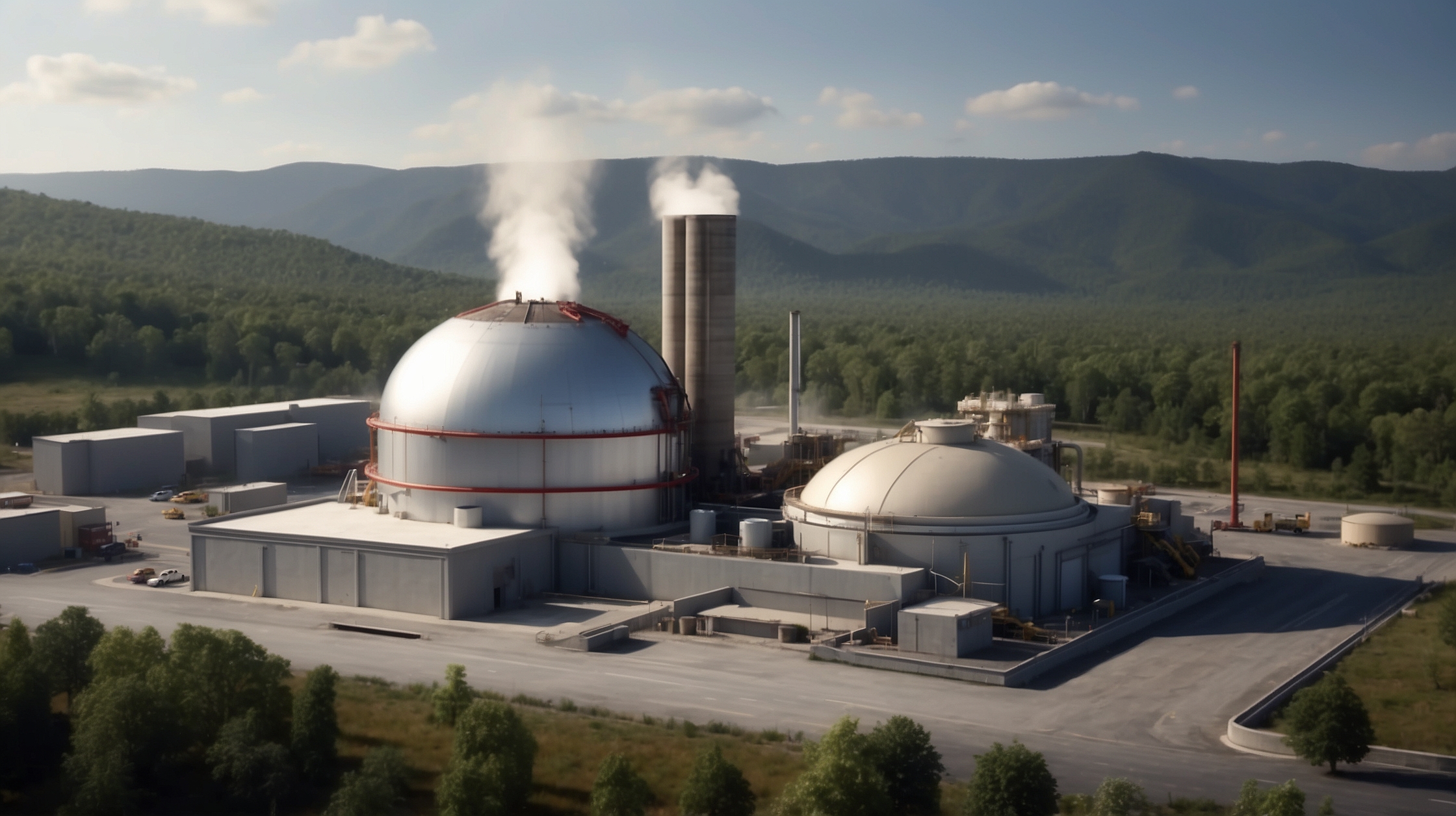
In a world increasingly shaped by the need for climate action and energy security, a new frontier in nuclear energy is emerging from the United States. At the intersection of advanced engineering and thoughtful innovation, a high-tech modular nuclear reactor concept is being unveiled, promising to transform how energy is produced and distributed far into the future.
This breakthrough arrives not in the form of a traditional power plant, but as a versatile, scalable solution designed for the needs of tomorrow. Rather than sprawling megastructures, this new reactor fits the mold of portability and adaptability—ready for deployment to remote areas, manufacturing hubs, or even disaster recovery zones.
Backed by cutting-edge materials science, automated safety protocols, and unprecedented modularity, the new design aims to lower the barriers to safe nuclear deployment while significantly reducing costs and construction delays. It’s not just a technological leap—it’s a shift in nuclear philosophy, with far-reaching implications for nations grappling with decarbonization and energy independence.
Let’s explore what this new nuclear concept is, why it matters, and how it might rewrite the global energy narrative over the coming years.
Overview of the new high-tech modular nuclear reactor
| Feature | Details |
|---|---|
| Reactor Type | Small Modular Reactor (SMR) Concept |
| Design Focus | Extreme modularity, safety automation, portability |
| Capacity | Various sizes; scalable for regional or industrial use |
| Primary Benefits | Faster deployment, lower cost, flexible siting options |
| Key Innovation | High-temperature materials + AI-powered safety systems |
| Countries of Interest | USA, plus potential partners in Europe and Asia |
What changed this year with modular nuclear technology
This year marks a pivotal change in how nuclear technology is designed and envisioned in the United States. Spearheaded by a consortium of American research institutions and private tech firms, the newly unveiled concept reactor pivots away from legacy nuclear infrastructure. Instead, it embraces smaller, more nimble components that can be manufactured offsite, shipped to location, and assembled in weeks rather than years.
The defining aspect of the innovation rests in its extreme modularity. Unlike conventional light-water reactors, these small modular reactor (SMR) systems utilize next-generation designs that include autonomous control systems, high-resilience metallic fuels, and peak thermal management. These modules can function individually or be assembled to support utility-grade infrastructure.
“This is not just a smaller version of older reactors. It’s an entirely new ecosystem for deploying nuclear energy where and when it’s needed most.”
— Dr. Alan Greene, Energy Systems Engineer
Why modularity is reshaping nuclear energy development
Traditional nuclear power facilities are plagued by sky-high upfront costs, regulatory hurdles, and intense public skepticism. Their construction can span up to a decade and frequently involves cost overruns stretching into the billions. Modularity offers a solution to nearly all these problems.
The new American concept enables a plug-and-play approach to reactor deployment. Not only does this reduce installation times dramatically, but it also opens up nuclear access to regions too remote or underdeveloped for standard installations.
Moreover, dramatic safety improvements stand at the core of these modular systems. The integration of AI-enhanced diagnostics and self-healing safety mechanisms ensures that human error or external conditions are far less likely to trigger crisis scenarios.
“By using prefabricated units and real-time safety data, these reactors offer unparalleled reliability and faster licensing opportunities.”
— Rachel Chun, Nuclear Safety Analyst
Advanced materials and AI-driven safety protocols
At the heart of the new design is a powerful set of technological foundations. From materials that withstand extreme temperatures without degradation, to autonomously monitored control systems that can override faulty inputs and isolate risk before it’s realized—this is nuclear engineering built for the 21st century.
One of the standout aspects is the incorporation of heat-resistant superalloys and next-gen moderators that allow for longer operational uptime and lower maintenance. Coupled with AI systems that “learn” from operational data, the reactor becomes smarter with every cycle—predicting component fatigue, adjusting flow rates, and issuing real-time alerts to prevent anomalies long before safety is compromised.
This digitally integrated core aligns with broader smart-grid ambitions, offering a seamless bridge between clean generation and AI-powered energy management systems already being pioneered globally.
Who benefits most from the new modular reactor concept
| Winners | Losers |
|---|---|
| Remote communities and island nations | Traditional fossil fuel plants |
| Low-carbon industrial corridors | Large-scale legacy nuclear projects |
| Developing countries seeking quick, reliable energy | Inefficient, aging power infrastructures |
Communities with unreliable access to the national grid—particularly in rural America, remote islands, and developing economies—stand to benefit immensely. These reactors can be assembled close to population centers or industrial zones requiring 24/7 stable energy.
Conversely, large-scale fossil fuel plants and aging nuclear facilities may find themselves outpaced by the nimbleness and efficiency of modular innovation. Retrofitting legacy infrastructures might become economically unjustifiable when modular systems can do more with less.
Potential global influence and policy momentum
The unveiling of this concept has initiated interest from not only domestic agencies but also international players interested in cooperation and technology sharing. As a leading innovator in nuclear safety, the United States is primed to set international standards in the small reactor market—especially with geopolitics and energy security now tied tightly together.
Moreover, the policy environment is warming up. With growing bipartisan consensus around the idea that advanced nuclear is critical to achieving climate goals, legislation supportive of modular reactor investment is already in motion. Fast-tracking regulatory frameworks tailored to modular designs is expected to be a key policy theme over the coming year.
Challenges still facing modular reactor deployment
Despite the promise, challenges remain. Obtaining regulatory approval for these advanced designs remains complex, as existing nuclear standards were built for large, centralized projects. Creating a streamlined licensing pathway will be critical.
Also, public trust in nuclear energy remains mixed. Although the technology has come a long way in terms of safety, community acceptance and education will be essential. Transparency in operations, strong oversight, and public-private cooperation are steps needed to win trust.
Lastly, ensuring the preparedness of supply chains and skilled labor to support mass production of these modular units is another priority on the horizon.
What’s next in the evolution of advanced nuclear energy
The next phase is likely to involve prototype pilots and limited-run commercial demonstrations. Locations with military bases, research campuses, or isolated demand hubs are expected to be among the first deployment zones by 2025–2027. The first full-scale commercial applications may follow soon after if early indicators are favorable.
Meanwhile, new startup ecosystems focused on nuclear digitization, AI-powered oversight, and next-gen fuel cycles are aligning their roadmaps around this modular paradigm—bringing with them a wave of investment and innovation akin to the early days of the space race or internet boom.
As the world hunts for viable paths toward decarbonization without economic regression, modular nuclear just might be the bold tool the energy transition has waited for.
Frequently asked questions about the new modular nuclear reactor concept
What is a modular nuclear reactor?
A modular nuclear reactor is a type of nuclear facility designed in smaller, scalable units that can be quickly constructed, transported, and safely operated in a variety of locations.
How is it different from traditional nuclear reactors?
Unlike traditional reactors, modular versions are built using prefabricated units, often offer passive or automated safety systems, and can be scaled up or down depending on energy needs.
Are these reactors safer than older designs?
Yes. The new models include built-in safety automation, real-time diagnostic systems, and materials that endure extreme conditions better than older reactor components.
When will these new reactors be available?
Prototypes are expected by 2025–2026, with commercial-scale units potentially rolling out later in the decade depending on regulatory approvals and public acceptance.
Can they be deployed in developing countries?
Absolutely. Their small size, portability, and reduced construction timelines make them ideal for parts of the world with less infrastructure but growing energy needs.
Will these reactors help combat climate change?
Yes. As a zero-emission energy source, small modular reactors could provide the stable, clean energy backbone needed to support renewables and reduce carbon emissions globally.
What role does AI play in these systems?
AI is integrated into monitoring systems to predict component fatigue, adjust operations, detect anomalies, and even automate mitigation steps—making operations significantly safer and more efficient.
Is the U.S. leading in this technology?
Yes. U.S. innovation is currently at the forefront of modular reactor development, with strong public and private sector investment already in play.