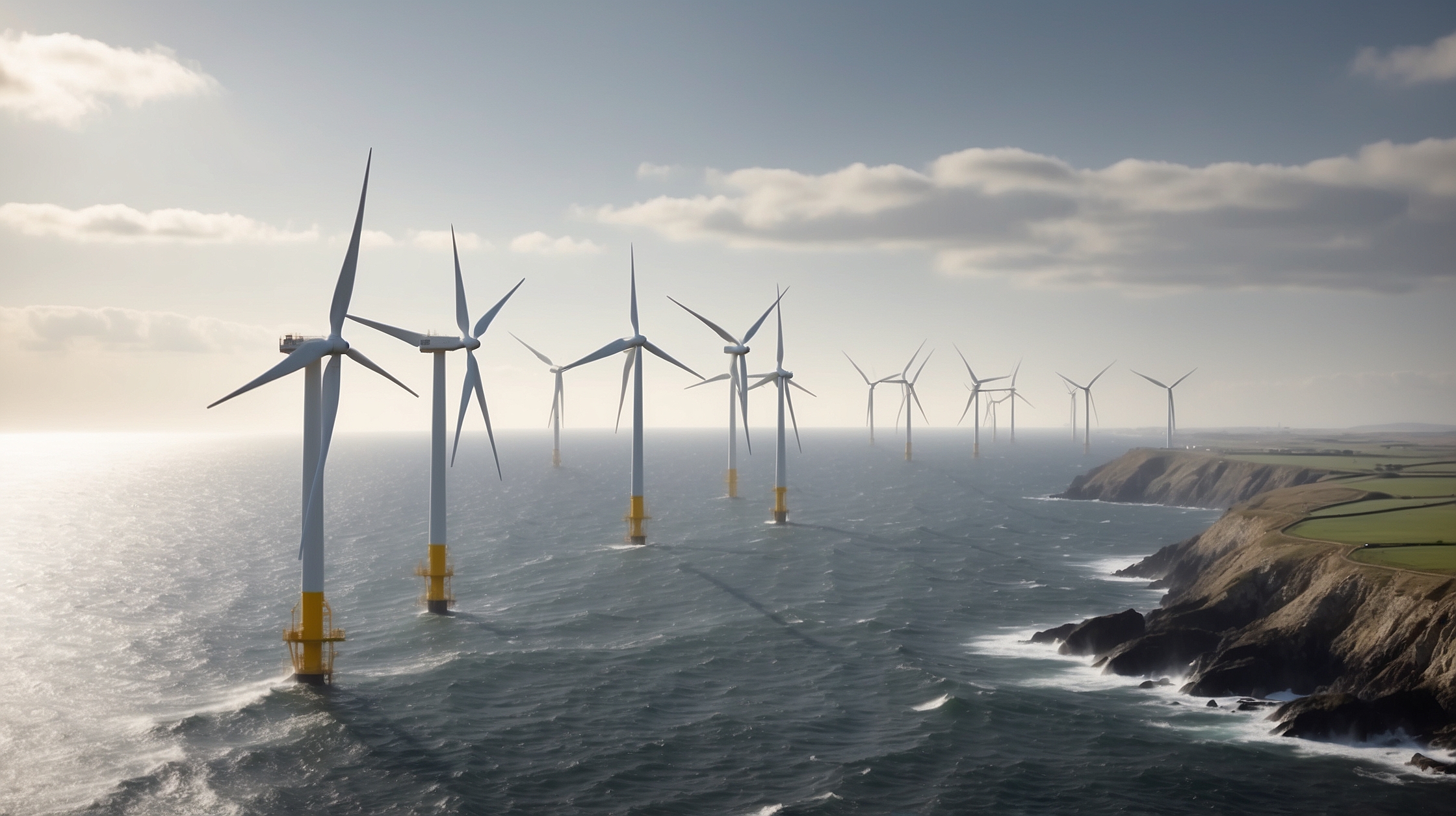
Off the windswept coastlines of the United Kingdom, a silent revolution is taking place—quiet perhaps in sound, but thunderous in impact. In a groundbreaking moment for renewable energy, the UK has set a new record in clean energy generation, highlighting just how dramatically its energy landscape is shifting. On an unassuming Sunday in January 2024, over **22.7 gigawatts (GW)** of electricity were generated from wind turbines alone. But what truly sets this milestone apart is that **57.6% of the country’s total electricity demand** that day came from **offshore wind**, surpassing all previous records and sending a clear signal that the future of energy is already here.
This new record reflects more than a fleeting moment of success; it symbolizes years of investment, innovation, and policy focus paying off. The UK, once heavily dependent on coal and natural gas, has become a global leader in wind energy infrastructure, especially offshore installations. The massive surge in clean energy production didn’t just happen due to favorable weather—it was a result of strategic foresight and relentless engineering advancements. Now, questions are being asked globally: if the UK can harness this much power from the wind, why can’t others?
Behind this triumph lies a complex interplay of political will, financial commitment, and technological progress. From towering turbines spinning above the North Sea to cutting-edge energy storage solutions and smart grid integration, everything had to synchronize flawlessly to break such a record. The implications are huge—not only for climate goals, but also for energy independence and economic opportunity. As debates continue to swirl around fossil fuels, nuclear energy, and climate change, this milestone may be remembered as a pivotal moment when offshore wind became not just viable but vital.
UK offshore wind power record: What you need to know
| Record Date | Sunday, January 14, 2024 |
| Total Wind Generation | 22.7 GW |
| Offshore Wind Share of Total Electricity | 57.6% |
| Total UK Power Demand | Just under 40 GW |
| Main Contributors | Dogger Bank, Hornsea, and other North Sea projects |
| National Grid Role | Real-time balancing and feed-in coordination |
What changed this year to make it possible
While wind has long been a part of the UK’s energy mix, 2024 marks a turning point. The installation of expansive new offshore wind farms like **Dogger Bank A** and **Hornsea 3** added several gigawatts of capacity—enough to power millions of homes. Further, improvements in turbine design, including higher towers and longer blades, allow for more wind capture and energy conversion.
At the same time, **grid infrastructure** enhancements enabled better absorption of intermittent wind power without causing instability. Thanks to digital grid modeling and energy storage deployment, excess generation was either stored or redirected with unprecedented efficiency. Notably, **National Grid ESO** has rolled out smarter balancing methods that integrate enormous wind output into the grid seamlessly.
Favorable weather was also a key player. A powerful Atlantic low-pressure system delivered sustained high wind speeds to the North Sea region, resulting in consistently strong turbine output. However, experts caution that it’s the **combination of technology and natural advantage**, not just the weather, that allowed the UK to smash previous records.
Who benefits and why it matters
The success has ripple effects across sectors. For ordinary consumers, more wind generation means **potentially lower energy prices**, especially during high-output periods. Against the backdrop of a cost-of-living crisis, cheap and abundant clean energy offers much-needed relief. Businesses benefit too—particularly industries that are conscious about lowering their carbon footprint or rely on large, stable energy inputs.
From an environmental perspective, this breakthrough is a critical boost for the UK’s climate ambitions. Surpassing the 50% offshore wind contribution target ahead of schedule could bring the UK closer to its legally binding goal of **net-zero emissions by 2050**. Each gigawatt of renewable energy safeguards against millions of tons of carbon dioxide emissions annually.
Moreover, the booming offshore industry has created **tens of thousands of jobs**, especially in coastal regions. Engineers, shipbuilders, electricians, and port workers are all part of a value chain that now underpins a vital pillar of the UK economy. For the government, it’s a validation of long-term investments and incentives aimed at transforming the energy landscape.
How the energy industry is adapting
With wind’s share of national energy use climbing, traditional energy players are adjusting their strategies. Many oil and gas giants have either pivoted towards offshore wind or partnered with renewable-centric startups. For example, former oil rig infrastructure and ports are being repurposed to support offshore turbine construction and maintenance.
National Grid is redesigning its **control centers and demand forecast systems** to accommodate the flexibility needed for greater wind integration. Storage technologies, especially **battery farms and hydrogen electrolysis**, are seeing accelerated deployment to manage supply peaks and troughs. Flexibility markets, where grid operators financially reward customers for adjusting their consumption patterns, are gaining relevance too.
Policy momentum and international implications
Politically, this success backs up a series of ambitious climate policies initiated over the last decade. Incentives like the **Contracts for Difference (CfD)** scheme, which guarantees fixed prices for renewable energy, have made large-scale offshore projects financially viable. In turn, this has unlocked private-sector confidence and competition that pushes technological boundaries further every year.
The UK’s triumph is also drawing international attention. Countries with similar climates and coastlines—like Denmark, Japan, and parts of the U.S.—are observing and learning. It’s no surprise that offshore wind is now central to energy diplomacy and green investment discussions worldwide. If replicated globally, the UK’s model could become a blueprint for sustainable energy systems elsewhere.
“This new record is not just about megawatts and numbers. It showcases what’s possible when we align policy, technology, and market incentives toward a common objective.”
— Dr. Leena Morant, Renewable Energy Policy Analyst
The road ahead: Challenges and opportunities
As promising as the numbers are, experts warn that challenges remain. Grid reliability, storage capacity, and the environmental impact of offshore expansion must all be carefully managed. Additionally, international supply chain issues and rising costs of materials pose real threats to rapid deployment timelines.
Still, the opportunities outweigh the hurdles. Continued investment in **artificial intelligence-driven grid management**, **floating wind farms** for deeper waters, and **sustainable end-of-life solutions** for turbine blades could solidify wind’s dominance. Educational institutions and vocational centers are also ramping up programs to **train the next wave** of renewable energy professionals.
“We’ve crossed an inflection point. Offshore wind has transformed from an idealistic ambition into a hard reality reshaping our grid and economy.”
— Karen Bellamy, Head of Infrastructure, Marine Energy Council
Short FAQs about the UK offshore wind record
What was the new wind power record set by the UK?
The UK generated over 22.7 GW of electricity from wind, with offshore sources contributing more than 57% of total energy demand on January 14, 2024.
What made this record possible?
A combination of new wind farms, better turbine tech, improved grid systems, and favorable wind conditions enabled the record-breaking output.
How does this benefit the average consumer?
Higher wind power generation may lead to more stable or reduced electricity bills and enhances energy security amid geopolitical uncertainties.
Is this a one-time achievement or a long-term trend?
Experts believe it’s a milestone marking the beginning of a longer trend as the UK continues expanding offshore wind capacity.
What are the environmental implications?
Replacing fossil fuels with wind energy drastically cuts greenhouse gas emissions and helps reach climate goals faster.
What happens during low-wind periods?
In those times, energy storage, solar, nuclear, and fossil backup systems balance demand and supply.
Are other countries close to reaching similar levels?
While a few nations are making progress, the UK remains a global leader in offshore wind deployment as of now.
What future innovations are expected?
Floating wind turbines, advanced energy storage, and AI-based grid systems are on the horizon for even more efficient clean energy use.