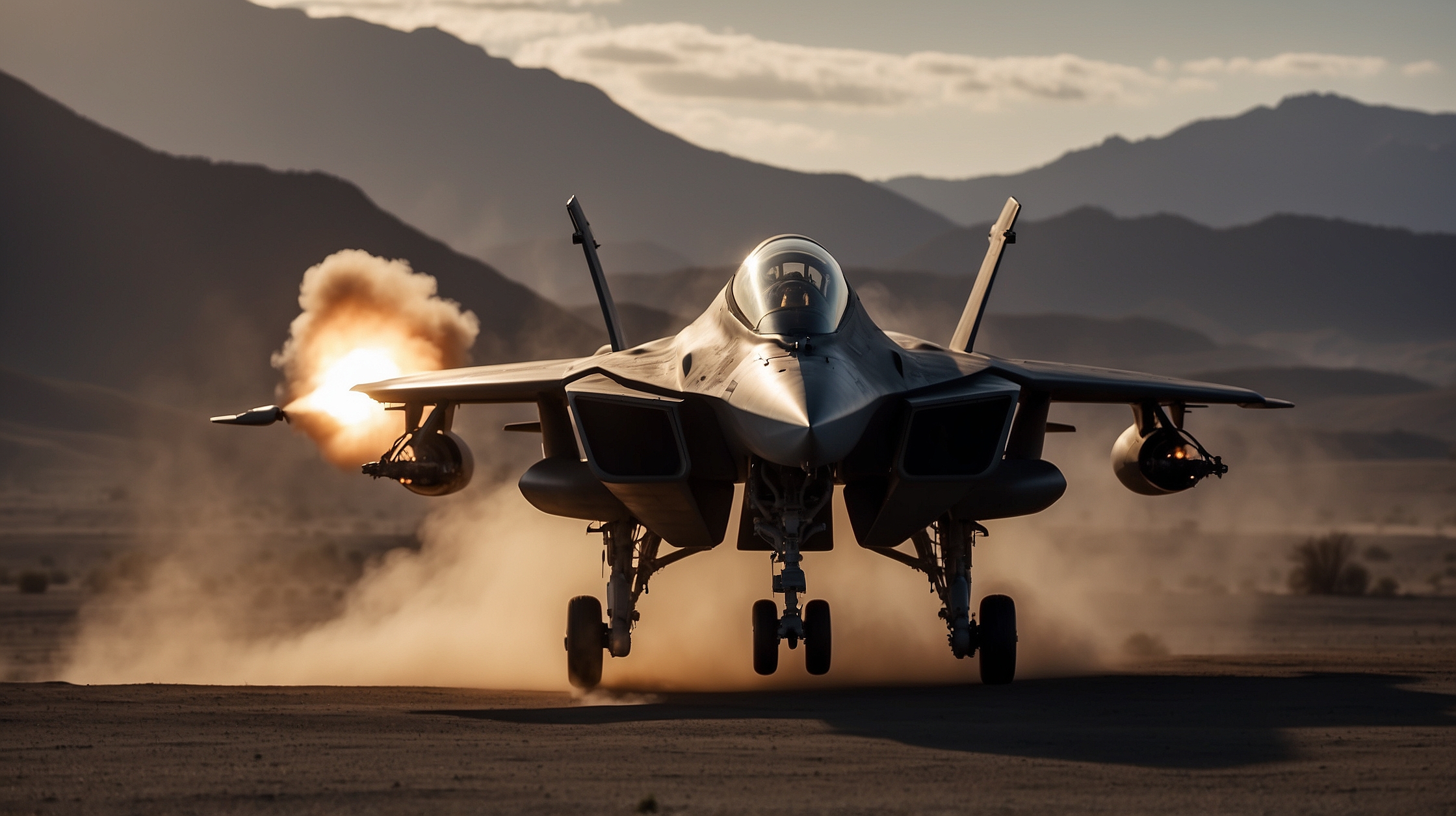
As dawn broke over Joint Base Lewis-McChord in Washington state, a hushed tension swept across the gathering of military officials and defense contractors. Months of silence, hushed operations, and cryptic discussions had preceded this moment. Onlookers watched as the U.S. Army officially unveiled its latest leap in defense technology: a fully operational Long-Range Hypersonic Weapon (LRHW) battery, anchored by the formidable **Dark Eagle** missile system.
This isn’t just another upgrade in America’s vast military arsenal—it marks the first time a hypersonic weapon system has reached full operational capability within the U.S. Army. As geopolitical tensions reverberate globally, this technological pivot exemplifies a definitive shift in the Department of Defense’s strategy toward faster, more agile warfare systems. The deployment of Dark Eagle may change the game—not just for America, but for every nation watching closely.
The ripple effect of hypersonic deployment is profound: it transforms the balance of power, heightens arms races, and establishes new rules for deterrence. This development also underscores Washington’s push to counter adversaries, like Russia and China, in a rapidly intensifying military-technology theater. So, what exactly is Dark Eagle, and why is it prompting such a dramatic turn in the Pentagon’s playbook?
Quick overview: The Dark Eagle hypersonic missile system
| System Name | Long-Range Hypersonic Weapon (LRHW) – “Dark Eagle” |
| Operator | U.S. Army, 5th Battalion, 3rd Field Artillery Regiment |
| Location | Joint Base Lewis-McChord, Washington |
| Operational Since | 2024 |
| Range | Over 1,700 miles (~2,735 km) |
| Speed | Mach 5+ (approx. 3,800 mph or faster) |
| Delivery Vehicle | Ground-based transporter launcher |
What changed this year
The military landscape drastically altered in 2024 with the official activation of the Army’s first operational hypersonic weapons unit. Unlike traditional ballistic systems, the *Dark Eagle* harnesses the power of hypersonic glide technology, bridging the capability gap between long-range missiles and extremely fast, maneuverable warheads.
Hypersonic weapons have long been a priority for Pentagon planners. However, progress was often marred by technological complexity and testing delays. In late 2023 and early 2024, testing resumed at an accelerated pace. With the successful assembly of all supporting components—including ground systems, missile stackers, and fire control centres—the U.S. Army declared its first LRHW battery combat-ready.
“This achievement marks a historic milestone for our force readiness. We are now equipped to counter threats at unprecedented speeds and distances.”
— General Michael Kurilla, Commander, U.S. Central Command
How hypersonic missiles differ from traditional warfare systems
Unlike intercontinental ballistic missiles (ICBMs), which follow a predictable arc, hypersonic glide vehicles (HGVs) are designed to maneuver unpredictably while traveling at speeds greater than Mach 5. This agility makes them incredibly difficult to detect and intercept using traditional missile defense systems.
The **Dark Eagle**’s integrated system consists of multiple units: mobile launcher trucks, command-and-control centers, and missile transportation vehicles. Once fired, the missile launches a glide vehicle to the edge of space before descending and navigating toward its target with adapted trajectory and minimal warning.
“Hypersonic systems like Dark Eagle are not just weapons—they are strategic deterrents that redefine what is possible on the modern battlefield.”
— Dr. Samantha Li, Defense Technology Expert (placeholder)
Strategic motivations behind the U.S. investment
The timing of the Dark Eagle rollout is no coincidence. In recent years, global competitors like China and Russia have aggressively developed and tested hypersonic systems of their own. Russia was first to operationalize such a missile—the Avangard—while China’s DF-ZF has been tracked in recent maneuvers over the Indo-Pacific.
America’s renewed focus on hypersonics is designed to **restore deterrence credibility**—a policy linchpin during Cold War years. By fielding operational units across the Army, Navy, and Air Force in the coming years, U.S. defense officials hope to position the U.S. military ahead in what many are calling the “hypersonic era.”
Technical and operational challenges overcome
Developing a capability as intricate as the LRHW comes with a host of hurdles—from thermal protection for glide vehicles to software integration within command architectures. The U.S. Army worked hand-in-hand with military-industrial partners to resolve long-standing issues in targeting, coordination, and real-time maneuverability.
After initial component deliveries in 2021 and subsequent testing stages in 2022–2023, operational integration proved successful only after exhaustive simulations and on-base rehearsals. The 5th Battalion, 3rd Field Artillery regiment is now trained to deploy these systems under real-world conditions.
“We’re confident in the system’s maturity and its role in complementing our broader national defense architecture.”
— Lt. Col. Jason Tubbs, U.S. Army Fires Branch (placeholder)
Winners and losers in the race for speed
| Winners | Losers |
|---|---|
| U.S. Army’s Strategic Fire Capability | Conventional missile defense systems |
| Defense contractors aligned with hypersonic tech | Adversaries lacking counter-hypersonic measures |
| Geopolitical partners under U.S. defense umbrella | Slower procurement nations |
What’s coming next for Dark Eagle and beyond
The Dark Eagle represents just the first wave of hypersonic deployment. The Navy’s version, the **Conventional Prompt Strike (CPS)** system, shares many technical roots with the Army’s LRHW and is poised to go to sea within the next two years. The Air Force is also pursuing its own air-launched hypersonic platforms.
Furthermore, the Department of Defense is investing heavily in counter-hypersonic technologies—aimed at intercepting rivals’ advanced weapons before they reach U.S. or allied soil. A new era of missile defense and rapid-response capabilities is being ushered in, prioritizing innovation, readiness, and global power projection.
What this means for the future of global conflict
With hypersonic weapons systems now unveiled and field-ready, the nature of conflict could change dramatically. Strategic options that were once theoretical—involving rapid first-strike, time-sensitive target engagement, and even missile system “stand-offs”—are now plausible within minutes of activation.
Allies of the U.S. see the deployment as a strong reassurance tactic, affirming military commitment and technological superiority. Conversely, adversaries will likely accelerate their programs in an attempt to counter or match this capability. The introduction of Dark Eagle, therefore, is both a shield and a shot across the bow.
Frequently asked questions
What makes hypersonic weapons faster than traditional missiles?
Hypersonic weapons travel at speeds over Mach 5 and feature advanced glide vehicles that can maneuver unpredictably mid-flight, reducing response time and increasing strike precision.
How long can it take for a Dark Eagle missile to reach its target?
Given its hypersonic speed and 1,700+ mile range, the Dark Eagle can reach its target in minutes—far faster than traditional cruise or ballistic missiles.
Is this the first hypersonic system deployed by the U.S. military?
Yes, the Army’s Dark Eagle is the first fully operational hypersonic weapons system within the U.S. defense inventory.
Where is the Dark Eagle currently deployed?
The fully operational unit is stationed at Joint Base Lewis-McChord in Washington state, operated by the 5th Battalion, 3rd Field Artillery Regiment.
Can the Dark Eagle carry nuclear warheads?
No, the LRHW is designed for conventional payloads only, aligning with U.S. military and treaty obligations to avoid nuclear escalation.
Who are the main defense contractors involved in the Dark Eagle project?
Companies like Lockheed Martin and Dynetics played significant roles in the missile’s development and system integration.
Will more Dark Eagle units be deployed across the U.S. and globally?
Yes, the current deployment is considered the first of potentially several strategic placements in and around key global regions.
What countermeasures are being developed against hypersonic threats?
The Pentagon is investing in sensors, layered defenses, and interceptors specifically designed to neutralize adversary hypersonic vehicles in future conflicts.