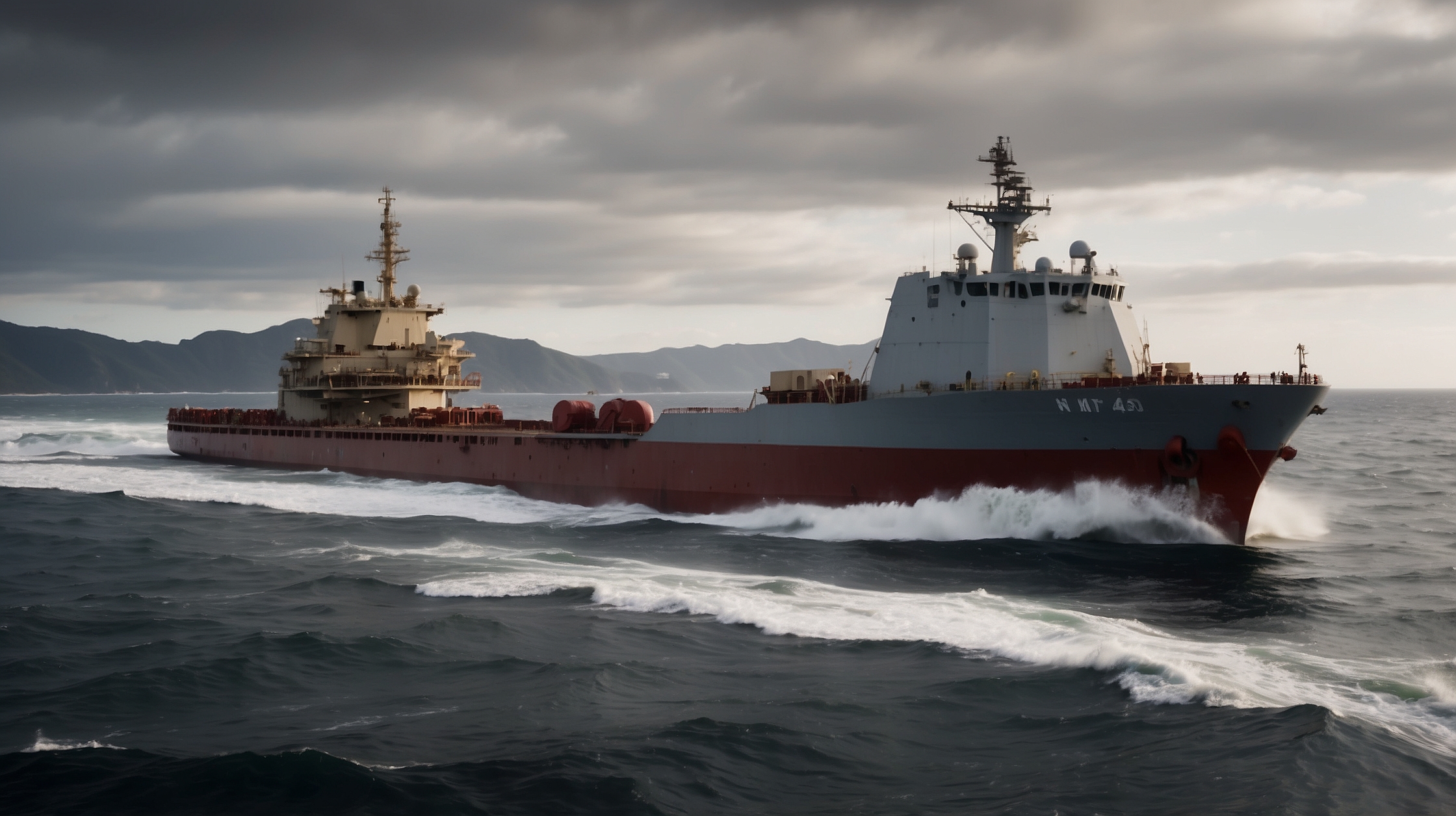
In the shifting sands of global geopolitics, few developments have sent as many ripples through diplomatic and economic circles as a recent action by the United States military. On what seemed like a routine day patrolling global maritime routes, U.S. forces took decisive action that has now drawn international attention: the seizure of a Russian-flagged oil tanker allegedly involved in sanctions-busting activities tied to Venezuela. The operation, while executed without military conflict, signals a significant escalation in enforcement of sanctions and maritime security.
Behind the seizure lies a tangled web of international sanctions, energy politics, and shadowy shipping activities. The vessel, reportedly owned and operated by Russian interests, is believed to have been transporting crude oil in violation of longstanding U.S. sanctions against Venezuela. It’s a story of high stakes on the high seas, involving billions of dollars in natural resources, diplomatic brinkmanship, and power plays that extend from Washington to Moscow to Caracas. As details emerge, the geopolitical chessboard continues to evolve in unpredictable ways.
Key facts about the tanker seizure
| Element | Details |
|---|---|
| Date of Seizure | Recent but exact date unconfirmed |
| Location | International waters off the coast of West Africa |
| Vessel Involved | Russian-flagged tanker allegedly tied to Venezuelan oil shipments |
| Enforcing Authority | United States military and allied enforcement agencies |
| Legal Basis | Violation of U.S. sanctions on Venezuela |
| Cargo on Board | Suspected Venezuelan crude oil |
Why the U.S. targeted this tanker
At the heart of this seizure is a set of sanctions imposed by the U.S. government in response to the political and economic crisis in Venezuela. In 2019, the Trump administration enacted broad measures to disrupt the flow of oil revenues to the government of Nicolás Maduro, whom it accuses of massive corruption and human rights abuses. These sanctions prohibit most oil-related transactions involving Venezuela and are enforced with significant resources from the U.S. Treasury and Department of Defense.
The Russian-flagged vessel reportedly defied these restrictions by participating in a covert trading arrangement intended to launder Venezuelan oil into international markets. Using tactics like ship-to-ship transfers, false flagging, and deceptive documentation, the tanker’s handlers attempted to obfuscate the true origin of the oil. This brazen skirting of sanctions drew intense scrutiny from U.S. authorities, who had been monitoring its activity for weeks.
The implications for U.S.-Russia relations
This latest development adds further strain to an already fraught relationship between the United States and Russia. The seizure of a Russian-flagged vessel—regardless of its cargo—carries significant diplomatic weight. Russia has long criticized U.S. sanctions on Venezuela and has been one of Maduro’s staunchest international supporters, providing financial, military, and technological assistance.
U.S. officials have justified their actions by pointing out that national security and international norms are at stake. However, Russia is likely to see this as a provocation and a violation of maritime sovereignty. The incident could lead to retaliatory measures, increased military posturing, or further economic counter-sanctions. It’s a move that may embolden Washington, but also risks confronting Russia in yet another theater of international competition.
How the seizure fits into global oil markets
The oil market is no stranger to volatility, and enforcement actions like these serve as reminders of just how interconnected politics and energy truly are. Venezuela, once among the world’s top oil producers, has seen output plummet due to decades of mismanagement, conflict, and sanctions. However, its vast reserves remain a valuable chip in global energy negotiations.
The U.S. crackdown on Venezuelan oil exports narrows the flow of crude supply, particularly in certain markets in Asia and Africa where sanctioned oil often reappears under false pretenses. Experts suggest that targeting illegal shipments helps stabilize pricing and ensures fair competition among oil-exporting nations that abide by international rules.
“This seizure sends a resounding signal that Washington is watching—and that sanctions aren’t just rhetorical tools but enforceable laws.”
— Dr. Maria Feldstein, Global Energy Markets Analyst
What changed this year in enforcement strategy
The Biden administration has taken a more nuanced approach toward sanctions enforcement, balancing diplomacy with a hardline stance on compliance. There has been a notable uptick in cooperation between U.S. and European enforcement agencies, as well as more advanced surveillance technologies deployed to track suspicious maritime behavior.
Furthermore, certain intelligence-sharing protocols have been enhanced to identify “dark fleet” ships—vessels that operate without AIS (Automatic Identification Systems) or employ complicated trade routes to avoid detection. It is believed that this particular Russian-flagged tanker was being monitored for several weeks before the operation was green-lighted by senior officials in Washington.
The geopolitical players involved
Several actors stand at the heart of this situation. The United States leads the charge from a policy and enforcement standpoint. Russia, whose flag flew upon the seized vessel and whose companies often act as intermediaries for sanctioned oil, stands accused of directly undermining U.S. law. Venezuela remains the origin point of the crude, with the Maduro government desperately seeking buyers for its sanctioned oil exports.
Additionally, third-party nations and operators—often in Asia and the Middle East—may have indirect involvement, desiring discounted oil while avoiding risk. Maritime insurers, port authorities, and commodity traders will now be under increased pressure to ensure every action complies with international laws. This crackdown could serve as a warning to other players considering backdoor deals in sanctioned commodities.
Winners and losers from the tanker seizure
| Winners | Losers |
|---|---|
| U.S. sanctions enforcement agencies | Venezuelan oil exporters |
| Legitimate oil trading firms | Russian-affiliated tanker operators |
| Global rule of law advocates | Black-market petroleum networks |
| Allied nations seeking energy transparency | Illegal shipping operations |
Reactions from the international community
Though formal responses from Russia and Venezuela are pending, early indicators suggest both nations may file strong diplomatic protests. Russian spokespeople have previously described similar U.S. actions as “economic warfare,” and Venezuela often portrays such sanctions enforcement measures as neocolonial aggression.
Meanwhile, several NATO allies and partners have voiced support for firm regulatory enforcement, citing the importance of energy security and rule of law in international waters. Some international observers have called for more transparency and multilateral coordination in dealing with sanctions violations, to prevent actors from exploiting jurisdictional grey zones.
What this means for future maritime operations
This incident may redefine how maritime operations are conducted, especially for shipping companies involved in high-risk routes or cargoes. More robust vetting of documentation, fuel origin, and port-of-call histories is likely to become the standard. Insurers may also start charging higher premiums for vaguely-flagged or poorly documented shipping assets.
Governments, too, may lean more heavily on advanced technologies—such as satellite surveillance and AI prediction systems—to enhance monitoring of maritime commerce. Increased international collaboration could result in shared blacklists and unified inspection protocols to ensure sanctions have teeth beyond simple political statements.
Frequently Asked Questions
What was the cargo on the seized tanker?
The tanker was reportedly carrying a large shipment of crude oil believed to originate from Venezuela—oil that is subject to U.S. sanctions prohibitions.
Why did the U.S. military get involved in this case?
The military was likely part of a coordinated enforcement operation involving surveillance and interdiction where national security and legal authority converged with a global trade violation.
How does the United States track illegal oil shipments?
The U.S. uses a combination of satellite tracking, maritime metadata, trade document audits, and intelligence from allied nations to monitor suspicious maritime movements.
Is Russia legally responsible for the tanker’s actions?
It depends on ownership and operating entity details, but under international law, countries can be implicated if their flagged vessels engage in illicit actions knowingly.
Could this affect oil prices globally?
In the short term, no significant impact is expected, but sustained enforcement against sanctioned oil could tighten supply in specific regions.
What actions might Russia or Venezuela take next?
They could pursue diplomatic retaliation, file international legal complaints, or adjust shipping strategies to avoid future seizures.