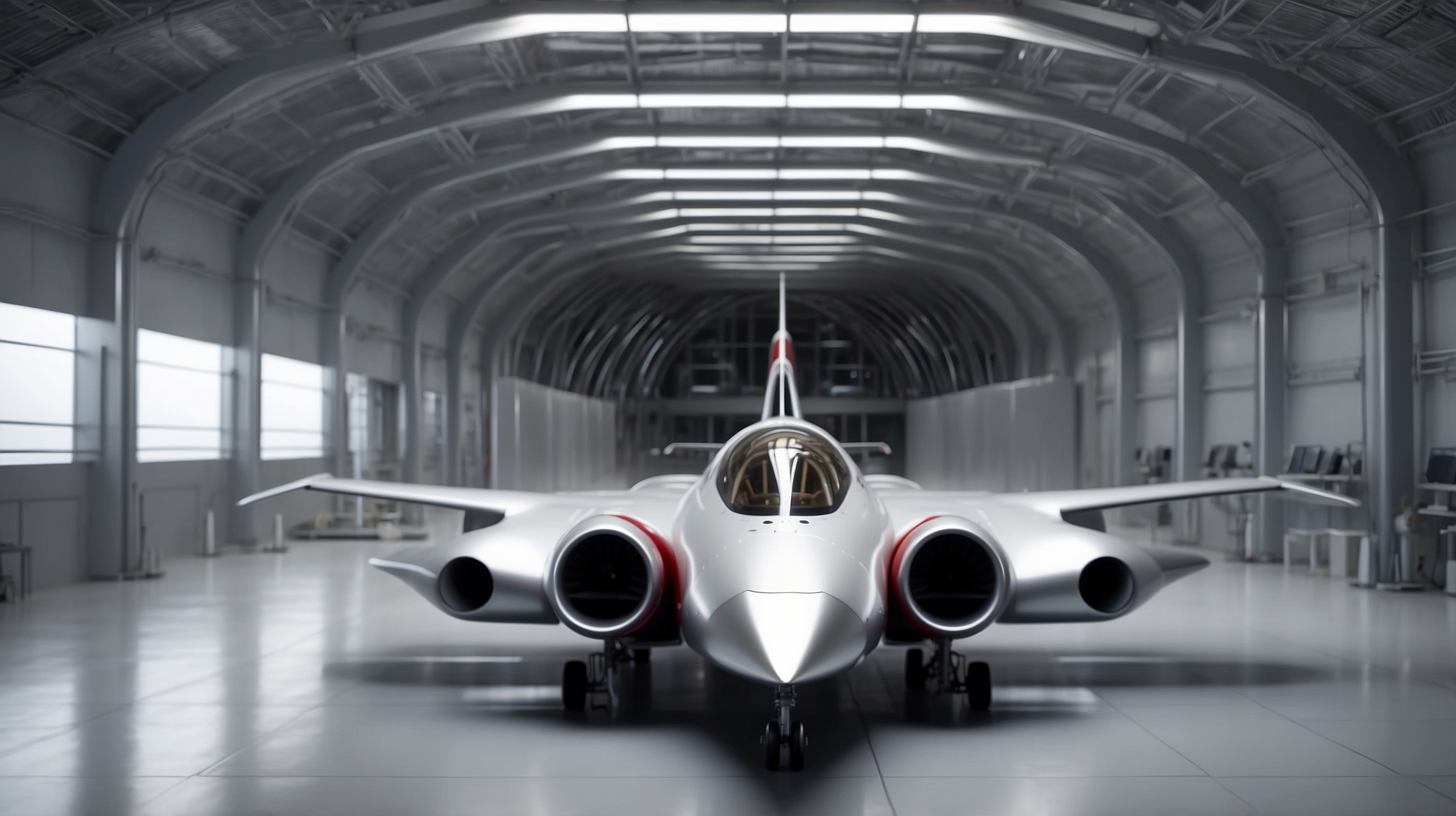
Amid rising concerns over energy efficiency and growing computational demand, the future of artificial intelligence infrastructure may lie not just in silicon and software—but in cutting-edge aerospace engineering. In an unexpected intersection of defense technology and data processing, a U.S. startup is harnessing the power of supersonic jet engines to answer one of today’s most pressing tech challenges: how to build greener, faster, and more energy-resilient data centers.
JetZero, a pioneering startup known for its aerospace innovations, is collaborating with the U.S. Department of Energy to develop advanced air-based energy solutions. Their goal? To deliver an aerospace-grade turbine, originally intended for high-speed aircraft, that powers the next generation of **AI data centers**. This isn’t science fiction. This is a radical departure from standard energy models that could usher in a new industrial paradigm where artificial intelligence, aviation-grade thermodynamics, and national security intersect.
As demand soars for generative AI applications, cloud computing, and large language models, so too do their energy requirements. Enterprises are grappling with operational bottlenecks due to aging electrical grids, surging electricity costs, and environmental constraints. JetZero’s innovation could serve as a game-changer—offering speed, power, and energy independence all wrapped into one futuristic turbine module.
What’s fueling this futuristic shift in AI infrastructure
| Key Element | Details |
|---|---|
| Project Name | JetZero Turbine AI Power Initiative |
| Primary Technology | Supersonic Jet Turbine (Modified for Ground Use) |
| Partners Involved | JetZero, U.S. Department of Energy |
| Main Use Case | Powering Large-Scale AI Data Centers |
| Expected Advantages | On-site clean power, reduced grid dependence, scalability |
| Potential Impact | AI performance boost, carbon footprint reduction, enhanced reliability |
Why data centers are struggling to keep up
The AI boom is demanding a new caliber of computational and energy architecture. Even the most modern data centers are beginning to hit power ceilings. Traditional power grids—especially in urban areas—are already strained. Combine that with the energy-intensive operations needed for training AI models like GPT-4 or DALL-E, and you get a perfect storm of inefficiency and escalating costs.
Cooling is another challenge. AI workloads generate far more heat than conventional processes. This heat must be dissipated effectively to prevent system failure. JetZero’s turbine doesn’t just produce energy—it does so in a way that integrates naturally with **cooling solutions**, making it a double-edged efficiency tool.
What makes JetZero’s approach different
Unlike solar or wind power, the supersonic jet turbine is **completely autonomous** and modular. It can be rapidly deployed to remote or underpowered areas, reducing the geographic limitations data centers usually face. Furthermore, the turbine is engineered to be *low-emission* through cutting-edge fuel and exhaust systems, aligning with rising environmental standards.
The turbine is adapted from military-grade thrust systems but modified to run efficiently at ground-level air pressures and lower sound levels. Its compact footprint and high-output capacity (estimated in hundreds of megawatts per unit) make it especially appealing to tech enterprises looking for **on-premise energy independence**.
Benefits that go beyond grid independence
The JetZero turbine doesn’t just alleviate reliance on public power grids—its architecture supports **rapid scalability**. This means it can adapt to growing compute needs in real-time without requiring costly or complex infrastructure overhauls. Plus, in cases of grid failure, these turbines act as autonomous backups that **keep operations running regardless of external outages**.
Companies investing in the system can also capitalize on emerging **government incentives** aimed at clean and distributed power generation, an increasingly significant factor given rising climate policies and sustainability benchmarks.
Who stands to gain—and who might lose
| Winners | Losers |
|---|---|
| Tech companies with high AI workloads | Traditional utility providers |
| Government agencies favoring energy resilience | Outdated fossil fuel infrastructure |
| Regions with weak electrical grids | Data centers with high cooling costs |
National security implications and strategic autonomy
Beyond commercial benefits, the initiative carries deep national security ramifications. AI is now viewed as a strategic asset, and with that comes the responsibility to shield it from grid failures, cyber-attacks, or geopolitical disruptions. With turbine-powered data centers, the U.S. could maintain **independent AI capabilities** that are immune from both foreign hacks and domestic power instability.
“Energy security is the cornerstone for next-generation computing. AI can’t afford a blackout.”
— Placeholder, Department of Energy Official
What experts are saying about this paradigm shift
While the JetZero project is still in its early phases, industry experts are already calling it one of the most promising intersections of aerospace and computing in years.
“This is like giving your AI the afterburners of an F-22. It’s not just smart—it’s fast, independent, and resilient.”
— Placeholder, AI Infrastructure Consultant
“It’s a fascinating blend of aviation and computation, designed to power a new era of thinking machines.”
— Placeholder, Energy Grid Researcher
Potential challenges the initiative may face
With bold innovation comes significant hurdles. One primary concern is **cost**. Supersonic engine tech is not cheap, and while scale could reduce unit pricing, upfront installation may limit adoption in smaller enterprises. Approval from environmental regulators could also delay deployment, especially in denser regions or areas with strict noise ordinances.
Another factor is **maintenance**. Aerospace engines are highly technical systems. Ensuring a global support infrastructure for these turbines will require skilled personnel and rapid parts distribution networks.
What comes next for JetZero and AI data centers
JetZero is expected to conduct live tests of its turbine-powered generator prototype in late 2024, with production-ready systems potentially launching as early as 2025. Early adopters are likely to be government agencies and large cloud computing providers seeking edge in **AI training efficiencies** and strategic autonomy.
As demand for AI continues on its vertical trajectory, energy will become the new computation bottleneck. If JetZero’s gamble pays off, we may soon enter a revolutionary phase—where intelligence is powered not just by silicon, but by **jet propulsion itself**.
Frequently asked questions about supersonic jet turbines for AI
What exactly is JetZero developing?
JetZero is developing a ground-based power turbine system adapted from supersonic jet engines to deliver energy to AI-focused data centers.
Why are AI data centers turning to jet engines?
These turbines provide high-output, scalable, and modular power that overcomes the limitations of traditional electrical grids.
Is this technology environmentally friendly?
While not emission-free, JetZero’s turbines are engineered to be significantly lower in emissions than fossil-fueled grid energy sources.
Will these turbines be used in urban areas?
They are better suited for remote or edge locations due to noise and regulatory constraints, though future versions may mitigate those concerns.
What companies stand to benefit the most?
Large-scale AI companies, data storage providers, and cloud computing firms dependent on massive compute and energy loads.
How will this affect energy grids?
If widely adopted, this could reduce strain on public grids and even serve as backup energy sources during outages or crises.
Can smaller startups use this technology?
Initially, the costs may restrict use to larger players, but modular design could eventually make scaled-down turbines accessible for smaller teams.
When will this technology be available at scale?
JetZero anticipates operational tests in 2024 and potential broad deployment starting in 2025, depending on regulatory approvals and funding support.