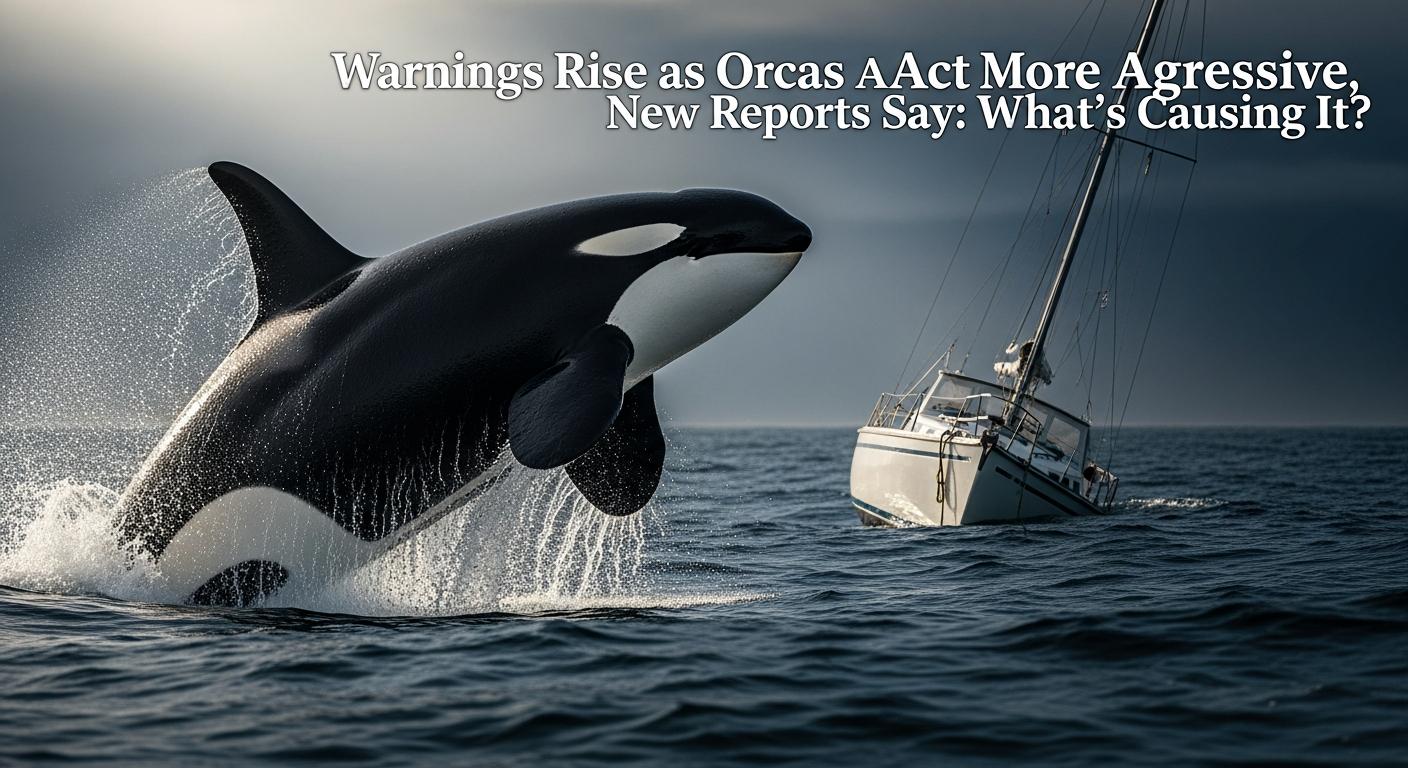
As dawn broke over the Pacific Northwest, a small fishing vessel bobbed in the chilly blue waters off Vancouver Island. The crew was hauling in their nets when a sudden splash interrupted their routine. A black-and-white dorsal fin sliced through the surface, followed by several more. What might once have been a moment of natural wonder has now become a cause for concern. In recent months, authorities and marine experts have issued increasing warnings about **unusual orca activity** — and 2024 is shaping up to be a banner year for such alerts.
These intelligent mammals, known to many as ‘killer whales,’ have long occupied a special place in the hearts of ocean lovers. But recent behavioral changes are prompting serious questions about what the animals are trying to communicate — and whether human activity or climate change might be behind it. Are we looking at the early signs of conflict between orcas and humans, or could we be witnessing a deeper environmental shift?
Reports of aggressive behavior, unnaturally close proximity to boats, and shifting migration patterns are appearing with alarming consistency. The increased frequency and geographic reach of these incidents suggest a developing trend that authorities can no longer ignore. It’s now more important than ever to understand the signals these powerful cetaceans are sending — before it’s too late.
Key insights from recent orca behavior reports
| Topic | Details |
|---|---|
| Spike in Orca Warnings | Record number of orca incidents reported in 2024 across multiple regions |
| Locations Affected | Pacific Northwest, Mediterranean, Northern Atlantic |
| Behavior Brought to Attention | Approaching boats, damaging rudders, coordinated movements |
| Leading Theories | Stress responses, environmental changes, interspecies communication |
| Action by Authorities | New monitoring initiatives, navigation advice, international collaboration |
What changed this year
Compared to 2023, there’s been a sharp uptick in the number of orca-related disturbance reports. Tracking data shows more **cases of orcas engaging with vessels**, especially sailboats, in unusual and damaging ways — including deliberate impacts on hulls and rudders. Some videos released show pods exhibiting coordinated tactics that suggest a high level of intelligence and perhaps a shared purpose.
This is a stark turn from their reputation as photogenic stars of ecotourism cruises or captivating performers at marine parks. “We have not seen this level of engagement in any past year,” said a spokesperson from a well-known marine observatory. In response, officials in various coastal nations are issuing boat operation advisories and even temporary navigational restrictions in orca-inhabited waters.
Why orcas are behaving differently
Experts believe several factors may be influencing this behavior. According to marine biologists, a cocktail of climate change, overfishing, and noise pollution may be contributing to elevated stress levels in orca populations. Not only are their food sources becoming harder to find, but the seas are increasingly congested with ship traffic, underwater drilling noise, and sonar disruptions.
More striking, however, is the possibility that this is a form of **learned behavior** being passed down through orca pods. These animals are known for their social structures and ability to transmit knowledge through generations. If one pod begins to experience vessel-related trauma or challenge, they may be teaching others to engage in protective or retaliatory strategies.
“Orcas are incredibly intelligent, and we’ve long known they operate as sophisticated societies. These behaviors are likely not random.”
— Dr. Sabine Cortez, Marine Ecologist
The broader environmental implications
The increasing frequency of such incidents is triggering not only alarm but also conversation about the bigger picture. Environmental advocates are pointing out that orcas may be acting as a kind of **sentinel species**, warning us of trouble beneath the waves. Just as canaries once warned miners of dangerous gases, these apex predators might be showing us the effects of marine ecosystem degradation sooner than any monitoring device could.
Correlations have been drawn between orca GPS tracking maps and areas with declining fish populations or increased pollution levels. The cumulative implications are hard to ignore — especially when other marine species have also shown signs of distress or migration shifts.
Regions seeing the greatest orca activity increases
According to maritime monitoring agencies, multiple global hotspots have emerged where orca-human interactions have reached critical alert levels:
- Northeastern Atlantic – Reports near Spain and Portugal of orcas targeting sailboats
- Pacific Northwest – Rise in breaches and loud vocalizations near commercial vessels
- Southern Ocean – New pod movements appearing in unfamiliar migration zones
An interesting note is that in some cases, orca incidents correspond to military sonar testing zones, further fueling the theory that acoustic stressors may be leading to erratic behavior.
Technology and global collaboration efforts
In response to the surging orca warnings, several marine conservation groups and governments are accelerating deployment of tracking and monitoring technologies. Drones, underwater microphones (hydrophones), and AI pattern recognition tools are being proposed to better understand where and why these interactions are happening.
Norway, Canada, and Australia are among the nations spearheading data coterminance projects, where shipping companies and marine scientists share real-time navigation, movement, and habitat data to cross-verify possible aggression zones. These collaborations are crucial, as the international nature of orca migration demands geographically broad cooperation.
“This is not just a North American or European issue. Orcas don’t follow national borders.”
— Lauren Tanaka, Marine Policy Advisor
Who wins and who loses from the changing orca dynamics
| Winners | Losers |
|---|---|
| Marine researchers (more data collection funding) | Fishing and shipping industries (increased costs from delays) |
| Wildlife advocates (greater public concern for marine health) | Ecotourism companies (uncertainties around sea tours) |
| Technology developers (new contracts for monitoring tools) | Local communities (risk to jobs dependent on marine tourism) |
What happens next in global orca monitoring
Marine regulators are pushing for the adoption of standard guidelines across international shipping lanes, including slower speeds in known orca zones and widespread educational efforts about marine mammal safety. There is also mounting pressure to implement stricter environmental protocols to restore fish stocks and regulate ocean noise levels.
Some groups are advocating bold steps like rerouting certain heavily trafficked shipping paths or limiting sonar device use near known pod territories. Whatever solutions are adopted, it’s clear that the status quo is not sustainable for the orcas or for the humans who rely on the shared seas.
Short FAQs on the rise in orca warnings
Why are more orca warnings being reported in 2024?
There is a noticeable increase in the number and geographical spread of incidents between orcas and boats, leading to elevated alerts and media coverage.
Are the orcas intentionally attacking ships?
Experts are cautious about calling it “attacks,” but behaviors such as damaging boat rudders suggest intentional and coordinated actions, possibly learned or communicative.
Which parts of the world are most affected?
The Atlantic waters off Spain and Portugal, the Pacific Northwest, and some areas of the Southern Ocean have seen the highest rise in unusual orca activity.
Is climate change a factor in orca behavior?
Yes, environmental stressors such as warming waters, reduced prey availability, and ocean noise pollution are believed to be influencing orca behavior.
What are authorities doing about this trend?
Agencies are deploying technology for monitoring, advising ship route changes, and working on international policies to protect both human and marine life.
Are humans at risk in these encounters?
Though incidents have caused property damage to vessels, there are no verified reports of human injury. However, close encounters do carry risks.
How can boaters avoid conflict with orcas?
Stay informed about regional advisories, reduce speed in caution zones, and avoid direct paths if orcas are spotted nearby.
Could orcas be adapting to human behavior?
Possibly. Orcas are known for high intelligence and cultural learning, making it likely that they are adjusting their responses based on human actions.