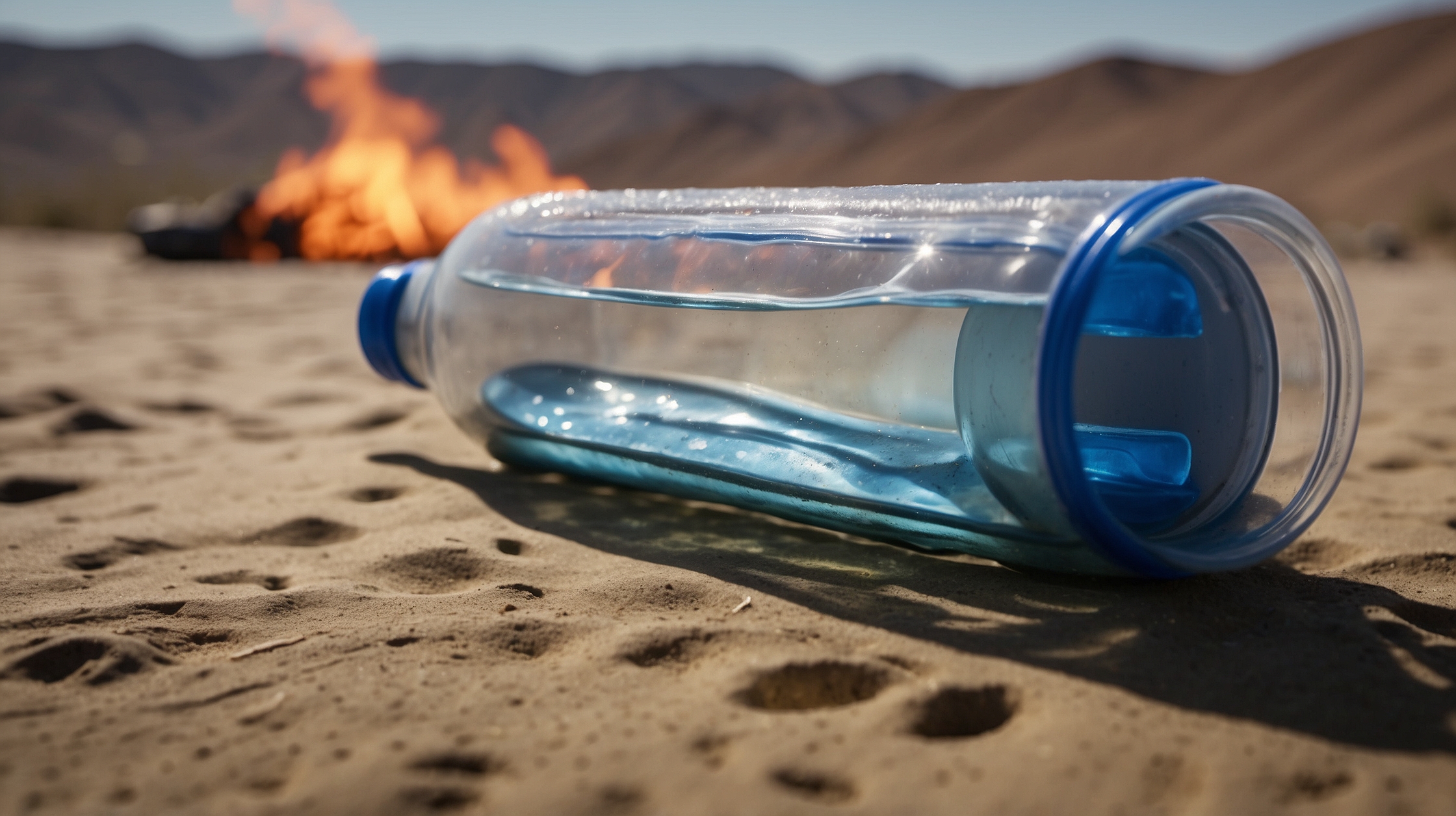
It was a seemingly ordinary summer afternoon when a firefighter in Idaho stumbled upon an uncommon hazard during a vehicle inspection. The temperature was high, the sky was clear, and the parking lot shimmered in the heat. What caught the firefighter’s attention wasn’t smoke or flames but a curious beam of light streaming from inside an unattended car. Upon closer inspection, he discovered something both alarming and incredibly simple—a clear plastic water bottle had been left on the front seat, its cylindrical shape and water contents acting like a makeshift magnifying glass. Beneath it, the seat fabric was already beginning to smoke.
This anecdote, both eye-opening and unsettling, underscores a hidden summertime hazard many of us overlook. We leave items inside our cars out of convenience—water bottles, sunglasses, even paper documents. But under intense sunlight, some of these objects can become ignition sources, especially when the conditions are just right. The humble water bottle may not seem dangerous at first glance, but in the right environment, it can concentrate sunlight into a hot, focused beam—hot enough to start a fire.
In this article, we’ll explore why leaving clear plastic water bottles in your car on a sunny day could pose a serious fire risk. We’ll lay out the science behind the phenomenon, highlight real-world incidents, and provide actionable tips to keep your car—and yourself—safe this summer.
Key facts you need to know about water bottles and car fires
| Risk Object | Clear plastic water bottle |
| Weather Conditions | Sunny, hot days |
| Ignition Method | Sunlight magnified through water |
| Common Surfaces at Risk | Car seats, dashboards, paper items |
| Time Required to Ignite | Varies, but can be within minutes under ideal conditions |
| Mitigation | Remove items or place them out of direct sunlight |
Why a plastic water bottle can become a fire hazard
When sunlight passes through a transparent medium like water contained within a cylindrical plastic bottle, it gets refracted and focused. Think of a magnifying glass used to burn a leaf — the concept is virtually the same. The curved surface of the bottle acts as a convex lens, focusing sunlight into a small spot that can rapidly heat up flammable materials such as cloth seats or cardboard.
In a car, where temperatures already soar rapidly under direct sunlight (interior temperatures can reach up to 160°F or 71°C in just an hour), this magnification effect can elevate temperatures beyond the ignition point of certain materials far faster than expected. Once ignition starts, the confined space and abundance of synthetic materials inside a vehicle could escalate the fire risk dramatically.
“People naturally wouldn’t think of a water bottle as a fire hazard. But under the right conditions, it concentrates sunlight just like a lens. It’s a real and underappreciated risk.”
— Dr. Emily Hayes, Fire Safety Specialist
Real incidents that underscore the risk
This isn’t merely a theoretical concern. Several firefighters across the United States have reported similar cases. One such instance gained traction online when a firefighter from Midwest U.S. demonstrated how a water bottle, left on the dashboard, began to burn a hole into the seat upholstery within a few minutes. Fortunately, no fire broke out that time, but the potential was crystal-clear.
Emergency services have started issuing public warnings during the hotter months, urging drivers not to leave transparent bottles or similar objects in their vehicles. As climate patterns shift and heatwaves become more severe and frequent, these risks will likely increase in both frequency and severity.
Conditions that heighten the danger
There are a few factors that make fire from a water bottle more likely:
- Clear, sunny days: Cloudless skies provide uninterrupted exposure to sunlight.
- Car parked in direct sunlight: Sunlight entering through windows superheats the air and surfaces inside.
- Transparent bottles with round surfaces: The more convex the shape, the more effective it is at focusing light.
- Presence of flammable materials: Cloth seats, paper, and fast food packaging all raise the stakes.
Simple ways to prevent a potential car fire
While the mechanism is scientific, the solution is simple. Make small but significant changes to how you store everyday items in your car:
- Remove bottles: Always take water bottles with you when you leave the car, especially in hot weather.
- Use opaque containers: If you must leave a beverage in the car, choose a stainless steel or non-transparent bottle.
- Shaded parking: Park in shaded areas or use a sunshade to lower the car’s interior temperature.
- Secure loose items: Make sure nothing is lying around that could focus sunlight inadvertently.
“Heatwave conditions are already tough to bear. The last thing anyone needs is a car fire started by something as innocent as a plastic bottle.”
— Jackson Peel, Emergency Services Coordinator
The hidden cost of ignoring small hazards
While it might sound like an urban legend, the hazard posed by clear plastic bottles under certain conditions is grounded in basic physics and increasingly validated by real-world incidents. Overlooking small risks like these can result in vehicle damage, insurance claims, and even harm to individuals in or near the vehicle at the time.
Aside from the physical dangers, there’s a mental burden—knowing that a quick errand or day trip could have ended in a vehicle loss due to something so easily preventable can be haunting. It’s a stark reminder that risk often comes in unexpected forms and that vigilance is the best safety tool we have.
Who should be most concerned
Certain groups should be especially mindful of this risk, including:
- Parents: Children’s toys and sippy cups can also act as lenses.
- Commuters: Leaving drinks in the car for convenience poses added risk.
- Fleet vehicle operators: Delivery vehicles spend long hours under the sun.
- Rural and forested area residents: High heat and dry conditions amplify fire risks.
Winners and losers if awareness increases
| Winners | Losers |
|---|---|
| Safety-conscious drivers | Drivers ignoring parked car dangers |
| Fire departments (fewer incidents) | Insurance companies (claims from fires) |
| Parents and families | Unaware commuters |
Short FAQs about car fires from water bottles
Can any plastic bottle start a car fire?
No, the bottle must be clear, contain water, and be positioned in direct sunlight to act like a lens.
How hot does it have to get inside a car for a fire to start?
Some materials can ignite at temperatures as low as 200°F, which can easily be reached inside a sunlit car.
Is this a common occurrence?
It’s rare but possible, especially under ideal conditions—sunlight, orientation, and material presence.
Can tinted windows prevent this type of fire?
Tinted windows may reduce sunlight intensity but won’t completely eliminate the risk.
What should I do if I see smoke in a parked car?
Call emergency services immediately and stay at a safe distance from the vehicle.
Are other everyday objects dangerous in a hot car?
Yes, aerosols, batteries, and electronics can overheat or even explode in extreme heat.
Would using reusable bottles eliminate the risk?
Yes, many reusable bottles are opaque and do not pose the same lens effect hazard.
Is this a summer-only problem?
Primarily yes, but any season with strong sunlight and high temperatures can create the conditions needed.