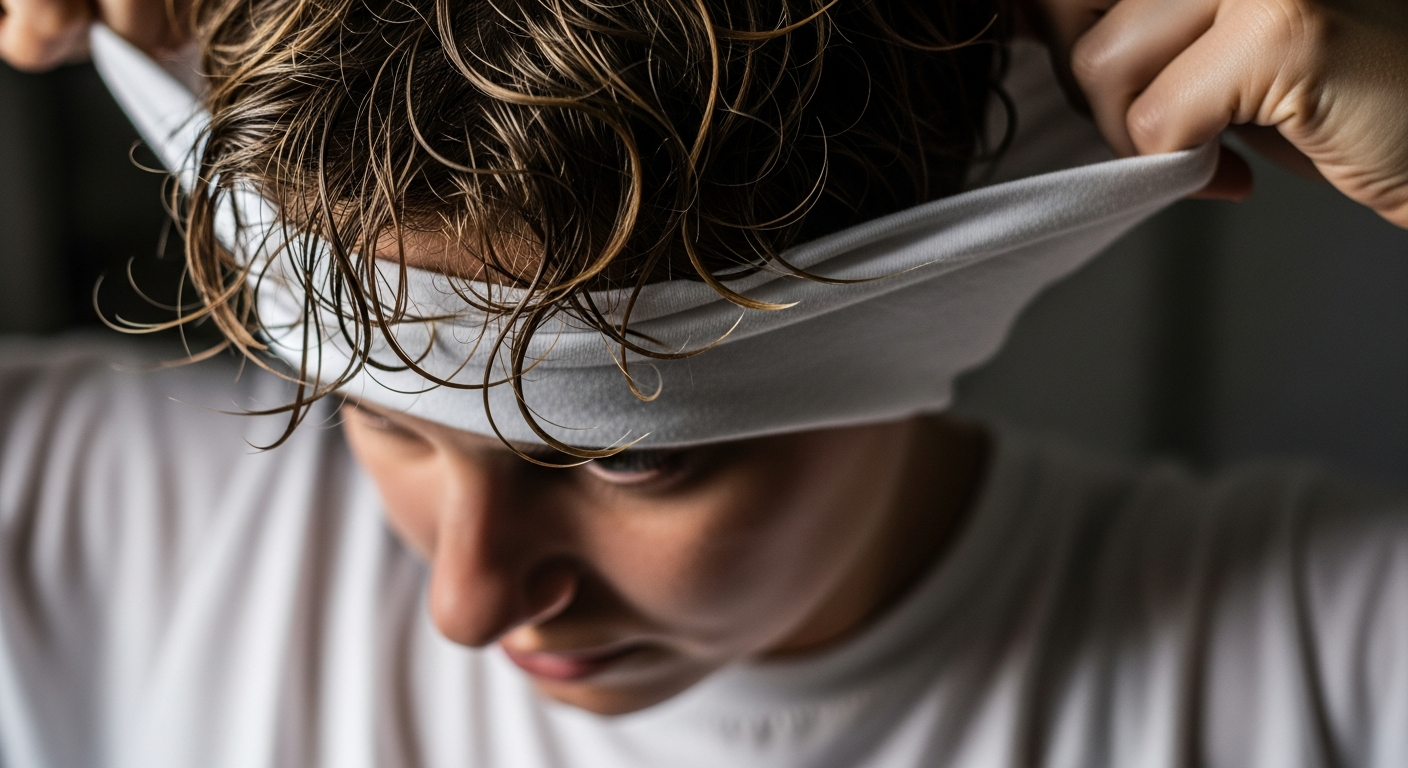
When Lara decided to embrace her natural short curls after years of heat-styling her hair, she expected definition and volume. Instead, she discovered frizz, unpredictability, and an unruly silhouette every time she let her hair air-dry. By all logic, avoiding blow-dryers and heat should have improved the health and look of her curls—but it seemed the very act of air-drying was sabotaging her hair. Frustrated, she stumbled across an unusual yet promising solution: the “plopping method” using a simple cotton T-shirt. The results were instant and transformative.
Interestingly, Lara is not alone. Across the globe, people with short hair—especially curly or wavy textures—are ditching traditional towel-drying and passive air-drying because of the frizz it causes. The key culprit? How moisture is managed and the structure of drying time without active manipulation. The seemingly gentle approach of letting hair dry naturally can often become a recipe for lost definition and frizz overload. But techniques like plopping are changing that narrative—offering a practical, damage-free route to smooth, vibrant curls, even on short strands.
Why the way you dry short hair matters more than you think
| Issue | Air Drying | Plopping |
|---|---|---|
| Frizz control | Poor | Excellent |
| Curl definition | Inconsistent | Consistently enhanced |
| Drying time | Long | More efficient |
| Hair texture | Rougher surface | Smoother finish |
| Product absorption | May vary | More even |
The science behind air-drying and frizz
While the idea of letting hair “breathe” and avoid heat seems healthy in theory, air-drying can backfire for short-haired individuals due to how water interacts with the hair cuticle. When hair dries slowly, the cuticle stays open longer, allowing in environmental humidity. The result? Disrupted curl patterns, undefined shape, and lots of frizz.
Further complicating the issue for short-haired folks is the reduced weight of hair—longer hair pulls itself downward as it dries, aiding in shape formation. Short hair lacks that gravity assist, making it more vulnerable to shrinking textures and random frizz halos during air-drying.
“Frizz is less about damage and more about moisture imbalance. Air-drying without structure gives water and humidity a chance to confuse the pattern your hair is trying to form.”
— Dr. Sheila Hart, Trichologist & Hair Scientist
How the plopping method changes your curl game
Plopping is a heat-free drying method that uses a cotton T-shirt or microfiber towel to gently cradle hair on top of the head, allowing curls or waves to dry in a defined, upward-clumping manner. This not only accelerates drying time but also minimizes movement, disturbance, and breakage during the crucial drying phase.
Essentially, plopping helps short hair maintain structure and volume by drawing water away at a controlled pace, reducing frizz and preserving definition. The lightweight fabric of a T-shirt reduces friction—unlike terry cloth towels, which roughen the cuticle and cause hair to puff out.
“Cotton T-shirts create less friction than towels. They mold to hair better and absorb enough water without stripping too much moisture.”
— Raphael Meng, Licensed Curl Specialist
Step-by-step: How to plop short hair like a pro
- Start with wet hair: After washing, gently wring out excess water with your hands. Apply leave-in conditioner or curl cream evenly through your curls or waves.
- Lay out your T-shirt: Use a large, clean cotton T-shirt. Lay it on a flat surface or your bed with the sleeves facing you.
- Flip your hair: Bend over and “plop” your wet hair onto the center of the T-shirt, letting your curls naturally fold toward your scalp.
- Wrap and secure: Pull the bottom of the shirt over your head and then cross the sleeves at the nape of your neck, knotting them to hold the shirt in place like a turban.
- Leave it on: Let it sit for 10–30 minutes depending on your hair’s porosity and the surrounding humidity.
- Final air-dry or diffuse: After plopping, allow your hair to air-dry the rest of the way or use a diffuser for added volume.
Is your towel the real enemy of your curls?
Traditional bath towels are likely working against your styling efforts more than you realize. Made to absorb water quickly, they also strip away essential moisture from hair strands, especially curls. The coarse texture of the material ruffles the hair cuticle, creating frizz and dullness over time. For short hair, which has fewer overlapping layers, even minimal disturbance can ruin overall shape.
This is why curl-friendly materials like cotton jersey (your typical T-shirt fabric) or microfiber are revolutionizing haircare routines. They’re soft, absorbent in moderation, and prevent the hair from weakening as it dries.
Why short hair needs curl-conscious techniques
Short curly hair doesn’t behave like its longer counterparts. It tends to spring upward rather than cascade downward, making moisture retention, definition, and frizz control far more critical. Because the strands don’t have the weight to elongate or “pull out” kinks and curls naturally, styling methods like plopping become essential for shaping curls close to the scalp.
Also, short hair reveals imperfection far more easily. One disruptive curl, poorly defined section, or puffed spot is much more noticeable. So the mechanisms that help long curly hair get away with uneven air-drying don’t apply here.
“Short curls are high-maintenance not because they’re ‘bad,’ but because every inch matters. Each curl plays a role in framing the face.”
— Dee L., Natural Hair Stylist
Common mistakes to avoid when drying short hair
- Rubbing hair with a towel: This lifts the cuticle, encouraging breakage and frizz.
- Letting hair dry hanging down: Causes curls to fall out of their pattern instead of forming into clumps close to the scalp.
- Not using leave-in products: Skipping cream or gel can cause curls to fray as they dry unevenly.
- Leaving hair too wet before plopping: Soaked hair can prolong drying time and stretch curls unnatural.
Winners and losers of the plopping movement
| Winners | Losers |
|---|---|
| Short-haired curlies | Traditional towel users |
| Natural texture lovers | People reliant on heat-styling |
| Low-maintenance stylers | Frizz-prone techniques |
Why it’s worth adding plopping to your routine
It may look unconventional at first, but plopping offers a controlled, simple, and inexpensive way to elevate the results of your usual wash-and-go routine. Especially for short hair, where daily styling often requires extra care, it’s an option that makes embracing your natural texture easier than ever. A simple cotton T-shirt might just be what’s standing between you and your best hair days.
Frequently Asked Questions
What type of T-shirt works best for plopping?
A soft, clean 100% cotton T-shirt without any graphics or rough textures is ideal, as it reduces friction and enhances water absorption without damaging the hair cuticle.
Can plopping work for straight hair?
Plopping primarily benefits wavy, curly, and coily hair types by enhancing natural shape. For straight hair, results may be limited unless there’s a wave pattern present.
How long should I plop short hair?
For short hair, plopping for 10–30 minutes is generally sufficient. Longer than that may over-dry the outer layers while leaving roots too wet.
Can I sleep with plopped hair overnight?
It’s generally not recommended unless using a breathable wrap and your hair dries very slowly. Overnight plopping can lead to flat spots or moisture imbalance.
Is plopping suitable for all hair textures?
Plopping works best for Type 2 (wavy), Type 3 (curly), and soft Type 4 (coily) textures. Extremely dense or tightly coiled hair may require product layering for best results.
What products should I apply before plopping?
Use a leave-in conditioner or curl-defining cream to support shape and volume. Light gel can lock in moisture, especially for humid climates or porous hair.
Does plopping replace blow-drying or diffusing?
Plopping is an alternative, but some still use diffusers after plopping to finish drying or add volume. The two can complement each other well.