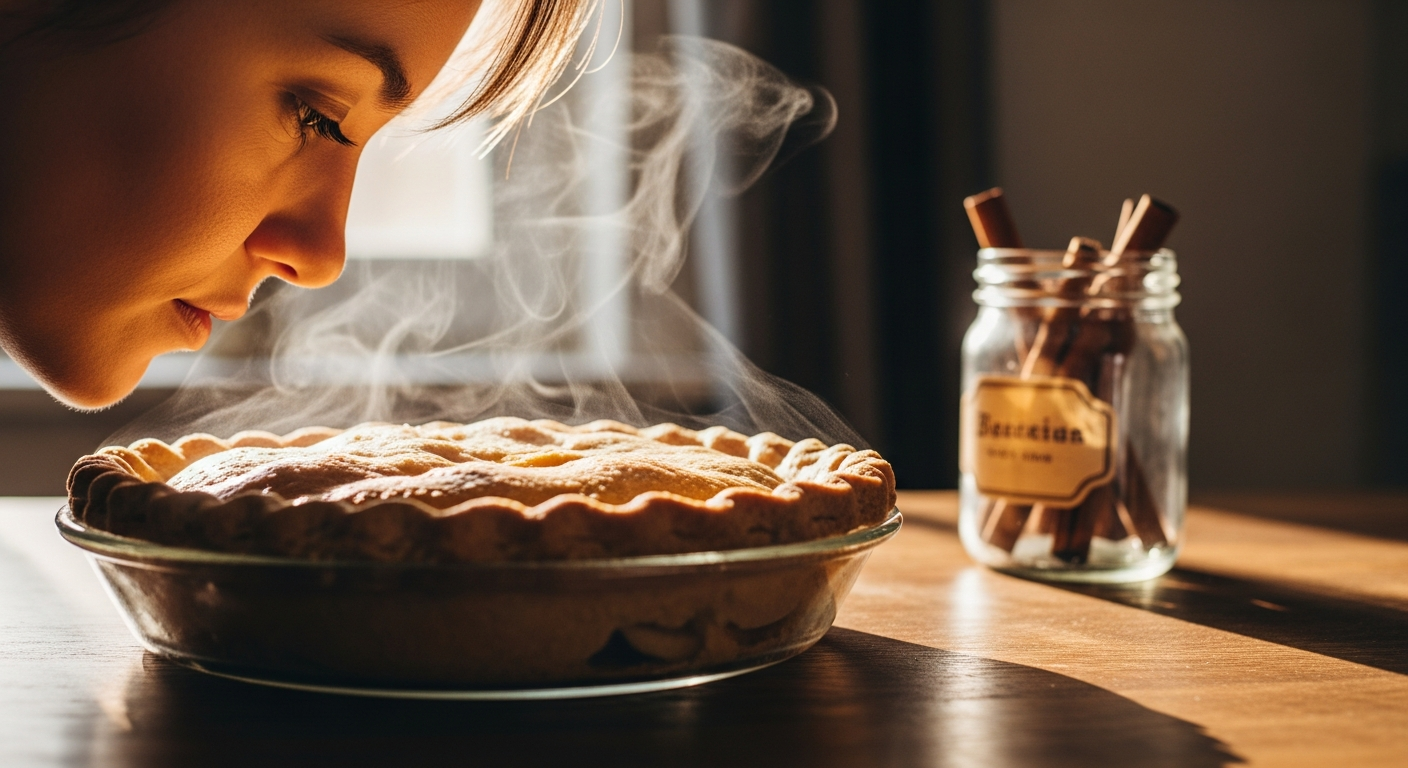
There’s a certain nostalgia that hits when the scent of freshly baked cookies wafts through the air or when a hint of a familiar perfume lingers. Almost immediately, memories flood in—your childhood kitchen, a long-lost friend, a specific moment that felt inconsequential at the time but now returns with vivid detail. These sensory flashbacks are powerful, sometimes overwhelming, and almost always emotional. But have you ever wondered why **certain smells** can transport us back in time more reliably than photos, places, or even sounds?
Researchers have long been fascinated by the mysterious relationship between smell and memory. Unlike our other senses, smell has an incredibly direct link to the brain’s emotional powerhouse: the limbic system. Recent scientific studies have unearthed fascinating insights into how our olfactory system acts like an emotional time machine, offering clues not only into memory recall but also into treatments for emotional trauma and neurological disorders.
Why scent and memory are deeply intertwined
| Key Concept | Smells have a direct route to the brain’s emotional centers |
| Main Brain Areas Involved | Olfactory bulb, amygdala, hippocampus |
| Types of Memories Triggered | Emotional, autobiographical, childhood-related |
| Common Triggers | Food aromas, perfumes, nature scents, cleaning products |
| Scientific Name | Proustian Memory |
| Clinical Relevance | Used in PTSD therapy, dementia care |
The science behind your nose as a time machine
When you inhale a scent, the molecules enter your **olfactory bulb**, a structure located just above the nasal cavity. What’s unique about this system is how extensively it interacts with both the amygdala (responsible for emotion) and the hippocampus (central to memory formation), without first passing through the thalamus, the brain’s typical relay center for sensory data. This *direct link* means that olfactory stimuli can evoke emotional memories more quickly and more intensely than sounds, sights, or touches.
In neuroscience, this phenomenon is often described as **“Proustian memory”**, named after author Marcel Proust, who vividly recalled childhood memories after tasting a madeleine dipped in tea. His literary portrayal was spot-on from a neurological perspective—scientific experiments confirm that olfactory cues are more potent in triggering **autobiographical memories** than visual or auditory ones.
Our brains evolved to prioritize smell as both a survival skill and a social tool. It’s hardwired into our emotional fabric.
— Dr. Lillian Abrams, Cognitive Neuroscientist
The emotional impact of smell-triggered memories
Unlike visually recalled memories, which can often be reconstructed over time or become distorted, **odorous memories** are more likely to retain original details and emotional nuances. This makes olfactory memory not just more accurate, but also more emotionally charged. One whiff of a specific cologne could bring back a flood of feelings associated with a loved one, regardless of how long ago a memory was formed.
Studies show that smells tend to provoke memories from **early childhood**, often before the age when your other memory systems fully develop. This is particularly relevant in therapy and emotional recovery, as reliving positive or traumatic experiences through scent can help patients process long-buried emotional events.
Practical applications in therapy and medicine
Understanding the strong bond between smell and memory is not just an academic exercise—it has real-world applications. Therapists have started incorporating **aromatherapy** techniques into treatment plans, especially for patients dealing with PTSD or those undergoing cognitive therapy. Scent-triggered memories offer access to experiences that might be inaccessible through conventional verbal therapy alone.
Similarly, in the field of elder care and dementia, familiar smells are used to spark **cognitive recognition** in patients suffering from memory loss. The scent of a homecooked meal or lavender soap might trigger lucid moments in someone with Alzheimer’s, opening valuable windows of communication with caregivers.
We’re leveraging olfactory memory as a bridge—between what was forgotten and what can still be recalled.
— Dr. Reynold Paxton, Gerontologist
Why childhood scents are the most vivid
Children experience a world full of *first-time aromas*: their home, their parents, school environments, even seasonal smells like autumn leaves or holiday spices. The brain rapidly encodes these into long-term memory, and because scent and emotion develop in tandem during early years, these connections become *foundational*. This is why a single smell can unlock deeply rooted images, like the scent of rain on pavement bringing back porch-side memories from decades prior.
Also, neurological plasticity is at its peak during childhood. Connections formed between the **olfactory system and hippocampus** are stronger and more enduring, making childhood-formed scent memories much harder to erase or modify.
The double-edged sword of scent and trauma
While scent can bring comfort, it can also be a powerful trigger for **negative or traumatic memories**. Veterans returning from combat zones have reported experiencing anxiety after catching a whiff of diesel fuel or burning rubber—smells that were part of their traumatic settings. Similarly, survivors of domestic abuse may react emotionally to a cologne or food aroma tied to their abuser.
Because olfactory cues bypass rational brain processing, **triggering reactions can be instantaneous**, and often physical (shortness of breath, panic, nausea)—a phenomenon studied closely in trauma-informed therapy models.
Aromas don’t ask for permission. They activate emotion and memory often before you’re consciously aware.
— Jasmine Fields, Licensed Trauma Therapist
How marketers and product designers leverage scent recall
Retailers, marketers, and product designers have smartly tapped into the power of **olfactory branding**. Scents are customized for stores, products, and services to create emotional bonds with consumers. That ‘new car smell’, the fragrance of a luxury store, even the aroma released from freshly opened electronics boxes—none are accidental.
Brands know that tapping into emotional memory encourages repeat behavior. The scent becomes part of the identity of the experience. As a result, customers may find themselves returning not just for a product, but for the emotional association ingrained in their scent memory.
Winners and losers of scent-driven memory
| Winners | Losers |
|---|---|
| Therapists using scent in trauma recovery | People with scent-associated trauma triggers |
| Marketers enhancing brand recall with aroma | Disease sufferers losing olfactory functions |
| Elder care facilities improving memory moments | Those affected by anosmia or smell disorders |
Future horizons in scent-based neurological research
As science delves deeper into **multi-sensory memory networks**, the future of brain care may revolve increasingly around the nose. Researchers are exploring wearable scent emitters as therapy aids, scent-associated learning aids for schools, and home-care kits for memory patients. Artificial intelligence is also aiding in classifying and mapping how scent-linked memories are stored at the neuronal level.
The power of smell will likely be central not only to understanding human emotion, but to reshaping how we design therapies, learning environments, even smart homes. All of which makes the humble act of smelling not just sensory, but potentially revolutionary.
Short FAQs about smell and memory
Why do smells trigger memories more strongly than other senses?
Because the olfactory system connects directly to the brain’s emotional and memory centers without routing through the thalamus, making reactions more intense and immediate.
What is a Proustian memory?
A memory evoked by scent that is vivid, emotional, and autobiographical, named after Marcel Proust’s writings on memory triggered by taste and smell.
Can smell therapy help with PTSD?
Yes, therapists are increasingly using targeted scents to help patients access and process buried emotional traumas.
Why are childhood smells more memorable?
During childhood, the brain forms strong, lasting associations with new stimuli, and the olfactory system is especially active, making those memories more permanent.
Can losing your sense of smell impact memory?
Yes. Anosmia (loss of smell) can weaken emotional memory functions and potentially be an early sign of neurological conditions like Alzheimer’s.
Are scent-triggered memories always accurate?
They often feel vivid and emotionally intense, but like all memories, they can still be influenced or biased over time.
How is scent used in marketing strategies?
Businesses use custom aromas to create emotional brand associations and enhance customer loyalty through subconscious recall.
Can scent recall be dangerous?
Yes, for people with trauma-related olfactory triggers, certain scents can provoke anxiety or flashbacks and should be managed with therapeutic support.