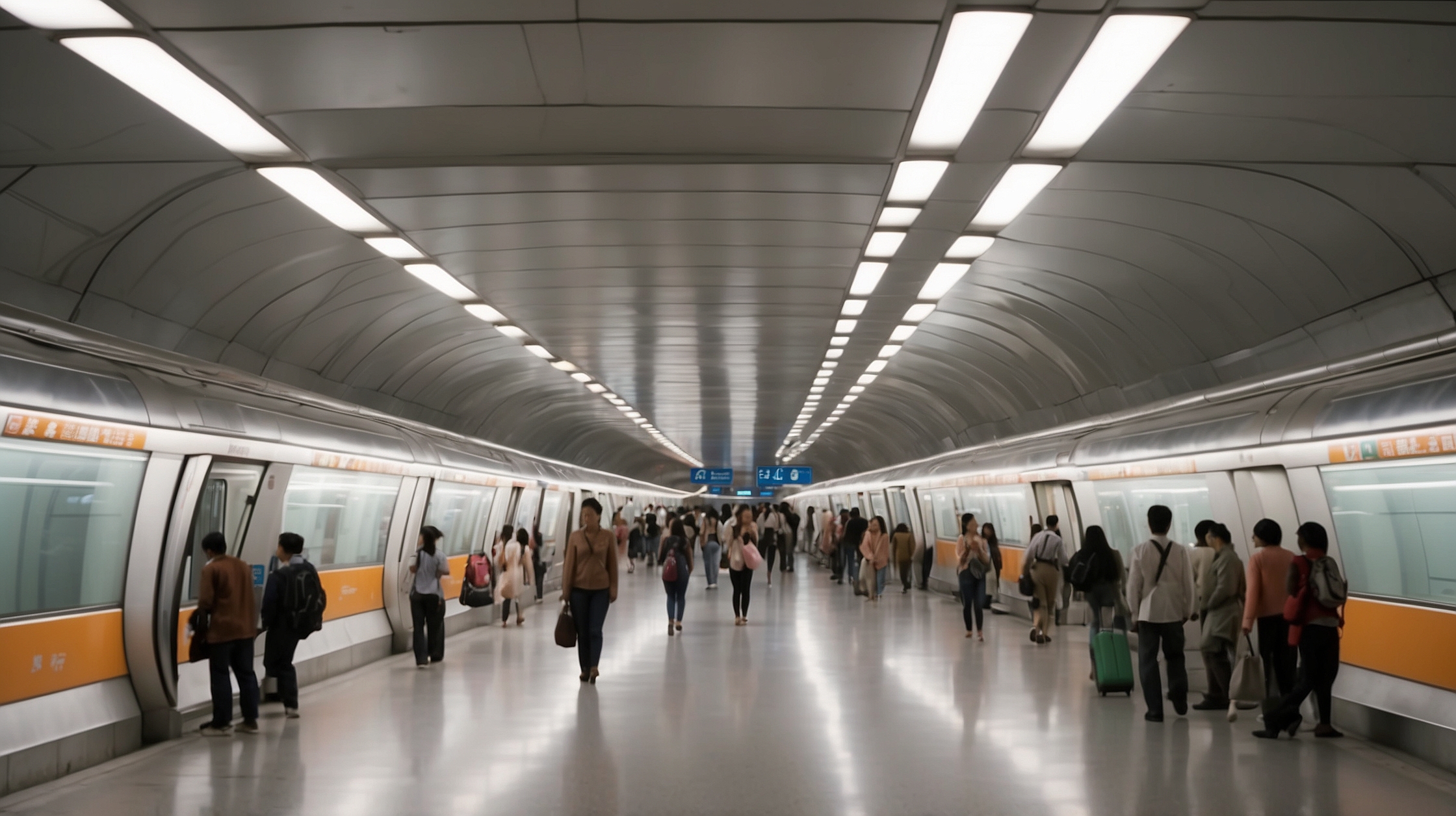
In 2008, many observers scratched their heads as China unveiled a series of brand-new metro stations scattered across seemingly desolate farmlands and empty plains. The move puzzled international urban planners and domestic critics alike. Why was the Chinese government investing billions into infrastructure that appeared to lead nowhere? Photos of these colossal, ultra-modern stations surrounded by open fields soon went viral, prompting debates around wasteful spending, poor planning, and political grandstanding.
Fast forward to over a decade later, and China’s strategy suddenly looks both incredibly ambitious and eerily prescient. Those once-isolated metro stations now sit at the heart of bustling urban neighborhoods, commercial districts, and high-tech research hubs. What was seen as over-engineering has quickly transformed into a case study of long-term vision and infrastructural foresight. It turns out there was a very methodical roadmap behind those empty stations—one that’s paying dividends today.
This is the story of why some of China’s most advanced public transportation systems started “in the middle of nowhere”… and how they became the centerpieces of the nation’s future cities.
Why China built metro stations in empty fields
| Key Aspect | Details |
|---|---|
| Year of Build | 2008 |
| Location | Suburban areas outside major cities (e.g., Beijing, Zhengzhou, Chengdu) |
| Initial Response | Confusion and criticism over stations with no surrounding population |
| Main Goal | Urban expansion and infrastructure-led development strategy |
| Long-Term Outcome | Stations now surrounded by urban development, reduced congestion in city centers |
The vision behind the planning
While critics in 2008 saw empty metro terminals and unfinished roads as wasteful, Chinese planners had a remarkably long horizon in mind. Grounded in the concept of “transit-oriented development,” China’s approach was to build the infrastructure first and let the development follow. Unlike in many Western nations where transit often reacts to demand, Chinese urban policy was determined to shape demand proactively.
These stations were deliberately built in locations designated as future urban expansion zones. The idea was to set the framework for orderly development—residential blocks, malls, offices, and schools would subsequently grow around these transport hubs. In China’s high-growth context, where urban populations swell dramatically, placing the metro infrastructure early ensured that burgeoning communities wouldn’t be trapped in car dependency or face unmanageable traffic jams later.
“Most countries wait for the people to come and then they start building. In China, we build first and the people follow.”
— Dr. Liu Minhua, Urban Development Expert, Shanghai Institute for Urban Planning
How the strategy is paying off today
Fast forward to 2024, and the neighborhoods around many of those once-desolate metro stations have transformed beyond recognition. Where there were dusty fields now stand vibrant neighborhoods with schools, hospitals, tech parks, and shopping centers. In Beijing’s Daxing District or Zhengzhou’s Hi-Tech Zone, stations that were once ridiculed for being in empty fields now see daily footfall in the tens of thousands.
This infrastructure-first approach did not just anticipate the growth; it effectively directed it. Developers were incentivized to build in areas with existing connectivity, creating natural clusters of growth centered on public transit. The result is a more sustainable form of urban sprawl that avoids the pitfalls of traffic congestion, pollution, and inefficient land use.
“Zhengzhou Xinzheng station saw only a handful of passengers a day back in 2010. Today, it handles 50,000 daily commuters and anchors a booming district.”
— Zhou Wei, Director, Zhengzhou Transit Authority
The economic and social ripple effects
By laying down transportation infrastructure early, China has unlocked economic value in regions that, a decade ago, were economically dormant. Land values near these metro lines have soared, new business districts have thrived, and local governments are enjoying increased tax revenues. The ripple effect of early development is not limited to construction — it has spurred tech hubs, real estate growth, education facilities, and improved public services.
Socially, the impact is just as profound. Migrant families and middle-class city dwellers have gained access to affordable housing in well-connected suburban areas, easing pressure on dense and expensive city centers. The result has been an improvement in overall quality of life, shorter commutes, and more equitable city planning across class lines.
Urban planning lessons for the world
China’s success story offers tantalizing lessons for urban planners worldwide. Despite criticism for its top-down approach, the “build it and they will come” philosophy appears not only feasible but optimal under certain economic conditions. Forward-thinking infrastructure investment, when accompanied by policy coordination and land use regulation, can dramatically shape urban futures.
Countries grappling with congestion, housing shortages, or unplanned growth can study this case for delivering long-term value through strategic transport planning. While replicating China’s scale or political model may not be realistic everywhere, adopting the mindset of future-ready development has broad applications.
“The world is watching China’s infrastructure strategy very closely because it’s moving the needle on what 21st-century urban planning looks like.”
— Sarah Lindstrom, Transportation Policy Analyst
Challenges along the way
However, China’s approach has not been without obstacles. In some remote areas, development has progressed slower than expected, leading to underutilized stations. Skeptics refer to these areas as “ghost metro stations.” While many such zones are now bustling, some remain waiting for progress to catch up.
Additionally, the upfront cost of building vast metro lines and stations is immense. Local governments often carry heavy debt loads to fund these infrastructural ambitions. Yet policymakers argue that these debts are long-term investments and will pay off over decades, as already witnessed in key areas.
Winners and losers from the early metro expansion
| Winners | Losers |
|---|---|
| Residents in new suburbs with rapid public transit | Rural communities displaced for construction |
| Real estate developers and local tax bases | Initial government budgets burdened by upfront costs |
| Commuters enjoying reduced traffic congestion | Areas where development lags behind anticipation |
What changed this year
In 2024, the final phases of several key metro expansion projects tied to these original “empty” stations are coming online. Major hubs like the Chengdu Airport Metro Line and extensions in Zhengzhou and Suzhou are stimulating another wave of real estate investment and urban migration. These expansions are cementing the now-thriving status of areas that once stood vacant, transforming them from quiet outskirts to economic power centers.
The increased ridership numbers and rapidly rising property values show that the tipping point has been reached. Where skepticism once stood, confidence and pride now take hold among city administrators and urban dwellers alike.
FAQs about China’s early metro station strategy
Why did China build metro stations in the middle of nowhere?
China anticipated future urban growth and built infrastructure in advance to guide and stimulate development in designated expansion zones.
Did the strategy work?
In most cases, yes. The areas around the originally isolated stations have seen booming development and rising population density.
Is this practice common in other countries?
It is relatively uncommon. Most nations build based on current demand. China’s approach is unique for its proactive long-term agenda.
What cities benefited most from this strategy?
Beijing, Zhengzhou, Chengdu, Suzhou, and Guiyang are notable examples where the early infrastructure investment has led to substantial returns.
What were some of the risks involved?
Slow economic uptake in certain regions and high upfront capital requirements posed financial and political risks.
Will China continue this metro-first policy?
Yes, policymakers are extending this model to second-tier cities, driven by its proven success in large urban centers.
How has it affected housing and traffic?
It has made housing more accessible in new urban areas and significantly reduced dependency on cars in expanding metro-connected zones.
Is this model suitable for developing countries?
It depends on political will, economic resources, and anticipated urbanization. The model requires patience and long-term planning discipline.