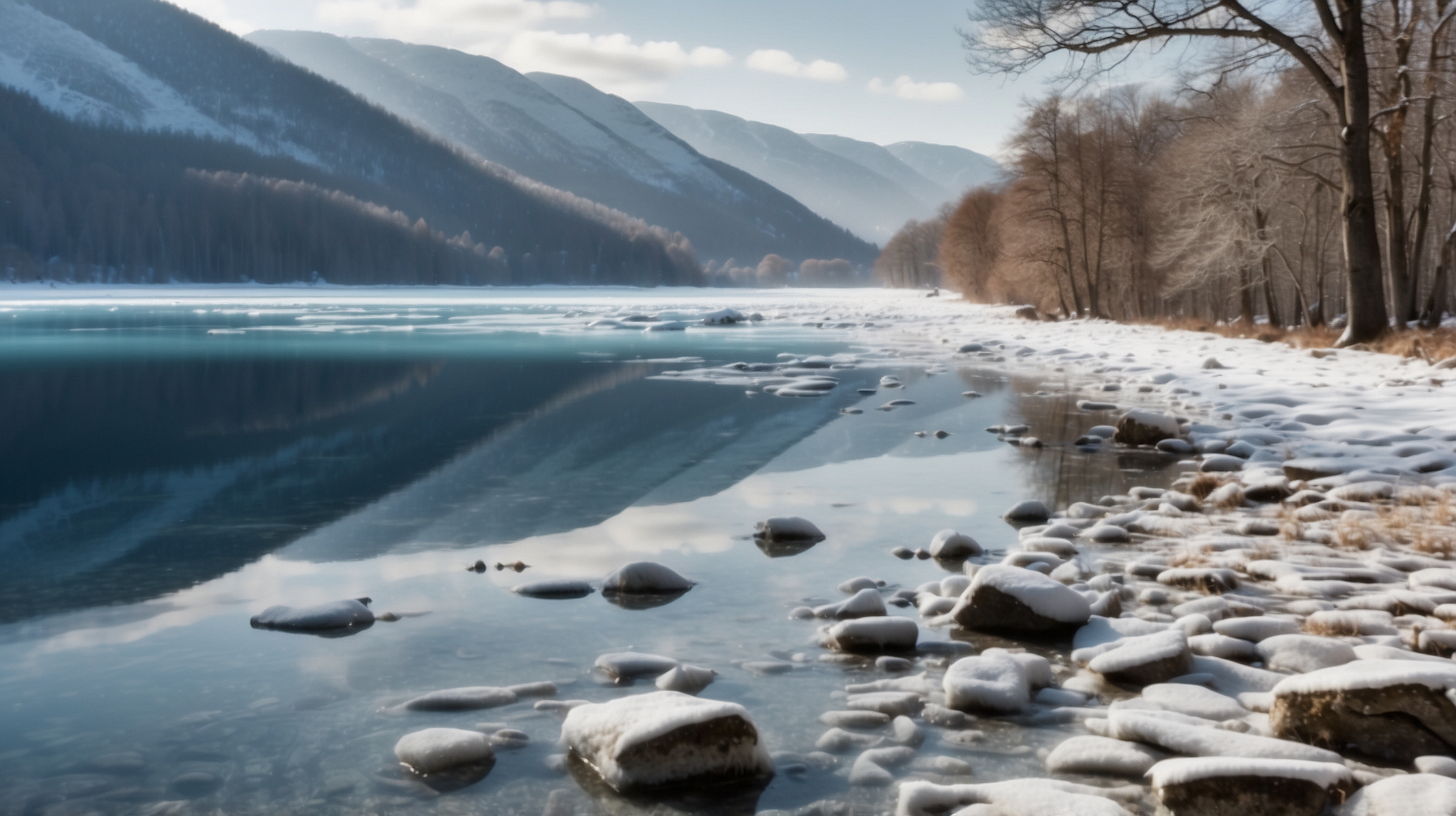
On a frigid winter afternoon in Créteil, just southeast of Paris, a curious sight drew the attention of passersby at the Créteil Lake: its waters had frozen at the edges, forming delicate crystalline patterns, but remained eerily fluid at the center. As pedestrians paused to marvel and snap photos, the frozen border gave an illusion of a fully iced surface, tempting adventurous souls, yet the thawed middle told a more complex tale.
Locals who frequent the lake — a serene man-made body of water nestled in the Val-de-Marne district — mused on the unusual nature of the phenomenon. Was it a freak accident of temperature? Microclimate magic? Or a sign of deeper changes in urban weather dynamics? As these questions piled up, an expert dive into the science of lake freezing patterns unveiled a fascinating convergence of physics, geography, and human infrastructure.
This winter spectacle, while visually captivating, is also a vivid illustration of how climate, insulation, and environmental structure each play synchronized roles in shaping natural landscapes — often in counterintuitive ways.
Understanding why only the edges of Créteil Lake froze
| Aspect | Detail |
|---|---|
| Location | Créteil Lake, Val-de-Marne, France |
| Phenomenon Observed | Frozen lake edges, liquid center |
| Main Cause | Wind exposure and thermal layering |
| Contributing Factors | Water depth, movement, urban heat |
| Temperature Conditions | Below freezing in shaded areas, slightly above in sunlit central zones |
Why lakes do not freeze uniformly
To an observer, a lake freezing from the outside inward might seem logical. However, in most natural and man-made lakes, the opposite is more common — smaller, shallower areas at the edges freeze first due to their proximity to the cold air and shaded, wind-protected banks. In contrast, the deeper middle remains exposed to dynamic elements like wind and sun, making it harder to form and maintain ice on the surface.
As climate scientists often note, water has unique thermal properties. Before it can freeze, a body of water must cool uniformly to 4°C — the temperature at which water is densest — and then the upper layers must continue dropping to 0°C. But if wind keeps disturbing the surface or warm water continues circulating from below, this freezing process is interrupted, particularly at the center where such movements are strongest.
“Water stratifies with colder layers on top and warmer ones below, especially in deeper basins. Edge zones freeze first because they tend to be shallower and undisturbed.”
— Dr. Sophie Garnier, Hydrologist and Climate Researcher
What changed this year
The partial freezing of Créteil Lake wasn’t simply a quirk of nature. This winter in Val-de-Marne saw unusually still air conditions on multiple nights, plus sharply dropping nighttime temperatures followed by sunny afternoons. These oscillating patterns created the perfect conditions for edge freezing, but not long enough or cold enough for central freezing to occur.
Experts also point to urban heat effects. Surrounding buildings and industrial operations emit stored heat throughout the day and night, warming the central water mass indirectly. Coupled with the wider lake’s slow but constant water movement, these factors created a barrier to complete surface icing.
“We’re seeing clear examples of the urban heat island effect extending into natural water systems, even in moderate winter climates.”
— Jean-Luc Thomas, Environmental Engineer
The role of wind and thermal layering
Wind is a powerful player in lake thermodynamics. On Créteil Lake, open centers are more susceptible to breezes that churn the water and disrupt ice formation. This continuous motion prevents uniform surface temperatures and inhibits the stillness necessary for ice to form and settle.
In contrast, the edges — protected by embankments, piers, or tree canopies — see minimal movement. These pockets become colder faster and don’t experience the same thermal mixing. With less movement, the uppermost layer of water can drop to freezing temperature and solidify.
How man-made lakes react differently from natural ones
Créteil Lake is artificial, a former quarry turned wetland habitat and recreation site. These man-made bodies of water often have irregular depth profiles and water flow patterns. Some areas are deep pits, while others are shallow wading areas, which can dramatically affect how quickly they freeze over.
Furthermore, engineered drainage and runoff systems can introduce warmer water into the depths during winter, especially with ongoing rain or thaw events in urban environments. All these factors contribute to the uneven ice cover witnessed this season.
Safety concerns about partial ice cover
Authorities have urged locals not to walk or venture onto any part of the lake, even where the ice looks thick. Thin ice near the middle creates a dangerous illusion of security at the edges. One misstep could lead to a fall through the ice, hypothermia, and worse.
Emergency services reiterated that even though the edge may appear solid, it’s rarely thick enough to bear weight consistently. Teachers at nearby schools incorporated impromptu safety lessons to remind students that no frozen lake should be treated as a skating rink without proper testing and authorization.
| Winners | Losers |
|---|---|
| Urban wildlife gaining safe temporary habitat on edges | Reckless visitors tempted onto dangerously thin ice |
| Photographers capturing rare seasonal scenes | Emergency personnel responding to near-accidents |
| Climate scientists studying microclimate behavior | Local winter sports enthusiasts |
Long-term climate implications
This isolated event might just be another instance of captivating winter weather, but for researchers, it fits into a broader tapestry of shifting seasonal behavior. Historically, lakes like Créteil would freeze more uniformly during sustained cold spells. The current patchwork freezing suggests that seasonal consistency is eroding.
Fragmented ice coverage is becoming more common not just in France, but across cold-weather regions in Europe. It’s a subtle but powerful sign that the balance of air temperature, wind, precipitation, sunlight, and urban insulation is tipping.
“These are the signals of change. We don’t need huge dramatic events to measure warming — just unfreezing middles and iced-over rims.”
— Marie Renault, Urban Climate Analyst
Lessons from Créteil Lake’s icy paradox
The partially frozen Créteil Lake is more than a winter oddity. It’s an invitation to understand how natural systems operate, how urban life shapes them invisibly, and how climate fluctuations rewrite long-standing ecological expectations.
While beautiful, such transformations underscore the increasing unpredictability in the world’s ecosystems — not just in exotic, far-reaching places but right at our urban doorsteps.
Frequently Asked Questions
Why didn’t the middle of the lake freeze?
The center remained unfrozen due to deeper water, constant movement from wind, and retained thermal energy from the sun and surrounding city infrastructure.
Is it safe to walk on the frozen edge of Créteil Lake?
No, authorities warn that even the edges could crack under weight, especially since the middle is still liquid, posing serious safety risks.
Do artificial lakes freeze differently than natural ones?
Yes, because of irregular depths, water inputs, and engineering around them, artificial lakes often have unpredictable freezing patterns.
Will the lake freeze entirely if it gets colder?
Possibly, but it would require a sustained period of sub-zero temperatures and calm wind conditions, which are increasingly rare.
What should you do if you spot someone on the ice?
Call emergency services immediately. Do not attempt to rescue them on your own, as icy conditions are extremely unstable.
Are there environmental benefits to partial freezing?
Yes, shallow frozen areas can provide temporary refuge for some wildlife and aid certain microbial processes, though they also stress cold-adapted species used to uniform freezing.
Is this related to global warming?
While a single event doesn’t prove global warming, the increasing frequency of fragmented freezing patterns does align with projected climate trends.
Can the lake’s freezing pattern vary year by year?
Absolutely. Local temperatures, wind patterns, snowfall, and even nearby construction can all influence freezing behavior annually.