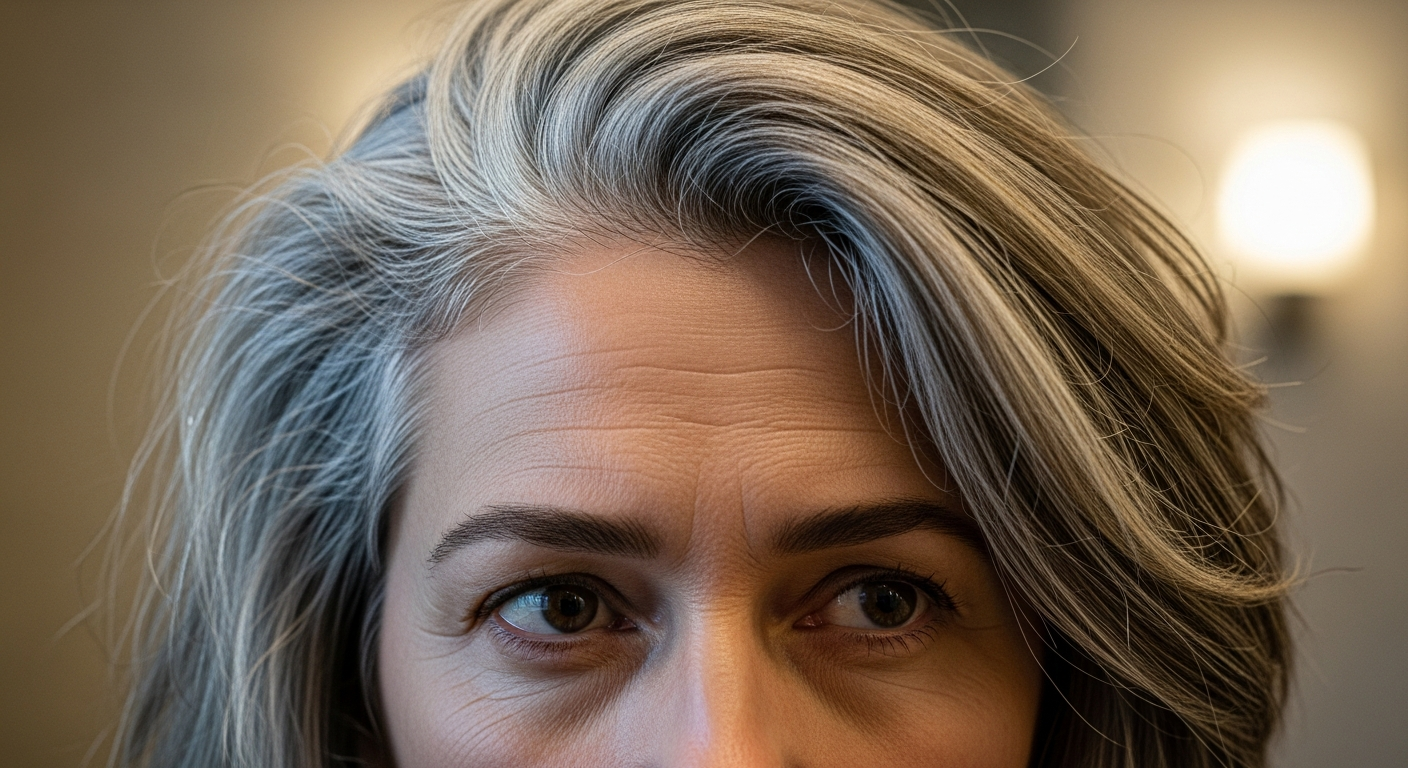
When 46-year-old Marissa stood in front of the mirror one morning, she barely recognized the tired face looking back. Her once radiant complexion seemed dulled, masked by the increasingly unnatural tone of her dyed hair. For years, she wrestled against the tide of graying locks with box dyes and salon treatments. But instead of reclaiming her youth, she felt like the artificial color was aging her more drastically than the grays ever had.
This isn’t just Marissa’s story—it’s a widespread experience. As more people enter their 40s and 50s, the initial response to gray hair is often panic. Society has deeply engrained the idea that youth equals beauty, and gray strands are something to hide. Yet the ongoing battle against this natural transition can create a different set of problems, from the constant maintenance cycle to the stark, often harsh look that contrasts with maturing skin tones.
Enter the concept of embracing the gray—but more elegantly. A technique known as “herringbone highlights” is challenging the outdated notion that coverage is the only solution. Blending gray with strategic, multidimensional tones, this method offers a softer, more flattering look that celebrates the passage of time rather than fights against it.
Understanding why traditional hair dye fails with graying hair
| Factor | Impact |
|---|---|
| Solid hair dye | Creates unnatural, flat color tone |
| Maintenance frequency | High upkeep; roots show within weeks |
| Skin aging | Harsh colors can exaggerate lines and dull complexion |
| Hair texture changes | Graying hair is more coarse, reacts differently to color |
Traditional all-over hair dye can do more harm than good as the skin changes with age. Mature skin typically loses some of its natural rosiness and elasticity, and bold, uniform dyes—especially darker ones—often create an unflattering contrast. Rather than erasing years, these dyes can cast shadows on the face and accentuate fine lines.
Additionally, gray hairs have different physical properties. They tend to be more coarse and less porous than pigmented hair, causing dye to absorb unevenly. This often results in patchy coverage or certain strands that simply refuse to hold onto artificial color. Over time, one can become stuck in a cycle of constant touch-ups, harsh outcomes, and disappointment.
How herringbone highlights change the narrative
Herringbone highlights are not your average foils. This strategic method weaves a mix of warm and cool tones—blondes, brunettes, ashes, and even coppers—throughout natural gray hair. This dynamic placement mimics the way hair would naturally lighten and transition with age, giving the final result an authentic, multidimensional appearance.
Rather than hiding the gray, this technique works with it. The goal is not perfection but harmony. These highlights are arranged in a staggered “herringbone” pattern, which balances the natural dispersal of grays with tones that complement the person’s complexion and natural hair color. The result is a textured, beautiful evolution of one’s natural hair—not its suppression.
“Herringbone highlights are a revelation for clients embracing their graying process. It enhances their features rather than masking them.”
— Jenna Morales, Celebrity Colorist
What makes this approach healthier and more flattering
One of the biggest appeals of herringbone highlights is their ability to soften the face. As the light reflects off the alternating shades, the relief effect makes the hair look full of motion and vitality. This movement draws attention away from lines or shadows on the face and instead brightens the overall appearance.
Additionally, since the highlights blend smoothly into the gray rather than covering it, there’s less obvious regrowth. Maintenance is more forgiving—appointments can be spaced months apart without looking untidy. For many, this offers not just aesthetic improvement but also emotional freedom from the never-ending color upkeep.
“Clients who switch to this transition method feel lighter emotionally. They no longer feel chained to the dye schedule.”
— Emily Cho, Senior Color Educator
Who this method is best suited for—and why
This style isn’t reserved for high-fashion salons; it’s especially ideal for anyone at the turning point where gray is becoming more visible, but they’re not yet ready—or enthusiastic—about going fully silver. Typically, this transition begins during the late 30s through the 50s, a period when many seek solutions that respect their evolved beauty.
Skin tone also plays a big role in how successful the blend looks. Herringbone tones can be customized to match nearly anyone’s undertones—whether cool, neutral, or warm—ensuring a natural enhancement rather than a jarring shift.
How to begin the transition to herringbone highlights
The best way to start is with a consultation. A colorist experienced in this technique will first assess your natural shade, where the grays are most prevalent, and your skin undertones. From there, a plan can be crafted that slowly integrates subtle highlights to begin softening the line between grays and dyed hair.
Steps to take
- Book a color consultation to review your hair’s health and graying pattern
- Discuss tone preferences and maintenance expectations
- Begin with light, scattered highlights in a placement that mimics your natural growth
- Return in 3–4 months for toning or to build in additional dimensions
Over time, the frequent use of full-head dyeing can be completely replaced by strategic color placement that allows more natural shades to shine through.
Winners and losers as hair trends evolve
| Winners | Losers |
|---|---|
| People with natural gray entering midlife | Outdated solid-color dye techniques |
| Stylists who offer bespoke coloring strategies | High-maintenance root cover services |
| Those embracing aging authentically | Beauty standards rooted in youth obsession |
Blending authenticity and aesthetics
In a cultural wave that’s beginning to celebrate authenticity over conformity, hair trends are finally aligning with personal evolution. The herringbone highlighting technique exemplifies how style can be synonymous with personal truth. Rather than punishing gray strands for showing up, this method invites them into the conversation—gracefully, artfully, and in sync with the maturing canvas of the face.
It’s not about giving up; it’s about growing into who you are, with poise and intention. As more women—and men—step away from the constant drive to hide their grays, they’re finding a new source of confidence in transparency. And with the right color approach, there’s no compromise on beauty.
Frequently asked questions about herringbone highlights
Do herringbone highlights require bleaching?
In many cases, yes—especially for blending lighter tones. However, high-quality stylists use methods that minimize damage and protect hair integrity.
Are herringbone highlights suitable for all hair colors?
Yes, the technique can be adapted for blondes, brunettes, redheads, and those with salt-and-pepper tones. The versatility makes it a smart choice for many.
How often should I maintain herringbone highlights?
Unlike full dye jobs, touch-ups can be spaced every 3 to 5 months, depending on how the color grows out.
Will this look natural if I already have some gray?
Absolutely—that’s what it’s designed for. The key is blending tones that reflect your natural coloring and complexion.
Can men benefit from this technique too?
Definitely. Men are also embracing gray in more stylistic ways, and subtle highlights can add polish without looking overly styled.
Is this a permanent color solution?
The highlights will fade gradually, and because they’re blended with your natural hair, regrowth is more forgiving than standard dyes.
What should I tell my stylist to get this look?
Ask for a “multi-dimensional gray blending highlight strategy,” and mention the herringbone pattern specifically. Photos can help communicate your goals visually.