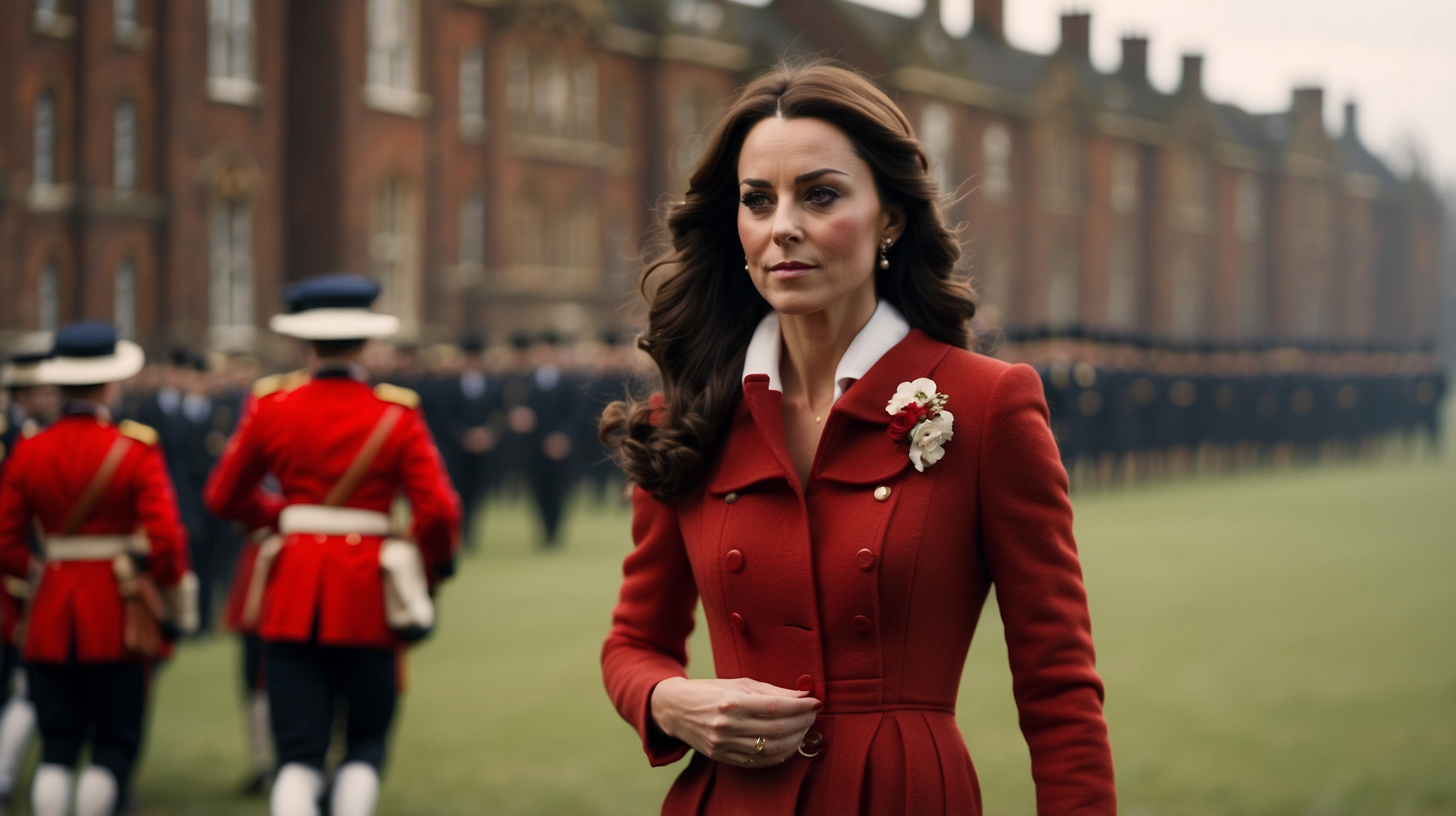
It was a moment that caught the eye of royal watchers across the globe. As the autumn sun filtered over the Cenotaph during this year’s solemn Remembrance Day ceremony in London, many noticed something subtly different. Catherine, Princess of Wales, known for her impeccable adherence to royal traditions, chose a slight but meaningful deviation in her outfit. It wasn’t just about fashion—it was a symbolic choice that sparked discussion and admiration alike.
Wearing a three-poppy brooch on her lapel, Catherine joined members of the Royal Family to honor those who died in military service. The subdued embellishment itself was not new, but the specific placement and styling of her red poppies marked a break from past traditions. In doing so, she echoed a sartorial path first taken by Sophie, Duchess of Edinburgh, subtly aligning herself with her fellow royal and crafting a meaningful gesture that didn’t go unnoticed. Social media lit up with speculation, admiration, and interpretation.
In royal circles, minute changes often convey major messages. So, when the Princess of Wales alters her ensemble for a major state occasion, people take notice—not just for what it means in terms of tradition, but what it reveals about the future of the monarchy’s public image. Her small but symbolic change has intrigued fans and experts alike, prompting new conversations about how modern royals are making age-old ceremonies their own.
What changed this year
| Aspect | Details |
|---|---|
| Event | Remembrance Day 2024 |
| Key Figure | Catherine, Princess of Wales |
| Style Change | Red poppies worn slightly differently; less traditional display |
| Historical Context | Royal women typically wear poppy brooches in formal, uniform styles |
| Inspiration | Sophie, Duchess of Edinburgh’s previous style choices |
The central shift this year was how the Princess of Wales styled her red poppies during the Remembrance Day ceremony. Traditionally, royal women pin a single or group of poppies to their left lapel, often using a specific brooch or cluster arrangement that honors a regiment or family tie. This time, Kate opted for a grouping on a different part of her coat, reminiscent of how Duchess Sophie styled hers in prior years.
This might seem insignificant, but in the world of royal protocol, such visual cues are powerful. This alteration reflects not just a personal touch but a subtle tribute to another royal woman who has gained admiration for her grounded, heartfelt presence—the Duchess of Edinburgh.
Why this style matters during ceremonial events
Remembrance Day is one of the UK’s most solemn national rites—a day for reflection, unity, and tribute. Royals dress not just to honor fallen soldiers but to echo national mourning. The poppy is a revered symbol of remembrance in the UK, inspired by the red flowers that grew on battlefields after World War I.
By diverging from the expected, Kate’s gesture translates to a deeper message: remembrance is personal. Emotional, symbolic, and national all at once, her fashion indicates modernity with respect. It mirrors a monarchy that is learning to balance form with feeling in today’s vastly more intimate and media-savvy culture.
“A small shift in where a royal wears a poppy says a million things—from remembering personal losses to modernizing tradition. It’s not fashion; it’s storytelling.”
— Emily Taylor, Royal Historian
The influence of Sophie, Duchess of Edinburgh
Sophie has long been admired for her down-to-earth demeanor and quiet approach to public life. In recent years, her subtle, heartfelt fashion choices during big ceremonies have led many to see her as a royal role model. Kate’s latest nod positions her as drawing from that same school of thought.
For years, Sophie’s influence circulated within quieter circles, but her prominence has grown. During previous Remembrance Day services, she wore her poppies not with grandeur but with simple grace—letting the symbols speak louder than the style. Kate’s homage suggests a strengthening sisterhood within the royal family, while modernizing their public personas.
“Catherine choosing to mirror Sophie’s style isn’t just aesthetics. It’s mutual respect, and a message about unity among royal women.”
— Dr. Helena West, Lecturer in British Monarchy Studies
The evolving royal presence at Remembrance Day
Once marked by rigid tradition, royal appearances have evolved to embrace emotional nuance. Queen Elizabeth II maintained strict protocol for decades, but as King Charles III steps forward, there’s more room for personal expression, especially among younger royals.
Kate’s gesture may be seen as a part of this evolution. Instead of strict sameness, individuality within the royal template is now the order of the day. It positions her as a modern monarch-in-waiting—aware of history, yet confident enough to adapt her place within it. The styling choice, while subtle, underscores the monarchy’s growing focus on relatability and emotional resonance.
How the public responded to the change
Fans and fashion followers quickly took to social media to discuss Kate’s updated styling. Threads flooded with messages praising her for “making the old new again” and for “respecting tradition while being her own woman.”
While there were a few voices critical of deriving meaning from fashion, the overwhelming response was positive. Many saw it as a thoughtful way to modernize symbolism without diminishing its gravity—a moment that reminded viewers the monarchy can breathe, grow, and feel along with its people.
Symbolism behind wearing poppies
Each November, millions in the UK and Commonwealth countries wear red paper or silk poppies to commemorate military personnel who died in wars. The flower gained popularity after the poem “In Flanders Fields” and has since stood as a public mark of respect and solidarity with veterans and grieving families.
Among royals, poppies serve a deeper function. They not only signify public remembrance but also offer individual members a way to tribute their personal military connections. Every detail—from the number of poppies to the brooch chosen—can hold deep meaning. Kate’s choice of three poppies this year, some commented, may represent the three branches of the British Armed Forces: Navy, Army, and Air Force.
“People underestimate just how carefully chosen these elements are. Every fold, every flower tells a story with layers.”
— Marianne Lewis, Fashion Analyst and Royal Commentator
The future of royal symbolism
As the royal family embraces a new era, elements like fashion, symbolism, and presence become key tools in maintaining relevance. Moments like Kate’s quiet shift offer a glimpse into how traditions can adapt while maintaining meaning.
Far from a rebellion, these changes symbolize evolution. In reimagining visual codes while preserving core values, the Princess of Wales is helping to shape the monarchy’s identity for a new generation—modern, aware, and ever grace-laden.
Frequently asked questions
Why do royals wear red poppies on Remembrance Day?
Red poppies are a symbol of remembrance for fallen soldiers, inspired by the battlefields of World War I. Royals wear them to honor the sacrifices made by military service members.
What was different about Princess Kate’s poppy style this year?
She chose to wear her three poppies in a more subtle placement, mirroring Sophie, Duchess of Edinburgh’s previous styling, instead of the traditionally prominent brooch style.
Who is Sophie, Duchess of Edinburgh?
Sophie is married to Prince Edward and is known for her understated yet emotionally resonant approach to royal duties, making her an admired figure within royal circles.
Do the number of poppies worn have specific meanings?
Sometimes, yes. Royals may choose a number that represents family members, regiments, or military branches. It’s often a personal tribute within a public display.
Is this change considered breaking royal tradition?
While not a radical break, it is a departure from strict tradition. However, it is within the bounds of acceptable royal flexibility and widely viewed as a respectful modernization.
What message does this send about the monarchy’s future?
It suggests that the monarchy is evolving to be more emotionally accessible and personally resonant, especially through the actions of younger royals like Kate.
Are royal outfits always symbolic during public events?
Often, yes. From colors to accessories, nearly every element of a royal’s outfit at public events is carefully selected to convey a message or honor a tradition.