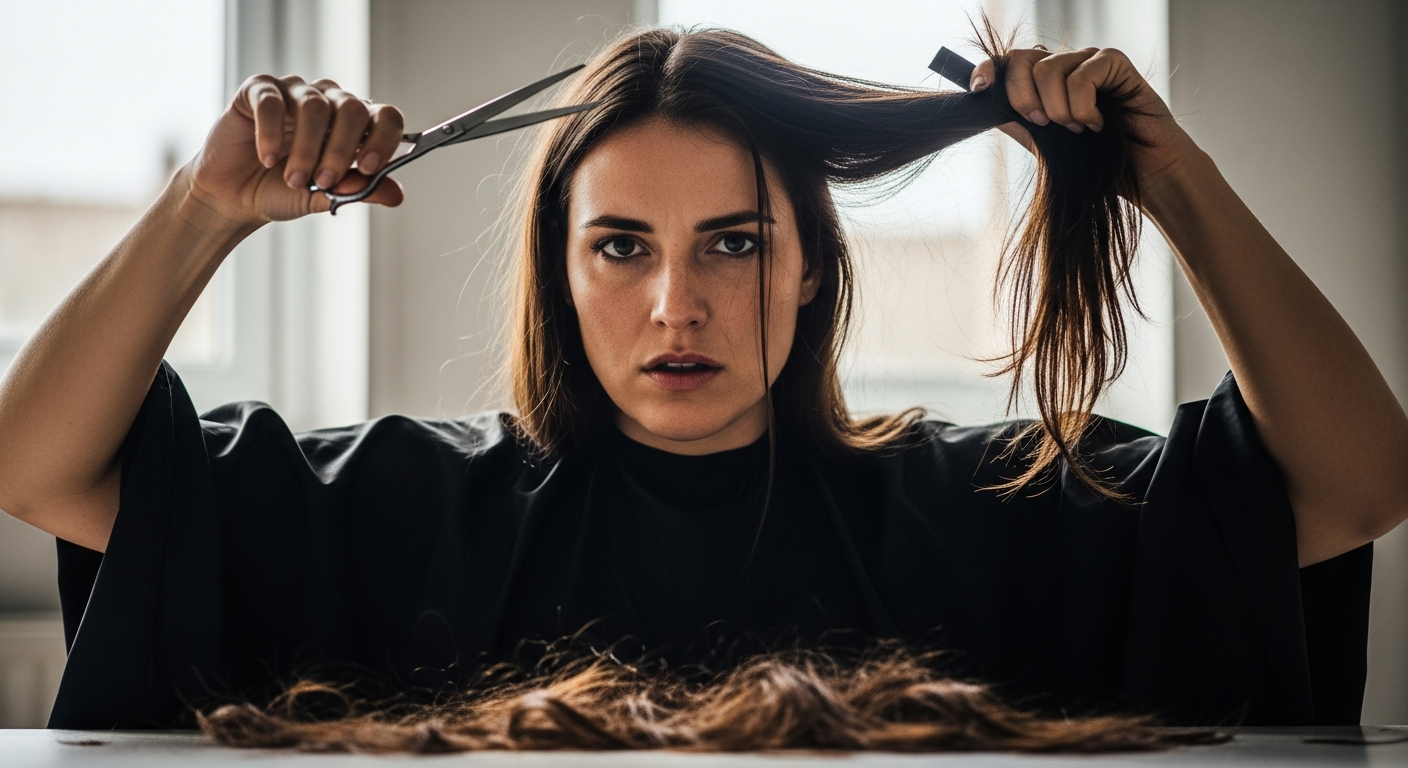
She sat in the salon chair, quiet but resolute, as the stylist’s scissors slid through long strands of hair that had once defined her look for years. With every snip, it wasn’t just hair falling to the floor—it was the weight of memories, pain, and a life chapter coming to a close. After a painful breakup, the decision to chop off her long locks seemed impulsive, even extreme to an outsider. But to her, it was cathartic, purposeful—a symbol of rebirth.
For countless women around the world, cutting their hair short after a major life change is more than just a cosmetic decision. It’s deeply emotional, often tied to a desire to reclaim control, refresh their identity, or sever ties to a past that no longer serves them. This phenomenon isn’t new—but the reasons behind it are becoming more visible as psychologists and sociologists delve into the complex interplay between trauma, identity, and transformation.
From long bobs to pixie cuts, the act of cutting one’s hair goes far beyond scissors and style—it reaches into the heart of emotional resilience, human psychology, and feminine courage. So what is it about short hair that resonates so deeply during times of change?
Why women choose to cut their hair after a breakup or trauma
| Reason | Description |
| Symbol of transformation | Haircuts often signify turning over a new leaf emotionally and mentally |
| Reclaiming control | Provides a sense of agency after a period of feeling powerless |
| Letting go of the past | Cuts ties with previous identity connected to painful experiences |
| Embracing independence | Short hair as a visual symbol of self-sufficiency |
| Externalizing internal change | Hair becomes a physical representation of emotional transitions |
The symbolic power of hair in human psychology
Hair has always carried significant symbolic weight throughout history. In many cultures, it represents beauty, power, youth, and, for women in particular, femininity. The decision to cut it—especially drastically short—is rarely just about aesthetics. Rather, it’s a powerful symbol of transformation, autonomy, and emotional evolution.
“Hair is often a proxy for personal identity. It’s one of the first things people notice and is tightly linked to how we see ourselves.”
— Dr. Marissa Lunden, Clinical Psychologist
When women deal with a breakup, divorce, loss, or personal trauma, they often feel stripped of control. Cutting their hair becomes a way to regain power over their bodies and choices. It’s a visible act that says, “I may be hurting, but I’m still in control of my narrative.”
Letting go of the past
Hair grows alongside us. It bears witness to the years, capturing moments—from springtime romances to the pain of loss. For many women, long hair becomes a sort of emotional archive, entangled with the life lived. After a relationship ends—especially if it was long-term—the appearance you’ve had during that partnership can feel like a relic of that era.
Shedding long hair becomes a metaphor for shedding the past.
“It’s about emotional release. Women aren’t just cutting hair—they’re cutting memories, cutting pain, and starting over.”
— Sophia Tran, Licensed Therapist
This newfound lightness doesn’t just reside on the scalp. Many describe feeling psychologically lighter, more free. It’s not about spite or revenge—it’s about reclaiming space that grief used to occupy.
The science behind change and appearance
Psychologists explain that humans are visual beings. When internal emotions feel chaotic, external changes often reflect that turbulence. A new hairstyle becomes a creative outlet—a tangible manifestation of what someone is experiencing inside.
People going through emotional upheaval need something they can change quickly and visibly, and hair often fits that bill.
How the decision can impact mental health
Interestingly, many women report overwhelmingly positive feelings post-haircut. They describe feeling “refreshed,” “unburdened,” and “in control.” This boost is more than anecdotal. Studies in behavioral psychology support the role of visual and tactile changes—a haircut being both—as catalysts for improved mood and clearer thinking.
However, it’s also crucial to recognize that while the act may feel empowering, it doesn’t erase emotional trauma on its own. But it lays the groundwork for healing and opens the door to a new identity.
Short hair as a symbol of rebellion and self-discovery
Historically, women have used short hairstyles to defy societal expectations. From flappers in the 1920s to punk rock icons in the ’70s and ’80s, the pixie cut has often symbolized rebellion against traditional ideas of femininity.
“Choosing a short hairstyle can feel like shrugging off expectations—saying ‘I define me now.’”
— Emily Navarro, Cultural Analyst
In today’s context, that rebellion is often internal. Rather than society pushing inconsistent beauty standards, women are pushing back against the versions of themselves they no longer wish to be.
From breakdown to breakthrough
Cutting your hair doesn’t fix everything. But it often marks the beginning of something new, a shift in mindset. It’s the first chapter in the story after the heartbreak—the moment the main character stands up, brushes themselves off, and says, “I’m starting over.”
It’s that sense of movement—from breakdown to breakthrough—that keeps many women walking into salons after they’ve walked away from something they once loved.
Who this phenomenon affects the most
| Winners | Losers |
| Women seeking emotional release and self-renewal | Partners who try to control appearance choices |
| Therapists and stylists fostering healing spaces | Societal norms dictating beauty standards |
How stylists play a role in emotional recovery
Hair stylists are often the silent witnesses to emotional breakdowns and breakthroughs. They don’t only cut and style hair, they offer a safe space, listening ears, and often encouragement when it’s needed most.
“We’re not just cutting hair—we’re helping rebuild confidence. Every chop is a step toward empowerment.”
— Jenna Fields, Master Stylist
Understanding this emotional depth enables them to support their clients not only physically but emotionally, helping them transition to their next chapter with grace and confidence.
Short FAQs about post-breakup haircuts
Why do so many women cut their hair after a breakup?
It symbolizes a fresh start, provides emotional relief, and helps reclaim personal identity.
Is cutting hair an impulsive decision during emotional times?
Sometimes, but it can also be a conscious, meaningful act of self-care and emotional expression.
Does changing appearance help with emotional healing?
Yes, external change can help people process internal emotions and boost self-confidence.
What does short hair represent psychologically?
It often represents empowerment, independence, and a break from past identities.
Are there studies linking haircuts to better mental health?
Behavioral psychology supports that visible change, like a haircut, can improve mood and mental outlook.
How long after a breakup do people typically make such changes?
It varies—some act immediately, others wait weeks or months; the emotional need dictates the timing.
Can stylists prepare for emotional clients?
Yes, many stylists are trained or experienced in offering emotional support along with their services.
Does society still judge women based on hair length?
To a degree, yes. But modern shifting norms are increasingly celebrating individuality and personal choice.