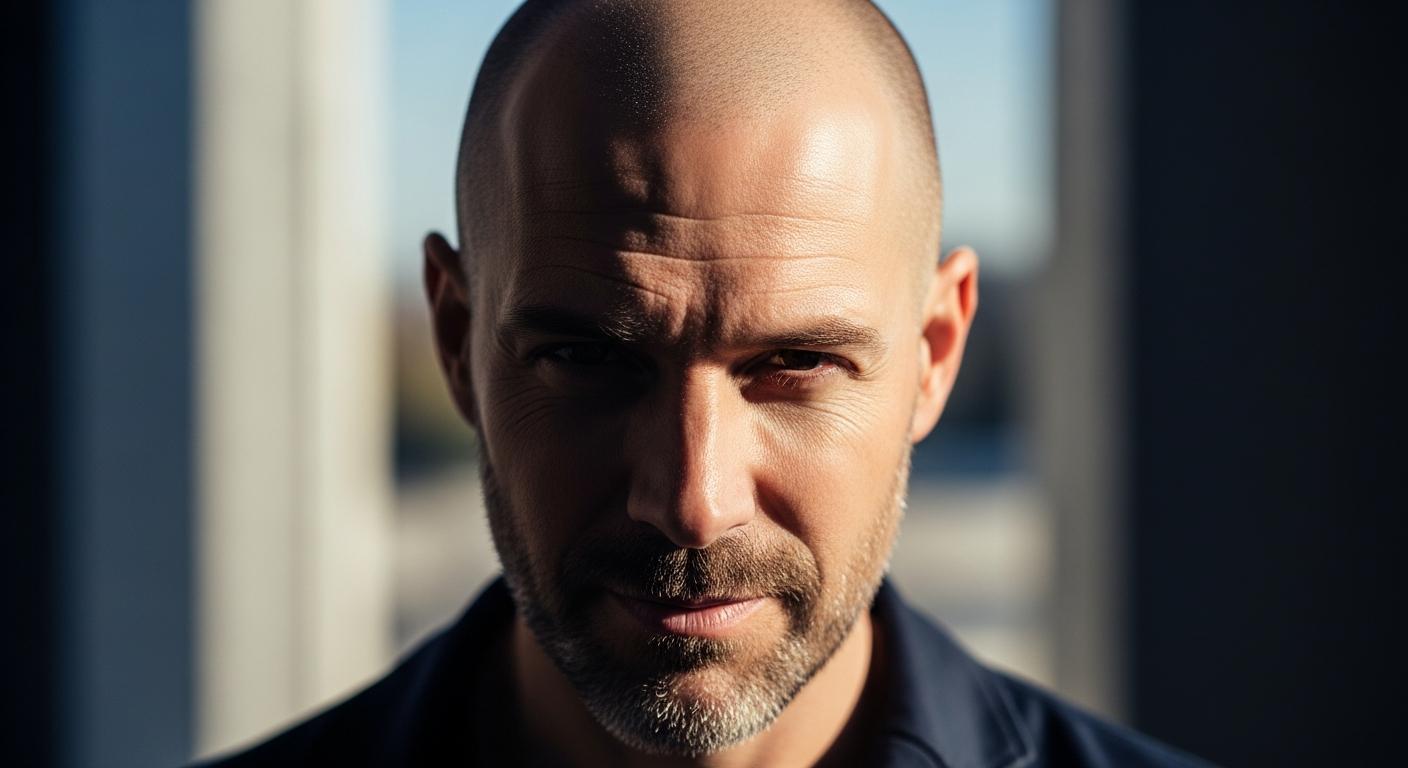
When Jake Matthews walked into his office for the first time after shaving his head, he braced himself for humor and teasing from his colleagues. Instead, he was taken aback — not by jokes but compliments. His boss gave him an approving nod, a usually skeptical coworker suddenly asked for his opinion during a meeting, and he even received two dinner invites before noon. For someone who had always struggled with mixed feelings about his thinning hair, the decision to go bald had unexpectedly shifted how others perceived him — and even how he saw himself.
Jake’s experience isn’t isolated. More and more men are opting to shave their heads completely, not just for aesthetics or convenience, but because of a subtle yet powerful psychological effect: their social interactions change. Studies and personal accounts indicate a common pattern — when men shave their heads, they are often perceived as more dominant, more confident, and even slightly taller and stronger.
This phenomenon raises compelling questions. Why does such a simple change in appearance evoke such strong shifts in perception? Could a shaved head really be the confidence boost many men didn’t know they needed? This article explores the curious psychology behind the bald head revolution — and what it means for men choosing to take control of their image.
The growing trend of embracing a shaved head
| Trend Name | Men embracing a clean-shaven head |
| Main Benefit | Increased perception of dominance and confidence |
| Scientific Support | Behavioral studies on social perception and masculinity |
| Common Triggers | Male pattern baldness, lifestyle choice, identity reinvention |
| Popular Demographic | Men aged 25–50, professionals, public figures |
Why men go bald by choice
For centuries, a full head of hair has been associated with youth, vitality, and attractiveness. Cultures around the world invest in hair oils, treatments, and transplants, often painting baldness as something to fear or hide. But the modern masculine narrative is changing. Rather than attempting to conceal thinning hair with comb-overs or expensive procedures, men are increasingly embracing baldness on their own terms.
This choice is a form of taking back control. Men want to stop fighting nature and instead reframe the situation to their advantage. Psychologically, the act of shaving the head represents a shift from insecurity to self-assurance. And because this transformation is so visible, the effects reverberate outward: peers notice the change and often respond positively.
“I used to obsess over my receding hairline. But once I shaved my head, I felt liberated — and oddly respected. It was like flipping a switch.”
— Alex Bruno, Tech Consultant
What science says about baldness and perception
A compelling study from the University of Pennsylvania found that men who permanently shaved their heads were perceived as more dominant, more confident, and more masculine than those with full heads of hair. Interestingly, these men were also rated as taller and stronger — even though their physical stats hadn’t changed at all.
Psychologists believe the clean-shaven look cues certain subconscious associations. Without hair to soften the facial features, the scalp and bone structure become more prominent, making the individual appear more striking. Additionally, because baldness is often associated with maturity and leadership (think military figures or power players like Jeff Bezos and Dwayne “The Rock” Johnson), it evokes implicit authority.
“We found that shaved heads are not just a neutral style choice — they actively change how others evaluate your strength and social status.”
— Dr. Albert Mannes, Behavioral Researcher
How confidence grows when hair disappears
The internal change is just as powerful. Numerous men report a significant uptick in self-esteem after shaving their heads. The act is symbolic: choosing baldness signals resilience, self-acceptance, and courage in the face of social expectations. This change leads to improved posture, eye contact, and even vocal assertiveness — all traits that reinforce the external perception of confidence.
For many, the anxiety tied to hair loss consumes years. Constant mirror checks, trying new products, and avoiding harsh lighting become daily rituals. By shaving their heads, men eliminate this mental burden, freeing up emotional bandwidth for more meaningful pursuits.
“Going bald by choice was like clearing mental clutter. I stopped worrying about something I couldn’t control and started focusing on things that really mattered.”
— Darren Ng, Lawyer and Speaker
High-profile men redefining the bald look
The public image of bald men has changed drastically, thanks in part to influential figures. Celebrities, athletes, CEOs — many choose to sport a clean-shaven look not out of necessity, but preference. These individuals contribute to normalizing, even glamorizing, the bald style.
Think about leaders like David Beckham, Prince William, or Vin Diesel — men admired across different industries for their poise, success, and charisma. Their baldness is part of their visual identity, reinforcing the idea that masculinity isn’t tied to hair, but how you carry yourself.
“Hair used to define my look, but now that I’m bald, I feel sharper and more memorable. People focus on my expressions, not my hairline.”
— Mike Sanders, Fashion Entrepreneur
Unexpected benefits in the workplace
Several professionals describe how shaving their heads subtly impacted their careers. They’re taken more seriously in meetings, treated as tenured or senior even if they aren’t, and frequently assumed to be more decisive or trustworthy. While this bias might sound unfair on paper, it illustrates the deep psychological effects of appearance in social dynamics.
A polished bald look can signal discipline and intentionality — traits highly valued in leadership roles. In industries like finance, law, and consulting, where gravitas matters, this aesthetic edge can translate into real-world opportunities.
| Winners | Losers |
|---|---|
| Men with receding hairlines embracing the bald look | Those hiding hair loss using ineffective methods |
| Public-facing professionals seeking a bold image | Men experiencing anxiety over their appearance |
| Individuals seeking psychological liberation and clarity | Those sticking to trends that no longer align with their identity |
How to make the transition confidently
Shaving your head for the first time can be emotionally intense. But with preparation and the right mindset, it can become an empowering rite of passage. Here’s how to do it:
- Mentally prepare: Visualize your new look. Understand the “why” behind your decision.
- Use quality tools: Invest in a good clipper or go to a trusted barber for the initial shave.
- Skincare matters: Maintain your scalp with moisturizers and sunscreen to avoid dryness or sunburn.
- Update your wardrobe: Your new look may inspire a refreshed style — experiment with collars, glasses, or facial hair.
- Own the look: Confidence is key. The more you embrace it, the more others will too.
Common questions men ask before going bald
Will shaving my head make me look older?
Not necessarily. While it can give a more mature appearance, many people find that a clean head actually enhances facial features and adds a sharper, more defined look.
Is there a “best time” to go bald?
Most do it when their hair thinning becomes noticeable. However, many men choose the shaved look well before hair loss begins as a fashion or self-image choice.
Do people really treat bald men differently?
Studies show yes — men with shaved heads are often perceived as more dominant, authoritative, and confident, even if their behavior hasn’t changed.
How should I maintain my shaved head?
Ensure regular shaving (every 1–2 days), use antibacterial moisturizers, and apply sunscreen when outside. Scalp care is essential for a clean and polished look.
Will having a round head shape look awkward bald?
Not at all. Every head shape can rock the look — it’s more about how you carry it. Beards, glasses, and style tweaks can balance the overall appearance.
What if I regret shaving it off?
Hair grows back! But most who make the leap report greater self-confidence and rarely go back to having hair once they experience the benefits.
Should I talk to others before making the choice?
If you’re unsure, consulting close friends, barbers, or even trying on bald simulation apps can help with visualization and decision-making.
Are bald men more attractive to women?
Attractiveness is subjective, but many women associate baldness with strength, decisiveness, and confidence — traits that can be deeply appealing.