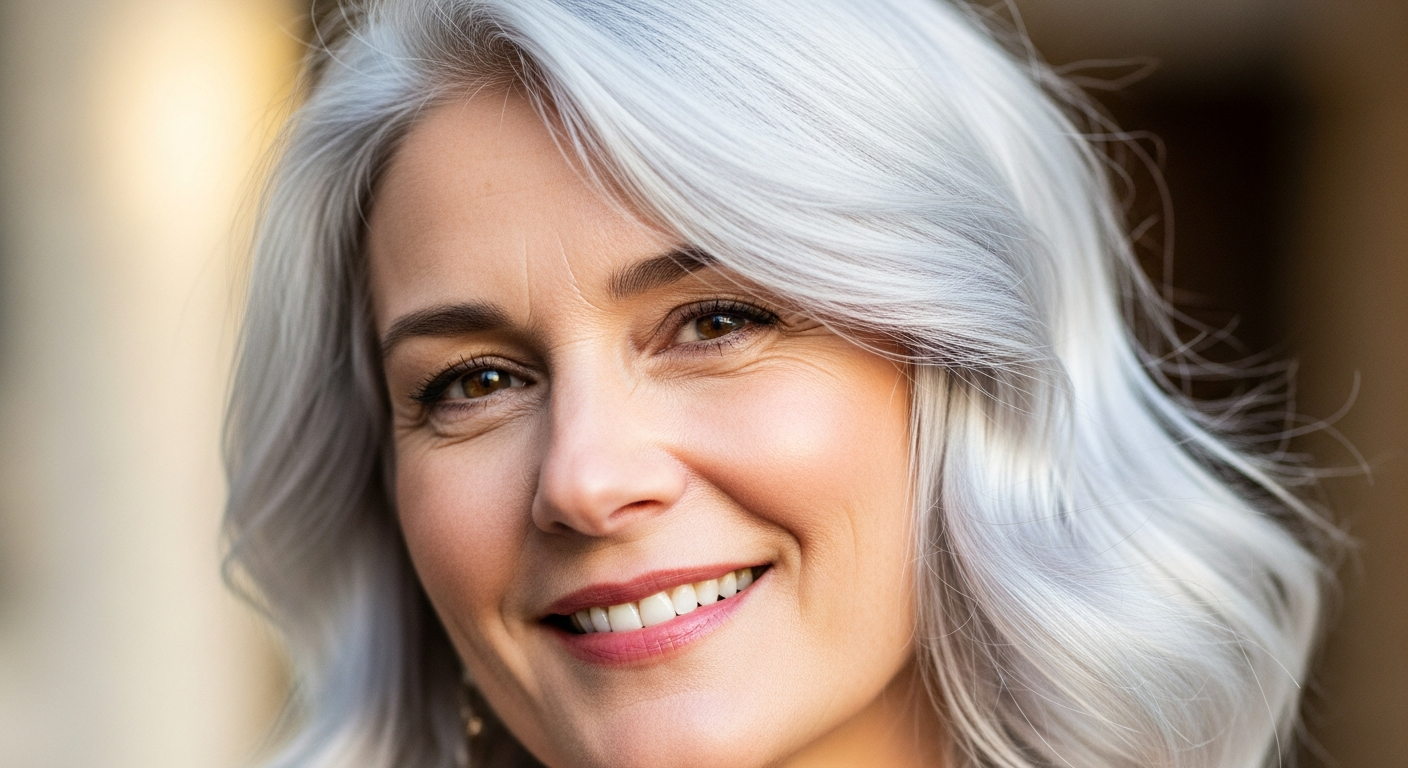
As the soft glow of dawn filtered through her apartment window, 52-year-old Lila glanced at her reflection and paused. The woman staring back had a halo of silver curls that shimmered, unapologetically authentic. This wasn’t just a new look. It was a quiet revolution. A reflection of freedom. Like thousands of other women around the world, Lila had finally stopped dyeing her roots—and the sense of empowerment she felt was almost indescribable.
For decades, women have faced relentless pressure to conceal signs of aging. Gray strands were enemies, and every few weeks, women dutifully returned to hair salons or reached for at-home dye kits to silence nature’s truth. But a growing number of women are reclaiming ownership over their appearance and identities, finding pride—and even strength—in letting their natural silver strands shine through.
The movement is more than just aesthetic. Letting go of the dye bottle is becoming a psychological reset for many. It’s not a surrender to age, but a celebration of authenticity, resilience, and confidence. So what exactly changes when women embrace their silver hair?
What embracing natural hair color really means
| Aspect | Details |
|---|---|
| Core Trend | Growing number of women opting to stop dyeing their gray roots |
| Psychological Impact | Increased confidence, self-acceptance, and freedom |
| Primary Demographic | Women aged 40+, particularly those over 50 |
| Motivating Factors | Desire for authenticity, time savings, health reasons, self-empowerment |
| Social Implications | Challenging beauty standards and age-based stigma |
Why more women are ditching root touch-ups
The fight against aging has long been driven by a beauty industry profiting from insecurity. But over recent years, women have begun asking an important question: “Who am I doing this for?” Root touch-ups, which typically demand attention every 3–6 weeks, often represented not just a beauty task, but a chore tethered to societal expectations. Many women report feeling immense relief once they decide to stop the cycle.
From rising awareness of hair health to busy schedules made busier by remote work, post-pandemic life has encouraged simplicity. The decision to let silver roots grow isn’t always about rejecting beauty—it’s about redefining it. It’s also about reclaiming the narrative: that aging can be graceful, dignified, and undeniably beautiful.
The psychological effects of going gray naturally
According to recent anecdotal findings, women consistently report a psychological boost after going gray. The sense of stepping into authenticity brings profound relief. Removing the mask of dyed hair often translates into greater confidence in professional and personal spaces.
For some, the change is even deeper. They describe feelings of ‘liberation’—no longer burdened by expectations of eternal youth. Others talk about respect: how embracing their silvers invites others to focus on their words, their wisdom, their presence—not their appearance.
Letting my gray grow in was the most courageous thing I’ve done for myself. I stopped hiding, and I started living more freely.
— Denise Howard, Mental Health Therapist
The health and economic benefits of going dye-free
Aside from emotional wins, there are practical reasons many women are stepping away from the dye aisle. Hair dye—especially the permanent type used for root touch-ups—often contains harsh chemicals like ammonia, PPD, and resorcinol, which can irritate the scalp and damage hair over time. Going dye-free reduces exposure and promotes healthier strands.
Financially, the move can be liberating as well. Root maintenance every 4 weeks adds up quickly—especially at salons. Cutting that routine saves hundreds to thousands of dollars per year, freeing up resources for wellness, hobbies, or travel—investments that bring joy rather than stress.
I was spending almost $1,200 a year coloring my hair. Since I went natural, I’ve used that budget to take yoga classes and start painting again.
— Joan Mitchell, Retired Educator
How social media is empowering the silver hair movement
If there’s a battleground for beauty standards, social media is its frontline. But it’s also become a source of community for silver-haired warriors. Platforms are filled with storytellers—women documenting their color transition month-by-month, sharing photos, encouragement, and product tips to nourish and style silver strands.
In this space, a support system blossoms. Hashtags like #GrayHairDontCare and #SilverSisters transcend vanity, becoming calls to action that normalize aging and celebrate individual journeys. These platforms show that women of all backgrounds are proudly stepping into their natural hue—and loving it.
The rise of silver role models in media and leadership
One of the more visible indicators of change is the increasing presence of silver-haired women in high-visibility roles—on screen, in politics, in business. From actors like Andie MacDowell embracing their locks on red carpets, to CEOs and wellness influencers choosing not to color, the message is growing louder: natural aging deserves the spotlight.
Representation matters. When younger women see older women embracing silver proudly and powerfully, they are more likely to view aging with optimism. The stigma begins to break down not with lectures, but with living examples of grace and confidence.
Winners and losers in the transition to natural hair
| Winners | Losers |
|---|---|
| Women embracing authenticity | Beauty industry profits from hair dye products |
| Holistic hair care product brands | Traditional salons relying heavily on coloring services |
| Communities promoting self-acceptance | Societal norms enforcing youth-centric beauty |
What to expect when transitioning to gray
Going natural isn’t a one-step process. It can take months—a year or more—for previously dyed hair to fully grow or fade. But women say the journey is part of the joy. During the transition, strategies like color blending, going for a pixie cut, or using glosses to manage brassiness can help.
Hair texture may also shift with age and graying. Silver strands may feel wirier or drier, requiring specialized conditioners and hydration treatments. The pay-off? Hair that finally feels like you—without compromise.
We need to normalize the process of aging as beautiful, not something to hide away. Gray hair is just another shade of self.
— Marisol Vega, Beauty Advocate (placeholder)
Is this just a trend or a lasting shift in culture?
While some dismiss the silver hair movement as a fleeting trend, its growing presence in workplaces, red carpets, and political offices suggests a deeper cultural shift. At its core, it’s about autonomy—choosing what feels right on your own terms, without pressure to conform.
The conversation is expanding beyond hair. It’s about aging with pride, being visible, and rewriting what beauty means at every decade. For younger generations watching their mothers and mentors embrace gray, it plants the seeds of self-worth that aren’t conditional on appearance. And that’s a legacy worth cultivating.
Short FAQs about going gray naturally
What are the psychological benefits of stopping hair dye?
Women report increased confidence, authenticity, and relief from societal pressure when embracing their natural hair color.
How long does it take to fully transition to gray hair?
The transition typically takes 6–18 months, depending on hair length, growth rate, and previous dye history.
Does gray hair require different care?
Yes. Gray hair may be more porous and dry, requiring more hydration, toning products, and gentle styling.
Can I still look professional with gray hair?
Absolutely. Many women find that gray hair enhances their mature, professional appearance and increases respect from peers.
What if I regret going gray?
You can always return to dyeing if you choose. This is a personal journey, and there’s no wrong path to self-expression.
Is there an age when it’s better to go gray?
There’s no perfect age—many begin the journey in their 40s or 50s, but it’s about personal timing and comfort.
Does silver hair change texture or thickness?
Some people notice graying hair becomes coarser or thinner, though this varies by genetics and care routines.
How can I deal with judgment or comments from others?
Confidence and community are key. Share your journey and connect with others who support self-acceptance and authenticity.