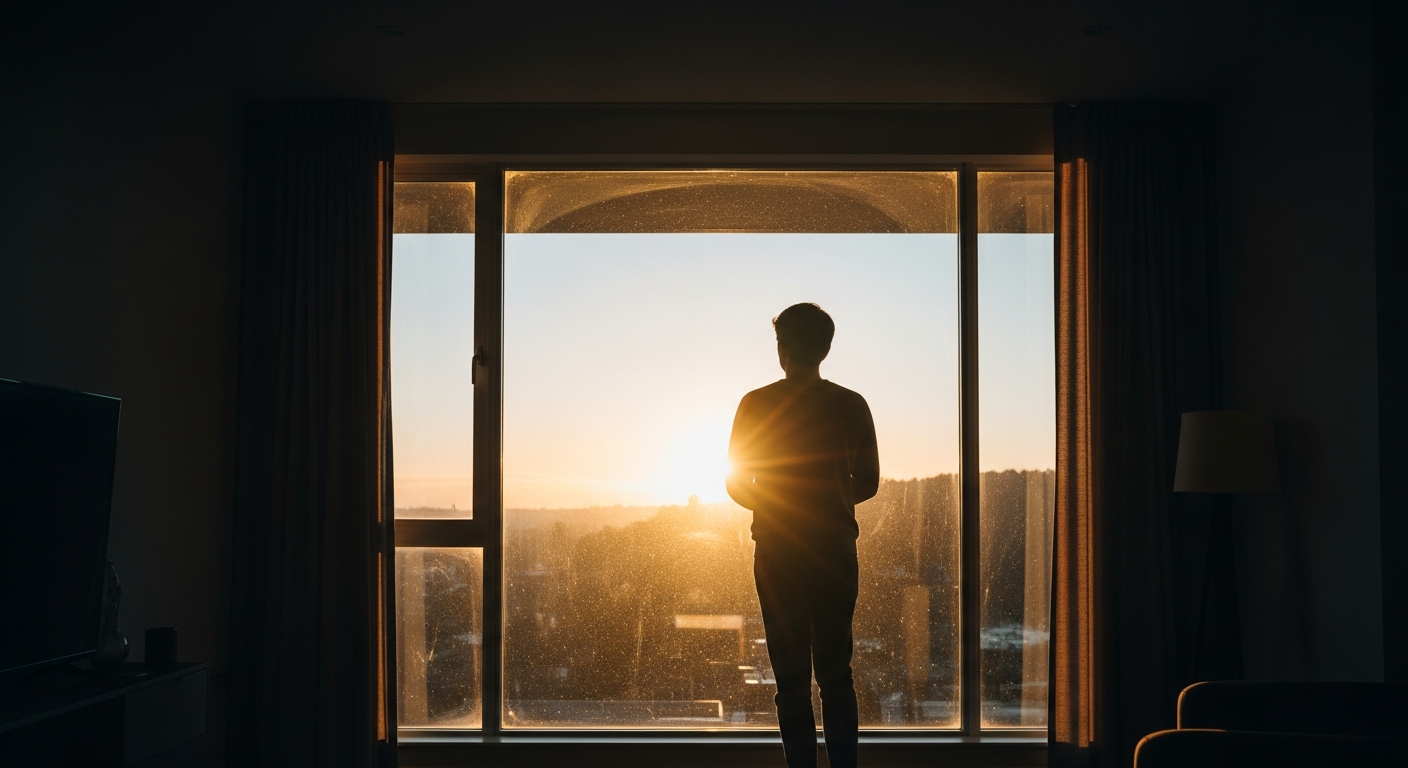
Waking up in the morning isn’t always easy, but one simple habit might change everything: standing near a window. New scientific insights suggest that spending even a few minutes near a sunny window shortly after waking can significantly enhance your mental alertness and overall mood. This common morning behavior isn’t just based on superstition or anecdotal benefit—it has its roots in anatomy, neuroscience, and circadian biology.
Exposure to natural sunlight in the first hour of waking activates various processes within the brain and body that help reset your internal clock, increase alertness, and improve cognitive performance throughout the day. The light that enters your eyes through windows—even on cloudy days—is rich in the blue wavelengths that the body needs to trigger these responses. These findings not only elevate our understanding of light as a biological necessity but also suggest quick and practical strategies for performing better and feeling more awake—without relying solely on caffeine.
Key benefits of morning sunlight exposure
| Benefit | Description |
|---|---|
| Increased Alertness | Bright light helps regulate the brain’s wakefulness centers |
| Improved Mood | Morning light helps regulate serotonin, a neurotransmitter linked to mood |
| Stronger Circadian Rhythms | Helps set your internal clock to match the day-night cycle |
| Enhanced Focus and Memory | Studies show better cognitive performance with morning light exposure |
| Reduced Grogginess | Standing by a window reduces sleep inertia more rapidly |
Why light matters more than we think
We often underestimate the power of natural light, yet our brains are deeply wired to respond to it. Humans evolved under the canopy of the sun, and as such, the light we perceive isn’t just for vision—it’s essential for keeping our biological systems running correctly. When we receive sunlight in the morning, specific cells in our eyes called *intrinsically photosensitive retinal ganglion cells* (ipRGCs) detect the blue-spectrum light and send signals directly to the brain’s *suprachiasmatic nucleus*—our master circadian clock.
This regulates daily processes such as hormones, metabolism, and behavioral patterns. Even through a window, light can help synchronize this clock, particularly when received within the first hour after waking. By doing this, you’re telling your body it’s time to be awake, alert, and ready for the day. Conversely, not getting morning light throws off this internal timing, leading to sluggishness, mood dips, and even poor sleep at night.
How it influences cortisol and serotonin levels
One key reason people feel more alert after morning sunlight exposure is the stimulation of **cortisol**, often called the “awake” hormone. Cortisol levels naturally rise in the morning as part of the body’s daily rhythm, and bright light makes this spike stronger and more aligned with your waking cycle. This results in greater mental clarity, focus, and even improved decision-making early in the day.
Additionally, morning light enhances the production of **serotonin**, a neurotransmitter that contributes to happiness and emotional balance. Serotonin later helps produce melatonin—the sleep hormone—as darkness sets in. This means your morning light exposure may not just help you wake up sharply but could also lead to more restful sleep that night.
Getting light in the morning is like giving your body a natural reset—it reboots your energy, performance, and emotional state.
— Dr. Harlan Greene, Neurobiologist
Role of windows versus artificial light
While artificial lights can help, they pale in comparison to **natural sunlight** in terms of intensity and spectrum. A bright indoor environment might provide 500 to 1,000 lux of illumination, but even on an overcast day, the light outside registers between 10,000 and 20,000 lux. Near a window, you get a valuable compromise—much stronger light than standard bulbs, and the key daylight spectrum that includes important blue wavelengths.
This is why **standing by a window** works even when it’s cloudy. The richer light quality is still effective at stimulating the retina and triggering the wake-up response in the brain. It’s also non-invasive, free, and takes only a few minutes each morning to make a difference.
A practical guide to maximize morning light exposure
- Time it early: Aim to get light exposure within 30–60 minutes of waking up.
- Duration matters: Try to stand or sit near a sunny window for 10–15 minutes each morning.
- Eyes open: The photoreceptors in your eyes need direct light exposure—not through closed eyelids.
- Open curtains or blinds: Remove any physical barriers to maximize light input.
- Add movement: Combine morning light with light stretching or walking for amplified effect.
Even five minutes of daylight exposure near a window can improve your body’s biological clock significantly.
— Dr. Leena Park, Sleep Medicine Specialist
Sleep inertia and how morning light helps
One of the hardest parts of waking up is overcoming sleep inertia—a groggy state that can linger for minutes or even hours. Natural light exposure significantly reduces this effect. Research shows that people who stand by a window upon waking experience faster improvement in reaction times, mood, and memory than those who remain in dim surroundings.
What’s more, bright light reduces **melatonin**, the hormone responsible for sleep, which remains in your system after waking. The faster melatonin is suppressed by light, the sooner your alertness and brain speed return to optimum levels.
Who benefits the most from this practice
Although everyone can gain something from better light exposure, some groups stand to benefit even more:
- Night owls and late risers: Helps reset delayed body clocks and makes mornings easier.
- People with depression: Morning light is a documented mood enhancer and supports psychological stability.
- Remote workers: Especially those without scheduled morning commutes, missing early daylight is common.
- Shift workers: Helps re-entrain disrupted circadian rhythms from irregular schedules.
Simple steps to add this to your routine
If you’re looking to make morning light a part of your lifestyle, here are some actionable steps:
- Place your coffee station or breakfast area near a window
- Open the curtains fully as soon as you rise
- Use light therapy lamps on extra dark days, as supplemental options
- Take phone calls or morning journaling sessions near the brightest window
- Remind yourself with post-it notes or calendar alerts until it becomes a habit
FAQs: What you need to know about morning light
How long should I stand near a window in the morning?
Ideally, aim for 10 to 15 minutes of exposure to bright, natural light within the first hour of waking.
Is it effective through glass, or do I need to go outside?
Yes, light through windows still helps. It’s not as strong as direct sunlight, but it captures the necessary spectrum for biological response.
Does morning light help with insomnia or poor sleep?
Yes, morning light helps reset your internal clock, making it easier to fall asleep at night and wake up refreshed.
Is blue light in the morning good for you?
In the morning, yes. Blue-spectrum light is essential for stimulating wakefulness and attention.
Can I still benefit on cloudy days?
Absolutely. Outdoor light—even on overcast days—still provides significantly more brightness and quality than indoor lighting.
What time of morning is best for light exposure?
The earlier, the better. Within 30 to 60 minutes of waking produces the strongest positive effect.
Are artificial light therapy lamps a good substitute?
They can be helpful supplements, especially in dark climates, but nothing completely replaces real sunlight’s spectrum.
Can kids or teens benefit from morning sunlight too?
Yes, children and teenagers also need morning light to develop healthy sleep patterns and reduce mood disturbances.