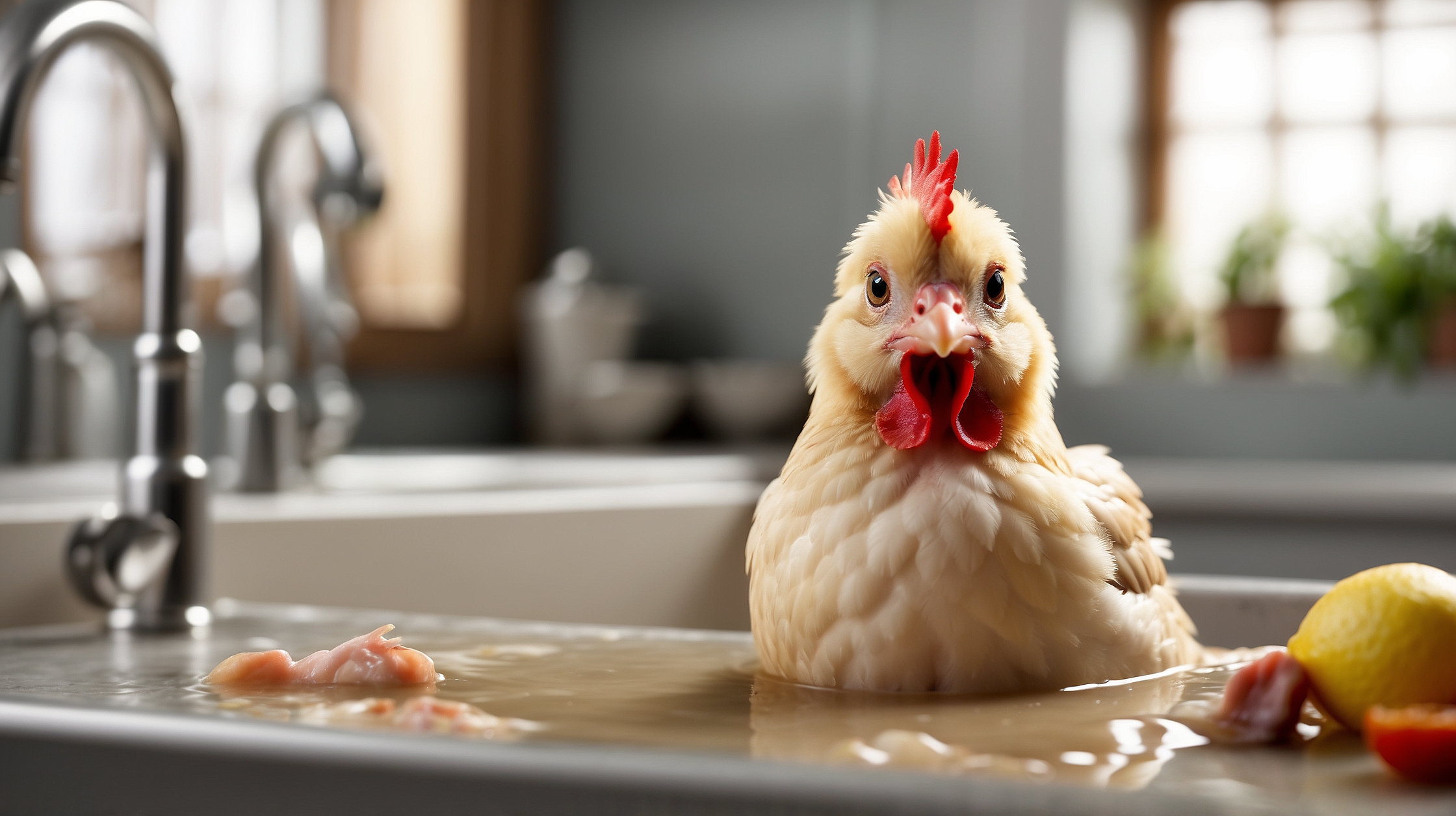
It was a calm Sunday morning when Lisa, a mother of three from Chicago, began prepping for her family’s weekly roast chicken dinner. As she always had, she placed the bird in her kitchen sink, turned on the faucet, and began rinsing the raw meat. Before long, her kitchen was buzzing with activity — chopping herbs, basting the chicken, and organizing sides. But just two days later, her youngest son was rushed to urgent care with severe stomach cramps. The diagnosis? A salmonella infection. The likely culprit? Contamination caused by washing raw chicken in the sink.
Lisa’s experience is far more common than most people realize. Generations have passed down this practice, believing it to be essential for maintaining hygiene. Yet, medical experts and food safety specialists have long known that the opposite is true — washing raw chicken actually increases the risk of dangerous bacteria spreading in your kitchen. The simple act of rinsing under tap water can inadvertently splash bacteria-laden droplets several feet in every direction, contaminating utensils, countertops, and anything else nearby.
In this article, we dig into why washing raw chicken before cooking is a practice that must change — and what safer alternatives you have to keep your family healthy and your kitchen bacteria-free.
Quick facts on washing raw chicken
| Danger level of washing chicken | High – due to spread of Campylobacter, Salmonella |
| Recommended by food safety experts? | No – professional guidance advises not to rinse raw poultry |
| Main risk | Cross-contamination of surfaces and food |
| Safe alternative | Proper cooking to 165°F internal temperature |
| Population groups most at risk | Children, elderly, pregnant women, individuals with weakened immune systems |
| Official recommendation | Do not wash raw poultry; clean surfaces thoroughly after contact |
Why washing chicken became a common habit
For decades, rinsing chicken under the faucet was considered standard kitchen hygiene. Many people believed it helped remove slime, blood, or feathers still clinging to the meat. This view was passed down through generations and often reinforced by cooking shows and home chefs alike. But what was once considered cleanliness has been proven to cause more harm than good.
As food safety science evolved, it became clear that washing poultry may lead to more bacterial spread rather than eliminating it. The sheer force of running water can propel microscopic droplets filled with pathogens such as salmonella and campylobacter onto countertops, cutting boards, and even other food already prepared.
What dangerous bacteria are you spreading?
A key concern from washing raw chicken is the spread of harmful bacteria. Two of the most common and dangerous are:
- Salmonella: This bacteria causes fever, diarrhea, and abdominal cramps — with severe cases sometimes leading to hospitalization.
- Campylobacter: A leading cause of bacterial gastroenteritis, it can also lead to Guillain-Barré Syndrome, a rare but serious autoimmune condition.
Even a few bacteria can pose a threat, especially to children, the elderly, pregnant women, or anyone with a weakened immune system. According to food safety specialists, campylobacter can be transferred by just a single drop of contaminated water.
“The danger lies in what we call aerosolized pathogens — they spread rapidly from the sink to counter or hands without you even realizing it.”
— Dr. Nina Wallace, Microbiologist and Food Safety Expert
What experts recommend instead of washing chicken
Proper cooking, not washing, is the best way to eliminate pathogens. When chicken is cooked to an internal temperature of 165°F (74°C), harmful bacteria are effectively destroyed. Experts recommend using a meat thermometer to verify internal temperatures rather than relying on appearance or timing alone.
To prepare raw chicken safely:
- Open the packaging directly over your cooking pan or prep plate.
- Use separate cutting boards and knives for poultry and other foods.
- Thoroughly clean anything that touches raw chicken, including hands, surfaces, and utensils.
- Never place cooked food back on any dish or utensil that held raw chicken.
“Cooking the chicken to proper temperature neutralizes the bacteria — washing it just makes your kitchen more vulnerable.”
— James Han, Registered Food Safety Instructor
Common myths about washing raw poultry
Myth 1: “Washing it gets rid of slimy textures and odors.” While some may find the texture off-putting, rinsing doesn’t improve freshness or safety. That sliminess is natural and disappears with cooking.
Myth 2: “I’ve always done it and never got sick.” This is the most dangerous myth. Just because illness hasn’t happened yet, doesn’t mean the risk isn’t present. Bacteria presence can be inconsistent — sometimes you dodge it, other times, you won’t.
Myth 3: “I use vinegar or lemon water, and that helps sanitize it.” Neither vinegar nor lemon juice reaches antibacterial levels sufficient to eliminate pathogens. Only proper heat does that.
“If people could see the microscopic splatter pattern from washing chicken, they wouldn’t risk it. You’re creating invisible contamination zones you can’t track.”
— Dr. Elaine Peterson, Public Health Educator
Kitchen surfaces most at risk
When water hits raw chicken, bacteria can travel up to 3 feet from the sink in mere seconds. The surfaces most likely to be contaminated include:
- Countertops and backsplash areas
- Sink handles and faucet knobs
- Cutting boards
- Nearby dishes or drying racks
- Dish towels and sponges
Contaminated areas may seem clean, but invisible bacteria can linger for hours — in some cases, even days. A simple towel used to wipe down a wet counter can transport pathogens onto your hands, dishes, or other food.
Winners and losers of this change in kitchen practices
| Winners | Losers |
|---|---|
| Families practicing modern food safety | Outdated food preparation habits |
| Home kitchens that avoid cross-contamination | Old cooking tutorials promoting rinsing meat |
| Health professionals advocating safe food handling | Misleading culinary myths passed through generations |
How to clean kitchen surfaces after handling raw chicken
Since raw chicken can spread bacteria, it’s essential to clean thoroughly after handling. Here’s how to disinfect your kitchen properly:
- Use hot, soapy water first to remove debris and grease.
- Disinfect surfaces using a bleach/water mix (1 tablespoon bleach to 1 quart water) or an approved kitchen cleaner.
- Let disinfectant sit for the recommended contact time (usually around 5 minutes) for full effectiveness.
- Wash hands before and after cleaning with soap for at least 20 seconds.
Changing kitchen norms starts with awareness
We grow up watching our parents and grandparents wash poultry — it feels correct, instinctual, even comforting. But as scientific understanding improves, we learn that some habits need adjusting. Choosing not to wash raw chicken is not a concession, it’s an informed decision to keep your family safe.
Replacing this outdated habit with smarter practices helps ensure that your delicious meals don’t come with unintended bacteria on the side. Whether you’re an experienced home chef or a first-time cook, remembering that heat kills bacteria — not water — is the key takeaway.
Frequently asked questions
Is it ever safe to wash raw chicken?
No, food safety experts universally advise against washing raw chicken due to the risk of cross-contamination.
Does vinegar or lemon juice help sanitize raw chicken?
While these may decrease surface bacteria slightly, they are not effective solutions for making chicken safe to eat. Only cooking to the correct temperature removes bacterial risk.
How far can bacteria spread when washing chicken?
Bacteria-laden water droplets can travel up to 3 feet from the sink, contaminating countertops, utensils, and nearby food.
What should I do if I accidentally wash raw chicken?
Disinfect all surrounding surfaces, utensils, and your hands immediately to prevent potential spread of pathogens.
Is patting chicken dry with a paper towel okay?
Yes, as long as care is taken not to spritz liquid. Always dispose of the towel immediately and wash hands afterward.
Can I prevent odors without washing the chicken?
Yes. Cooking neutralizes any unwanted odors, and marinating (in a separate container) helps refresh the flavor without rinsing.
What’s the safest way to prepare chicken before seasoning?
Remove from packaging directly onto clean prep surface, and season without rinsing. Cook to 165°F to ensure safety.