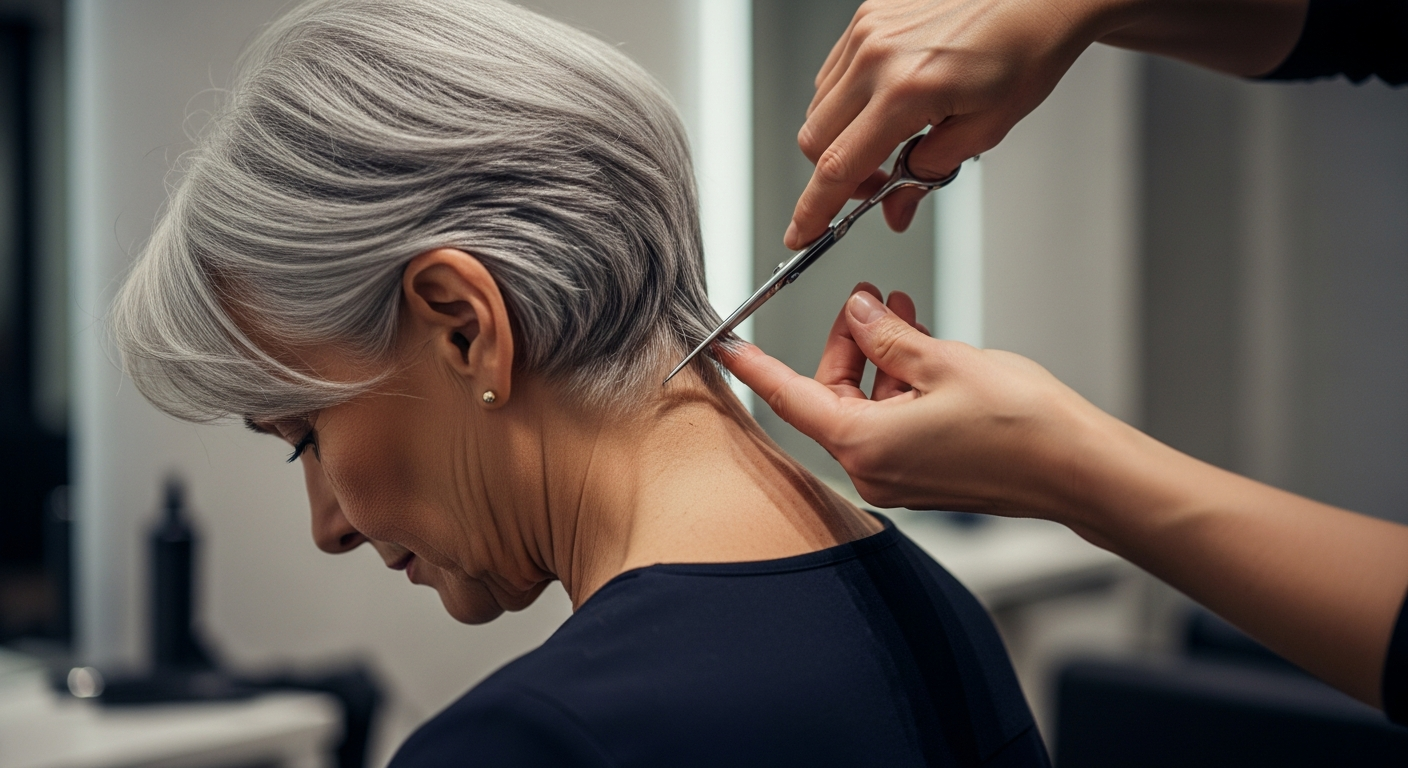
A classic haircut can be timeless, elegant, and empowering — but when it comes to women over 60, even the most iconic styles need a thoughtful twist. Among these, the **classic bob cut** remains one of the most requested by older women. It’s a versatile look that transcends decades, offering sophistication without sacrificing ease. However, as women age, subtle changes in bone structure, hair texture, and overall aesthetic preferences mean that even a universally flattering hairstyle like the bob needs to evolve.
That evolution often begins at the neckline. While younger women may achieve a sharp A-line or blunt bob with relative ease, **women over 60 benefit significantly from a strategic modification at the nape**. The key is to **prevent the haircut from appearing outdated**, heavy, or ill-suited to an aging face and neck. It’s not about giving up style — it’s about enhancing it in a way that respects the natural changes occurring over time.
Professional hairstylists now recommend a tapered or “stacked” finish at the nape for older women, providing lift, contouring the neck, and introducing modernity to a classic look. Let’s dive into why this small change is making a big impact — and how you can adopt it to refresh your own bob.
Why older women need a bob restyle at the nape
| Key Aspect | Importance |
|---|---|
| Neckline modification | Prevents bulkiness and visual heaviness |
| Tapered nape layers | Added lift and youthful contour |
| Adaptation for thinning hair | Creates fullness and shape |
| Texture adaptation | Reduces limpness in fine or graying hair |
| Modernized silhouette | Makes classic cut feel contemporary and fresh |
How the classic bob gained popularity
First introduced in the 1920s, the bob revolutionized women’s hair by offering a shorter, manageable style that broke away from traditional long curls and buns. By the 1960s, icons like Vidal Sassoon reinvented the bob to include sharp, graphic lines and architectural shaping. For decades, the **bob remained a symbol of empowerment, youth, and modern fashion** — three things that many women over 60 still value.
But the original bob often emphasized a straight, heavy cut at the nape, which, though striking in youth, can draw unwanted attention to sagging skin or thinning hair in later years. That’s why modifying that blunt cut has become increasingly important.
Why the nape makes all the difference after 60
Age brings grace, but it can also bring challenges in hair styling. The nape area — the back of the neck where the bob typically ends — can become a focal point. For older women, this spot is often where **skin starts to loosen and hair thins**. A blunt, heavy bob can accentuate these features rather than conceal or complement them.
By softening the cut at the nape — either through **graduated layers, tapering, or subtle undercutting** — stylists are now able to counter aging effects. The result is a more **lifted, tailored, and breathable silhouette**, framing the face and neck with refinement and airiness.
“The tapered nape literally lifts the bob — giving an optical illusion of a longer neck and stronger jawline. It’s a small tweak with a big payoff.”
— Elena Martin, Celebrity Hairstylist
What changed this year in bob trends for mature women
In 2024, stylists and beauty insiders are seeing a shift. The demand for the classic bob isn’t fading — but there’s a growing consensus that it needs to be **customized for older age brackets**. That customization increasingly centers on what happens at the nape. Clients over 60 are asking for looks that provide dimension, movement, and an easy-to-maintain shape.
Thus, the deep, blunt bob of earlier decades is being replaced with styles like the **French bob**, the **angled bob**, or the **stacked bob** — all of which offer nape customization options. Cutting trends are embracing movement and texture over stiffness and uniformity, helping these hairstyles better align with the natural aging process while maintaining freshness.
Who qualifies and why it matters
Women in their 60s and beyond who experience thinning hair, sagging around the jaw and neckline, or simply want a more polished look often qualify for these revised bob cuts. The modification matters because it allows them to wear a modern, relevant hairstyle without compromising individual needs or battling daily maintenance issues.
Even women with thick or curly hair can benefit—stylists now shape curls at the nape in a taper to **prevent pyramid shapes** and bulk. The specificity of cutting ensures that no one-size-fits-all approach is taken—each cut is tailored to both hair type and facial structure.
“If you’re over 60 and your bob still has that ‘helmet’ shape, you’re doing yourself a disservice. A rework at the nape can add decades of style back to your look.”
— Daria Koh, Advanced Stylist and Educator
How to communicate the style you want to your hairstylist
Going into your salon appointment with clear ideas is key to getting the look you want. Here are phrases and concepts to help:
- “I want a classic bob with a tapered nape.”
- “Can we lift and graduate the back to avoid bulk?”
- “I’d like some stack layers for movement around the neckline.”
- “Can you soften the nape so it contours my neck better?”
Bring photos that represent **modernized bob styles with soft edges or angled silhouettes**. Pay special attention to how the cut looks from the back—you want subtle layering or stacking instead of a flat shape at the bottom. Don’t hesitate to ask your stylist what they recommend for your individual hair type and face shape.
Winners and losers of sticking with a blunt bob after 60
| Winners | Losers |
|---|---|
| Women opting for nape-stacked or tapered bob | Those wearing heavy, blunt necklines past age 60 |
| Stylists who personalize cuts for mature clients | Generic “one-length” cuts with no contour |
| Hair textures gaining lift and direction | Thin or thick strands flattened by bulky ends |
Tips for maintaining a modified bob at home
Maintenance is as much about styling as it is about the cut. When you leave the salon with a beautifully tapered nape, keep the look fresh by:
- Using a root lift spray at the nape to enhance volume
- Blow-drying with a round brush to keep layers animated
- Scheduling trims every 6–8 weeks to maintain shape
- Using a lightweight texturizing product for soft definition
“A modified bob almost styles itself. Just use the right products and maintain shape — and you’ll always look put-together.”
— Marcus Hale, Senior Hairstylist
Short FAQs about bob cuts for women over 60
What is a tapered nape in a bob haircut?
A tapered nape means the hair at the back of the neck is cut shorter and closer to the skin, gradually blending into longer layers, giving the illusion of lift and a longer neck.
Is a bob cut still fashionable for women over 60?
Absolutely. A modified or modernized bob remains one of the most flattering and stylish options for older women today.
Can I get a stacked bob if I have curly hair?
Yes. A skilled stylist can stack curls at the nape for a more modern silhouette without adding unnecessary bulk.
How often should I trim my bob to keep it looking fresh?
Every 6–8 weeks is ideal to maintain shape, definition, and prevent the style from looking heavy at the neckline.
What’s the difference between a blunt bob and a stacked bob?
A blunt bob has a uniform length at the ends, while a stacked bob includes graduated layers at the nape for volume and contour.
Will modifying the nape make my hair look thinner?
No. When done correctly, it can actually create the illusion of thickness and structured volume.
Is this haircut easy to style daily?
Yes. The shape does most of the work — just a quick blow dry or light product use can achieve a polished result.
What should I ask my stylist for if I want a youthful bob?
Request a classic bob with nape tapering or stacking, depending on your hair type and face structure.