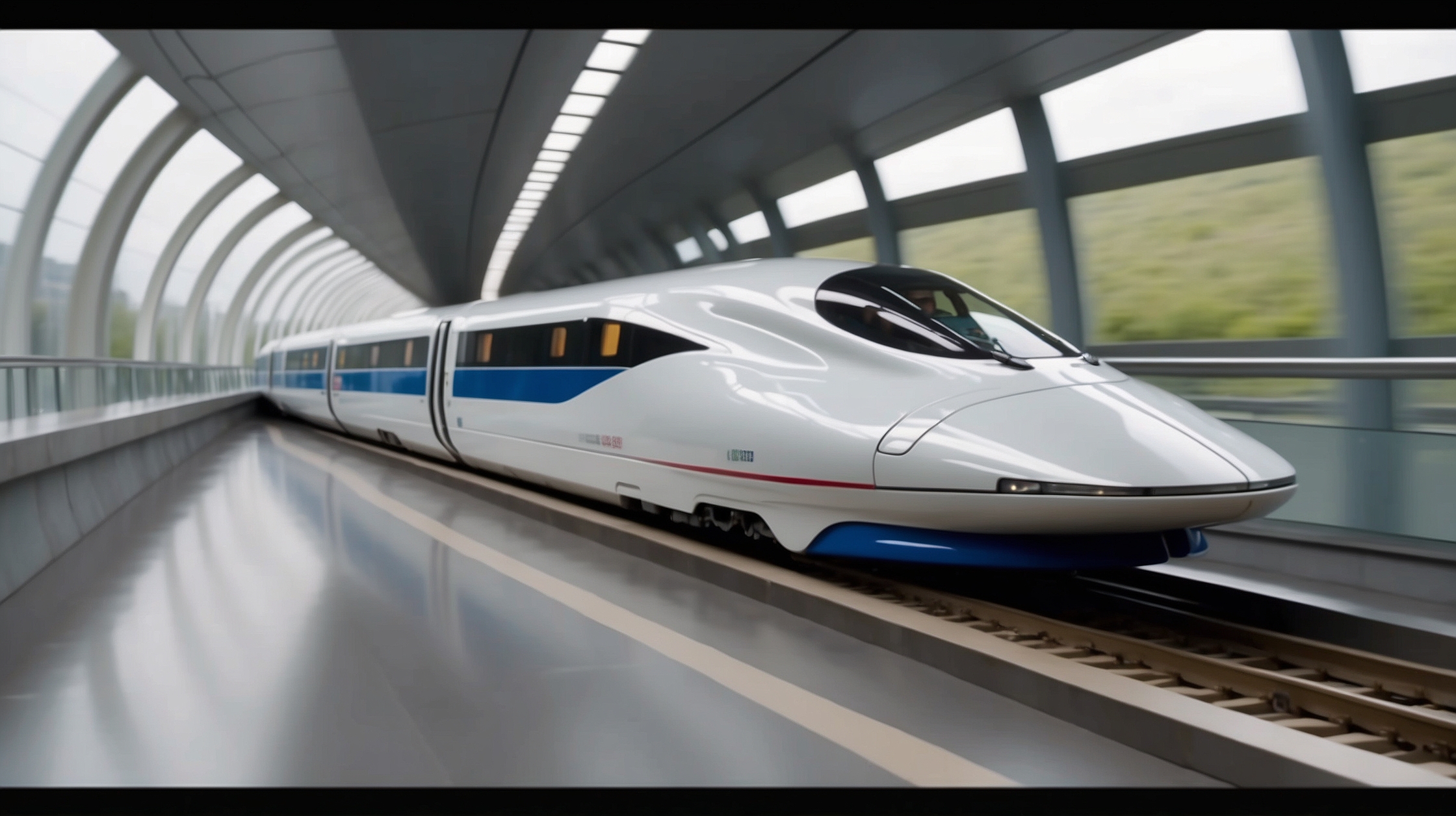
On a crisp morning in Qingdao, China, the future of transportation quietly came alive. A sleek, silver-blue train floated above a track without wheels, making no more than a hushed whisper as it slid effortlessly forward. It wasn’t science fiction or a futuristic fantasy—it was the debut of the world’s fastest **maglev train** to date, promising to redefine high-speed travel and perhaps the very framework of how we approach mobility.
The atmosphere during the test runs was electric. Engineers and onlookers held their breath as the train accelerated to unheard-of speeds, hovering magnetically above specially designed tracks. This was a moment long in the making and a true culmination of years of engineering mastery and innovation. China, once known for its rapid industrial growth, has now catapulted itself into the future with this glimpse of next-generation travel.
This monumental achievement marks more than just breaking speed records. It signals a major shift in the global race for transportation supremacy and highlights the technological prowess required to make such dreams a reality. As global demand for fast, efficient, and sustainable transport rises, China’s new maglev technology offers a compelling answer.
Overview of China’s New Maglev Train
| Train Type | Magnetic Levitation (Maglev) |
| Top Speed | 600 km/h (373 mph) |
| Developer | China Railway Rolling Stock Corporation (CRRC) |
| Primary Location | Qingdao, China |
| Expected Routes | Beijing-Shanghai corridor, with future expansions |
| Technology | Electromagnetic levitation & propulsion |
| Passenger Capacity | Up to 10 carriages (approx. 100 passengers per carriage) |
How this technology works
Unlike traditional trains that rely on wheels, maglev trains use **magnetic levitation** to hover above the tracks. By eliminating contact friction, these trains can **achieve higher speeds** with greater energy efficiency. The system uses powerful electromagnets to both levitate and propel the train along a special track known as a guideway.
China’s latest maglev train pushes the boundaries by reaching speeds of **600 km/h (373 mph)**—closing the gap between traditional rail travel and commercial airliners. According to developers, shorter routes like the **Beijing to Shanghai corridor**—which currently takes about five hours by conventional high-speed train—could be completed in as little as 2.5 hours using maglev transport.
“We’re not just building a faster train; we’re reimagining what rail transport can be in the 21st century.”
— Zhang Shuai, Lead Engineer, CRRC
What changed this year
Due to intense R&D and government support, 2024 marked the world’s first successful trial runs of a maglev train hitting consistent speeds of **600 km/h**. This drastically surpasses previous records held by other countries and solidifies China’s top spot in the race for rail innovation. Key developments include:
- Completion of a **full-scale prototype** with operational passenger compartments
- Successful integration of an **active guidance system** to stabilize levitation
- Trials with multiple carriage configurations, ensuring scalability
This wasn’t an isolated success. Various sectors of government and industry collaborated to create not just the train, but also the **infrastructure and supply chains** needed to bring the technology to full deployment across China’s vast railway network.
Economic and environmental impact
Beyond its speed, the maglev train brings significant **environmental advantages**. By eliminating friction and using clean energy sources, maglev systems reduce **carbon emissions** when compared to airplanes or traditional diesel rail systems. In the Beijing-Shanghai air corridor, replacing just 10% of flights with maglev trips could shave off thousands of tons of CO2 annually.
On the economic front, faster intercity travel boosts **regional connectivity**, making economic hubs accessible like never before. For instance, professionals can comfortably commute across cities daily, promoting urban decongestion and rural growth.
“Faster rail speeds unlock new economic corridors, making it possible for talent and resources to interconnect across great distances.”
— Li Wei, Economist at China Economic Institute
Winners and losers from this development
| Winners | Losers |
|---|---|
| Urban commuters | Short-haul airlines |
| Rail technology firms | Current high-speed rail companies outside China |
| Environmental advocates | Auto industry reliant on highway travel |
| Local economies near new routes | Legacy transport infrastructure |
What it means for high-speed rail globally
China’s maglev breakthrough is setting a **new international benchmark**. Nations around the world—particularly those developing or expanding their rail infrastructure—are now looking towards electro-dynamic suspension as a viable future alternative. Countries like Japan and Germany, long seen as leaders in rail innovation, are now racing to keep pace or adopt adaptable versions of this technology.
This also signals a broader geopolitical shift. By exporting maglev technology or forming strategic rail-related partnerships, China could gain significant **soft power** in global infrastructure projects.
Next steps for deployment
China has confirmed that the next phase will include **commercial trials on longer rail routes**. Though initial costs of deployment remain high due to infrastructure demands—such as special guideways and power stations—early projections show that costs will reduce through localization and economies of scale. The plan includes potential integration with **airport city links**, business zones, and cross-border corridors.
Deployment timelines remain tentative, but insiders suggest the first full-length maglev line could become operational by **2027 or 2028**, depending on regulatory approvals and funding shifts.
“The leap to 600 km/h isn’t just about speed—it’s about manifesting future cities through near-instantaneous transport.”
— Dr. Huang Rong, Urban Transport Policy Advisor
Public perception and travel experience
Unlike older high-speed rail systems, maglev trains offer a **smoother and quieter ride**, as passengers glide over tracks with little to no vibration and lower decibel levels. Preliminary onboard experience evaluations reflect strong consumer enthusiasm, with praise for comfort, noise control, and punctuality.
From a design perspective, interiors boast **minimalist aesthetics**, wide seats, panoramic windows, and built-in smart technology for navigation, updates, and entertainment—all crafted to appeal to both commuters and tech-savvy tourists.
Challenges that remain
Despite this progress, several hurdles persist. The most critical issues include:
- High infrastructure cost for dedicated maglev tracks
- Complex integrations with existing urban transport systems
- Regulatory harmonization, especially if deploying cross-regionally
Moreover, convincing the public and politicians to invest in maglev technology over traditional high-speed options remains a policy challenge, albeit one that becomes easier when the **benefits of faster, cleaner travel** become increasingly evident.
Frequently asked questions
How fast is the new Chinese maglev train?
This maglev train can achieve speeds of up to 600 km/h (373 mph), making it the fastest ground transport vehicle currently in practical development.
What does maglev mean?
Maglev stands for magnetic levitation. Instead of using wheels, the train hovers above the tracks using powerful electromagnets, reducing friction and increasing speed.
When will the maglev train be available to the public?
Commercial routes are expected to roll out between 2027 and 2028, although technical trials are already underway in select regions.
How comfortable is the ride on a maglev train?
Riders report a smooth, quiet, and vibration-free experience, thanks to the lack of physical contact with tracks.
What are the environmental benefits?
Maglev trains produce fewer emissions compared to airplanes and offer a sustainable alternative for medium-distance travel corridors.
Is the maglev train safe?
Yes, maglev technology has built-in stabilizing controls and systems to manage speed and levitation height, providing robust operational safety.
How does it compare to air travel?
For routes up to 1,500 km, maglev trains can match or surpass airplanes in total travel time when airport logistics are factored in.
Why is China leading in this space?
China’s coordinated investments in technology, infrastructure, and government-backed R&D have allowed it to lead the global charge in maglev innovation.