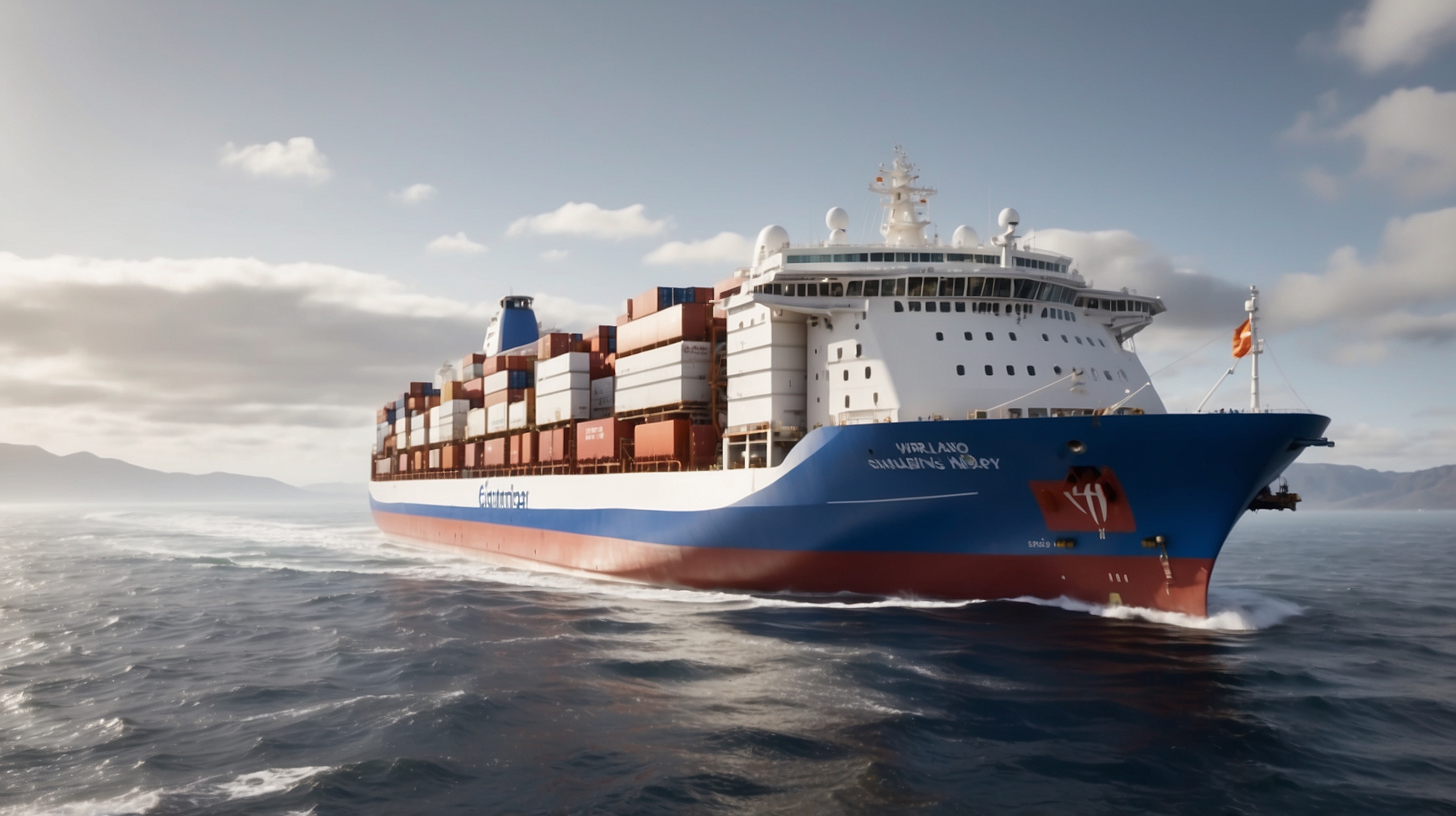
On the shimmering waters off the coast of South America, a historic voyage is underway that may redefine global shipping logistics. Gone is the thunderous roar of diesel engines and the associated trail of pollutants in the air and sea. In its place, a new soundscape emerges—one of silent propulsion, clean energy, and unparalleled innovation. The maritime industry, traditionally slow to adopt green technology, is finally making waves toward a sustainable future.
Dubbed as the largest of its kind, the world’s biggest **electric cargo ship** has officially set sail, charting a new course not just across oceans, but for an entire industry. Designed to transport heavy resources with zero emissions, this electric vessel is more than just a ship—it’s a symbol of transformation in a world racing to meet net-zero commitments. Enthusiasts, environmentalists, and investors alike are watching closely as this maritime marvel embarks on its journey from South America, carrying not only valuable materials but also the aspirations of a more eco-conscious future.
Here’s an in-depth look at what makes this electric ship a game changer, its cutting-edge technology, and the impact it promises on global trade, regional economies, and environmental preservation.
Key facts and specifications at a glance
| Feature | Details |
|---|---|
| Ship Name | Jarará |
| Type | Electric Cargo Ship |
| Length | 63 meters |
| Cargo Capacity | 16 containers (up to 100 tons) |
| Main Route | Amazon river ports (Brazil) |
| Energy Source | Lithium-ion batteries |
| Charging Time | 3 hours |
| Max Range | 3,000 km |
| CO₂ Emissions | Zero |
Why this voyage is groundbreaking for the global shipping industry
This electric vessel—named **Jarará**, a name inspired by a local Amazonian snake—is far more than a marvel of engineering. It signals a monumental leap forward for green logistics and clean maritime practices. With its advanced power system fueled entirely by lithium-ion batteries, the ship emits no greenhouse gases, unlike conventional diesel-powered vessels that contribute heavily to air and water pollution.
The Jarará has been **specially designed for the unique topology of the Amazon River**, allowing it to navigate shallow waterways while hauling up to 100 tons of goods. The Amazon, lacking a robust road network through much of its terrain, depends heavily on river transport, making this ship’s route particularly significant for sustainable transport solutions in remote areas.
What changed this year for electric maritime tech adoption
Global attention on **carbon reduction and sustainable energy** has sharply accelerated in 2024, pressuring industries—especially high-carbon emitters like shipping—to transform supply chains toward greener alternatives. Emerging regulatory frameworks coupled with rising operational costs of fossil fuels have made investments in electric vessels not just environmentally vital but also economically attractive.
Additionally, advancements in **battery storage capacity**, software-controlled navigation, and renewable docking infrastructure have overcome several of the logistical hurdles that previously hindered electric shipping. The launch of the Jarará marks the perfect convergence of technology readiness and regulatory momentum.
Who qualifies and why it matters: the stakeholders involved
The Jarará is operated through a partnership between Brazilian maritime firms and leading innovators in electric propulsion technology. The primary users and beneficiaries of this vessel include regional farmers, traders, and rural communities who rely on river ports as their primary means of logistics.
By integrating **zero-emission logistics into local economies**, the electric ship immediately reduces the environmental impact of goods movement in an ecologically sensitive region. It also strengthens Brazil’s position as a leader in clean tech innovation within Latin America.
“We designed the Jarará not just to move cargo, but to prove that clean shipping is viable even in challenging environments like the Amazon.”
— Rafael Mendonça, Project Lead Engineer
The technology behind the Jarará
At the heart of the Jarará lies an integrated **electric propulsion system** powered by modular lithium-ion battery packs, with a rapid-charging cycle of just three hours. Its dual-motor design ensures redundancy while maintaining high energy efficiency, delivering enough torque to traverse vast distances across varying river currents.
The vessel comes scanning-equipped with advanced location and traffic systems to allow for **adaptive routing**, crucial for the unpredictable river levels in the Amazon. High-frequency charging stations are established along its main route to ensure reliable operations even during extended missions of up to 3,000 kilometers.
How it benefits global supply chains and local communities
This vessel doesn’t merely symbolize progress—it enacts it. The use of electric vessels like the Jarará can reduce the overall **life-cycle emissions of global supply chains**, especially for exports traveling from inland South America to international ports.
In local contexts, the benefits are immediate and tangible. River communities previously choked by diesel fumes are getting reprieve. Regional economies see heightened productivity as products move faster and cheaper across vast water networks without the common delays caused by fuel shortages or mechanical failures.
“We are not just moving goods—we’re moving toward a new infrastructure of opportunity for the people who live along these river routes.”
— Luana Castro, Logistics Director
Paving the way for future investment in green logistics
The Jarará serves as a **pilot program and blueprint** for broader investments in electric maritime fleets not just in Brazil, but globally. Its performance metrics are already drawing interest from logistics firms, governmental transport authorities, and green tech investors worldwide.
This is especially vital as the International Maritime Organization (IMO) pushes stringent goals to reduce GHG emissions from shipping by 50% before 2050. For countries like Brazil, home to vast hydroelectric potential and a critical need for regional transport, electric shipping represents both a necessity and a competitive advantage.
Winners and losers in the new era of electric shipping
| Group | Impact |
|---|---|
| Regional Communities | Winners — Enjoy cleaner air and economic uplift |
| Environmental Stakeholders | Winners — Reduction in pollution and carbon footprint |
| Fossil Fuel Suppliers | Losers — Declining demand from maritime sector |
| Maritime Tech Startups | Winners — New market opportunities |
| Old Fleet Operators | Losers — Risk of obsolescence without tech upgrade |
What comes next for the electric ship revolution
The successful maiden voyage of the Jarará is just the beginning. Stakeholders behind the project plan to build **more vessels tailored for other river networks** across South America, and potentially replicate the model for use in Asia and Africa. Each new vessel will enhance our understanding of long-term battery durability in humid environments, offer insights into supply chain redesign, and fuel a marketplace that is actively seeking sustainable maritime solutions.
“This isn’t just a South American achievement—it’s a global model for reshaping waterborne commerce.”
— Dr. Helena Schultz, Clean Transport Researcher
Frequently Asked Questions
What is the name of the world’s largest electric ship?
The vessel is named Jarará, inspired by a local Amazonian snake and symbolic of adaptability and power.
Where does the electric ship operate?
The Jarará operates along the Amazon River and surrounding tributaries, serving Brazilian river ports.
How much cargo can the Jarará carry?
The electric ship has a capacity of up to 100 tons of cargo, or 16 large containers.
What powers the electric ship?
The vessel is powered by advanced lithium-ion battery technology and does not use any fossil fuels.
How long does it take to recharge the ship?
The ship’s battery systems can be fully recharged in approximately 3 hours.
Is this ship part of a larger fleet?
Currently, Jarará is a standalone innovation, but plans are in place to expand the fleet across regions.
What are the main benefits of using electric ships?
No emissions, low noise, and reduced operational costs make electric ships ideal for sustainable transport.
Can similar ships be developed for ocean travel?
Yes, technology is advancing rapidly and work is underway to build ocean-going versions of electric ships.