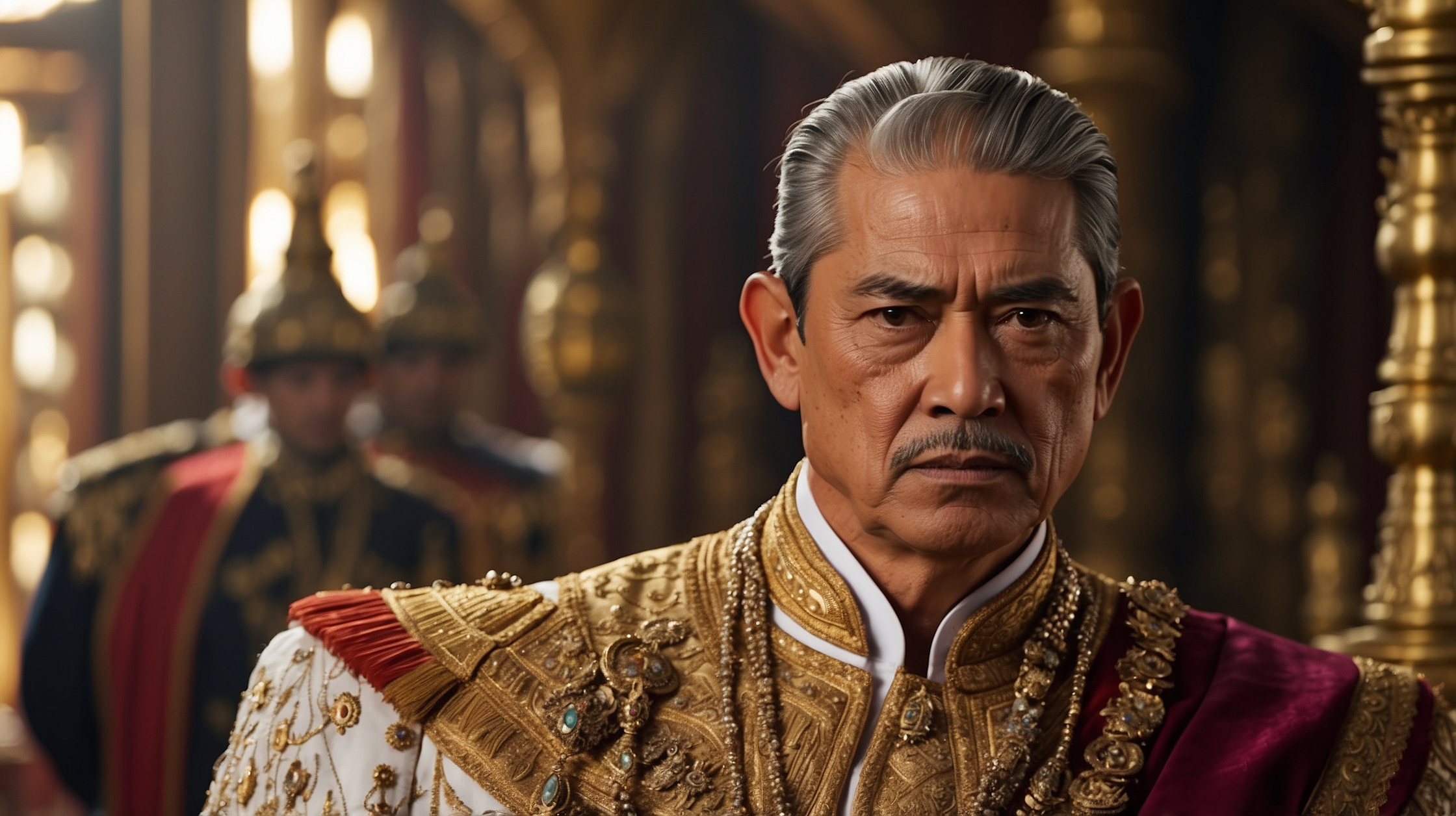
In a world where monarchy often rivals corporations in wealth and influence, few royal figures captivate international fascination quite like King Maha Vajiralongkorn of Thailand. Known officially as King Rama X, his extraordinary fortune has placed him at the top of the list of the world’s wealthiest monarchs—an astonishing development in global wealth rankings unveiling just how much influence can be concentrated in a crown.
The financial power of a monarch is typically shrouded in mystery. With funds accumulated over generations, and institutions like the Crown Property Bureau at their disposal, royal families have always held significant sway. But seldom has a king’s personal fortune drawn such attention. Following updates to Thailand’s laws governing royal assets and his direct control of key financial agencies, King Vajiralongkorn’s net worth now stands as a compelling portrait of geopolitical prestige and monetary authority.
As the modern world continues to dissect power structures and hierarchies, King Vajiralongkorn’s dominant position raises deeper questions about monarchy’s evolving place in the 21st century. From complex asset transfers to strategic financial consolidation, understanding how Thailand’s king amassed his fortune provides valuable insights into sovereignty, statecraft, and global wealth trends.
Overview of the World’s Richest King
| Aspect | Details |
|---|---|
| Full Name | King Maha Vajiralongkorn (Rama X) |
| Country | Thailand |
| Estimated Net Worth | $43 billion USD |
| Source of Wealth | Crown Property Bureau, Real Estate, National Holdings |
| Year of Accession | 2016 (Official Coronation in 2019) |
| Major Asset Changes | 2018–2020 transfer of royal assets into personal control |
How King Vajiralongkorn amassed an unprecedented fortune
The rise in King Vajiralongkorn’s wealth is predominantly linked to the reallocation of assets from the Crown Property Bureau—a formerly independently-managed state agency controlling royal assets—to his direct ownership. This historic shift was spearheaded by legislative changes passed in 2017 and implemented fully by 2018, allowing the king to assume total personal control over the SPB’s holdings.
The Crown Property Bureau has long been the economic engine of Thailand’s monarchy, managing assets including central Bangkok real estate, bank shares, and stakes in some of the country’s largest corporations. This includes holdings in Siam Commercial Bank and Siam Cement Group. Once these assets transferred into the sovereign’s name, King Vajiralongkorn became arguably the richest monarch in modern times.
Thailand’s monarchy operates with deep historical reverence and political insulation. By transitioning assets previously labeled as “public property” into private holdings, the king not only amplified his own financial standing but also redefined the role of the royal institution in economic affairs. Analysts believe this sets a precedent of modern control unmatched by other monarchies today.
Political and legal maneuvers behind the wealth transfer
The 2017 changes to Thailand’s royal property management law overturned a near century-old structure. Previously, the Crown Property Bureau managed royal assets “on behalf” of the monarchy. The new legal interpretation returned full discretionary power and ownership to the reigning king. This move was not subjected to parliamentary oversight, reflecting the monarchy’s unique power under Thailand’s constitutional but military-guided system.
Experts have pointed to the monarch’s use of Royal Gazette announcements to quietly enact major economic changes. These shifts occurred with minimal public debate, showcasing how Thailand navigates royal legislative authority outside of conventional democratic procedures.
“Unlike ceremonial monarchies in the West, King Vajiralongkorn exercises genuine financial and political control through legal authority that essentially rewrote institutional norms.”
— Dr. Ananda Sukprasert, Royal Thai Political Analyst
What changed this year
While King Vajiralongkorn had already become the wealthiest monarch in previous years, recent evaluations updated his total net worth to approximately $43 billion USD. Market gains in the value of corporate shareholdings and rapid real estate appreciation in Bangkok significantly contributed to this inflation.
In 2024, the revisit of royal holdings accounting brought to light additional properties and equity stakes previously unreported due to lack of transparency. High-profile Thai companies tied to royal investment saw record profits last fiscal year, elevating the direct value of his portfolio. Furthermore, the inclusion of more diversified asset classes—like land leases and joint ventures—have added billions in valuation.
Who qualifies and why it matters
The title of “world’s richest monarch” is both a symbolic and material recognition that reflects strategic financial structuring, political leverage, and national image. Few monarchs globally hold such unchallenged sway over national economic arteries. In contrast, royal families in countries like the UK or Belgium have more symbolic roles with parliamentary control over their wealth or spending.
King Vajiralongkorn’s qualification as the richest monarch hinges on personal ownership and direct shareholder influence, rather than sovereign funds that are technically held “in trust.” This fundamental distinction places him above oil-rich monarchs in the Middle East or Europe’s ceremonial kings whose net worth may appear large but lacks unfettered individual control.
“The aggregation of royal wealth under King Rama X isn’t simply an inheritance—it’s an orchestrated economic centralization. Few monarchs have this kind of unfettered agency over such strategic sectors.”
— Dr. Leanne Matthews, Global Wealth Watch Institute
Winners and losers from royal wealth capitalization
| Winners | Losers |
|---|---|
| Royal establishment and family | Public financial transparency advocates |
| Major Thai corporations tied to CPB | Independent regulators without asset oversight |
| Stock market investors benefitting from royal-linked assets | Civic organizations demanding asset partition |
How this impacts Thailand’s economy and politics
King Rama X’s economic consolidation has a direct effect on Thai governance and market dynamics. His control over assets once attributed to the nation brings into focus the blurred lines between state and monarchy. As the highest shareholder in multiple strategic sectors, including finance, construction, and agriculture, his interests inevitably intersect with national policy priorities.
Critics warn this could suppress democratic discourse or public accountability mechanisms. On the other hand, supporters maintain that the monarch’s financial oversight offers stability and long-term planning continuity in an often volatile Southeast Asian economy.
Yet, Thailand’s youth-driven democratic movements have often clashed with the idea of royal asset dominance, fueling protests that push for more transparency. These confrontations are shaping a new paradigm in Thai socio-political debates—how to balance respect for tradition with modern demands for accountability.
Short FAQs about the World’s Richest Monarch
What is King Vajiralongkorn’s estimated net worth?
His estimated net worth is approximately $43 billion USD, making him the world’s richest monarch as of 2024.
How did King Rama X gain personal control of royal assets?
Through legal reforms enacted in 2017–2018, King Vajiralongkorn assumed direct ownership of assets previously managed by the Crown Property Bureau.
Is the Crown Property Bureau a private or public institution now?
It is now considered a privately controlled entity under the king’s name, no longer classified strictly as a public institution.
What are some key companies tied to his wealth?
Major holdings include Siam Commercial Bank and Siam Cement Group, both integral parts of Thailand’s economy.
Why is this wealth important politically?
The king’s financial power greatly influences both political decisions and economic direction due to high-level equity in major industries.
Do other monarchs have similar control over national assets?
No. Most other monarchs—especially in Europe—operate with symbolic influence and have limited personal control over state assets.
What criticism has been raised about his net worth?
Civil rights groups argue that such concentrated wealth hinders transparency and promotes unchecked sovereign power in financial matters.
How has the public reacted inside Thailand?
The public sentiment is mixed, with growing calls among youth and reform groups for clearer distinctions between state and royal wealth.