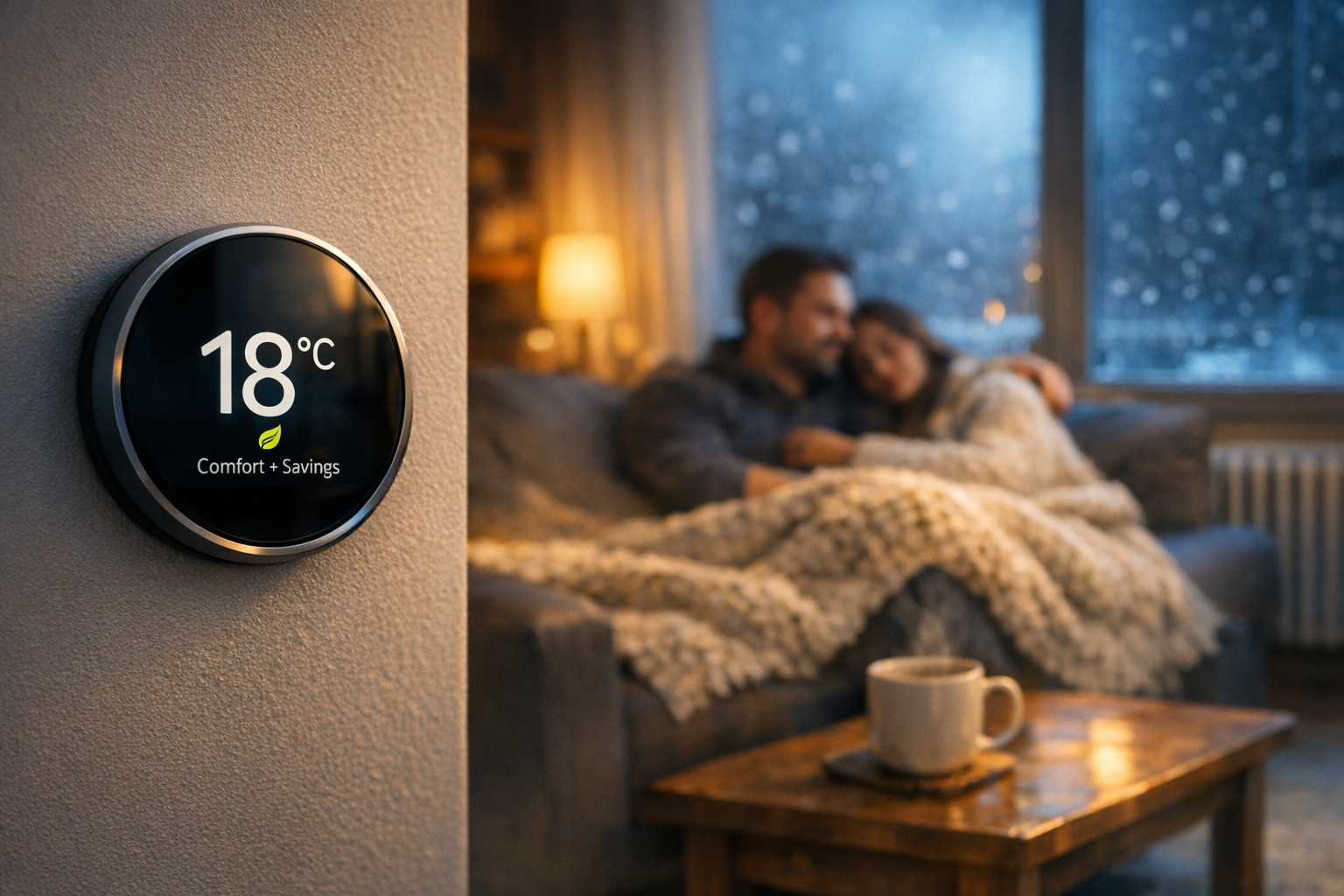
As the seasons shift and global energy trends transform how we heat our homes, a quiet revolution is taking place across households, office buildings, and public institutions. For years, the so-called “19-degree rule” served as an unspoken guideline for those looking to balance comfort, sustainability, and energy savings. But new research, technological updates, and expert consensus have called this benchmark into question. The public is now being asked: Is 19°C still the optimal indoor temperature in colder months, or is it time to evolve our standards?
For much of Europe, especially during energy crises and rising fuel costs, heating systems were dialed down to 19°C as a form of eco-conscious discipline. Governments, schools, and even businesses embraced this policy—not just to conserve power but to contribute to climate objectives. It became something of a minimalist rallying cry for conscious energy behavior. But the conversation has changed. Experts in thermoregulation, energy efficiency, and public health are now painting a more nuanced picture of just how warm—or cool—our indoor spaces should really be.
The shift brings pressing questions for homeowners, renters, landlords, and corporate facility managers alike. If 19°C is no longer the gold standard, what is the new target? And what do temperature preferences say about our values, comfort levels, and environmental responsibilities in 2024?
What experts now recommend for indoor heating temperatures
| Topic | Details |
|---|---|
| Previous Standard | 19°C indoor temperature |
| New Recommended Range | 20°C to 21°C for general community use |
| Primary Reason for Shift | Improved comfort, productivity, and evolving building insulation standards |
| Target Audience | Homeowners, offices, schools, healthcare facilities |
| Key Energy Consideration | Balance between thermal comfort and energy efficiency |
What changed this year
Evidence from new thermal health research and shifts in energy efficiency practices have called into question the effectiveness of the 19°C rule as a one-size-fits-all guideline. While 19°C conserved energy, it didn’t always support optimal comfort or health—especially for vulnerable populations. Research published across Europe and echoed by energy ministries highlights that a temperature range of 20°C to 21°C tends to offer better overall satisfaction without drastically increasing energy use, thanks to newer heating technologies and insulation upgrades.
“We’re not saying 19°C was wrong—it was necessary at the time. But today’s smart systems and better insulation mean we can go a little warmer without sacrificing sustainability.”
— Dr. Lena Hoffmann, Energy Policy Analyst
Additionally, international standards like those provided by health and safety organizations have adjusted their winter indoor recommendations, suggesting that 21°C is the lowest safe limit for older adults and children, who may have weaker immune or thermoregulation systems.
Why temperature impacts more than comfort
Temperature doesn’t just determine how cozy we feel—it affects our cognitive ability, productivity, sleep, and physical health. Large-scale studies from workplace analytics show that office workers performed tasks more efficiently and made fewer errors at 21°C compared to 19°C. Other research correlates prolonged exposure to cold indoor environments with higher blood pressure and respiratory complications, particularly in seniors.
Children in colder classrooms, too, showed decreased academic engagement. With these findings stacking up, it’s no wonder that educators and workplace planners are pushing for a slight adjustment to heating guidelines.
“A two-degree increase might seem minor, but it can dramatically alter alertness and emotional wellbeing—even if energy use stays sustainable.”
— Prof. Arthur Vélez, Environmental Physiologist
Winners and losers from the new recommendation
| Winners | Why |
|---|---|
| Older Adults and Children | Better warmth support improving health and comfort |
| Remote Workers | Improved productivity and mood in home offices |
| Property Developers | Opportunities to innovate heating systems and insulation |
| Losers | Why |
| Public Institutions with Older Infrastructure | Increased heating bills without upgraded systems |
| Landlords of Poorly Insulated Buildings | Higher tenant complaints and pressure to improve energy systems |
How improved insulation is enabling higher comfort levels
Modern building standards have quietly changed the game. Thermal insulation materials now used in residential and commercial properties are significantly more effective than what was available even a decade ago. These upgrades reduce heat loss through windows, walls, and roofs—enabling environments to stay warmer with less energy.
This means that turning the thermostat up by 1–2 degrees no longer results in as extreme of a cost or carbon increase as it once did. Many of the new buildings in Europe now meet nearly-zero energy standards, reducing the ecological guilt for those aiming for 20–21°C comfort.
“The magic isn’t just in the thermostat—it’s in the walls, windows, and rooftops. The future of indoor warmth is structural.”
— Emil Gustafson, Green Construction Specialist
Special considerations for vulnerable populations
For the elderly, children, and those with chronic conditions like diabetes or cardiovascular disease, indoor temperature isn’t a luxury—it’s a necessity. Staying too cool, even for short periods, can lead to long-term health setbacks. That’s why medical professionals increasingly discourage the 19°C norm, calling instead for minimums of 20°C across key living areas such as bedrooms and bathrooms.
Care centers, hospitals, and schools now implement dynamic heating solutions to adjust warmth depending on time, population profile, and activity level. These tailored solutions underline why a universal rule no longer holds up under scrutiny.
The rise of smart thermostats and intelligent heating
The connected home revolution has also changed the equation. Smart thermostats can now map your routine, measure occupancy, and self-adjust based on humidity, outside temperature, and energy tariffs. For example, raising the living room to 21°C on a rainy morning while keeping unused rooms cooler can preserve both comfort and efficiency.
With the aid of smartphone apps and AI learning, heating is no longer an analog, set-it-and-forget-it operation. People can now manage their comfort while meeting lower carbon targets.
In this context, the “19°C rule” becomes an outdated notion in a world where comfort and conservation need not be in conflict. Choice and precision are now the keys.
What families and homeowners can do now
Instead of sticking to rigid rules, most experts encourage homeowners to assess their space holistically. Consider the following:
- Upgrade insulation before winter
- Install smart thermostat systems
- Target 20–21°C for major living spaces
- Use localized heating (heated blankets, floor mats) in private areas
- Schedule heating based on occupancy and activity levels
This strategy reduces total heating consumption while allowing for warmth when it’s most essential. In fact, some homes have seen energy bills drop despite raising set temperatures, thanks to better building design and intelligent energy use.
Short FAQs about Indoor Winter Temperature Guidelines
Is 19°C still acceptable as an indoor temperature?
It’s acceptable for many people, but no longer considered optimal for comfort, productivity, or vulnerable groups like seniors and children.
What is the best indoor temperature for winter?
Experts now recommend 20–21°C for main living spaces during winter for a balance of comfort and energy efficiency.
Will increasing temperature raise my energy bill significantly?
It depends. In well-insulated homes with smart controls, the impact is minimal. In poorly insulated homes, the cost might rise more sharply.
How can I keep bills low while staying warm?
Use programmable thermostats, improve home insulation, and close doors to unused rooms to trap heat more effectively.
Is it safe to heat bedrooms to 21°C?
Yes, especially for the elderly, children, or those with medical conditions. In fact, it may be necessary for their well-being.
Should public buildings adopt 21°C as the norm?
Many are moving in that direction already, particularly schools and hospitals. It supports health and productivity.
What about sustainability concerns?
Modern insulation and smart technology allow for higher comfort without losing energy efficiency goals.