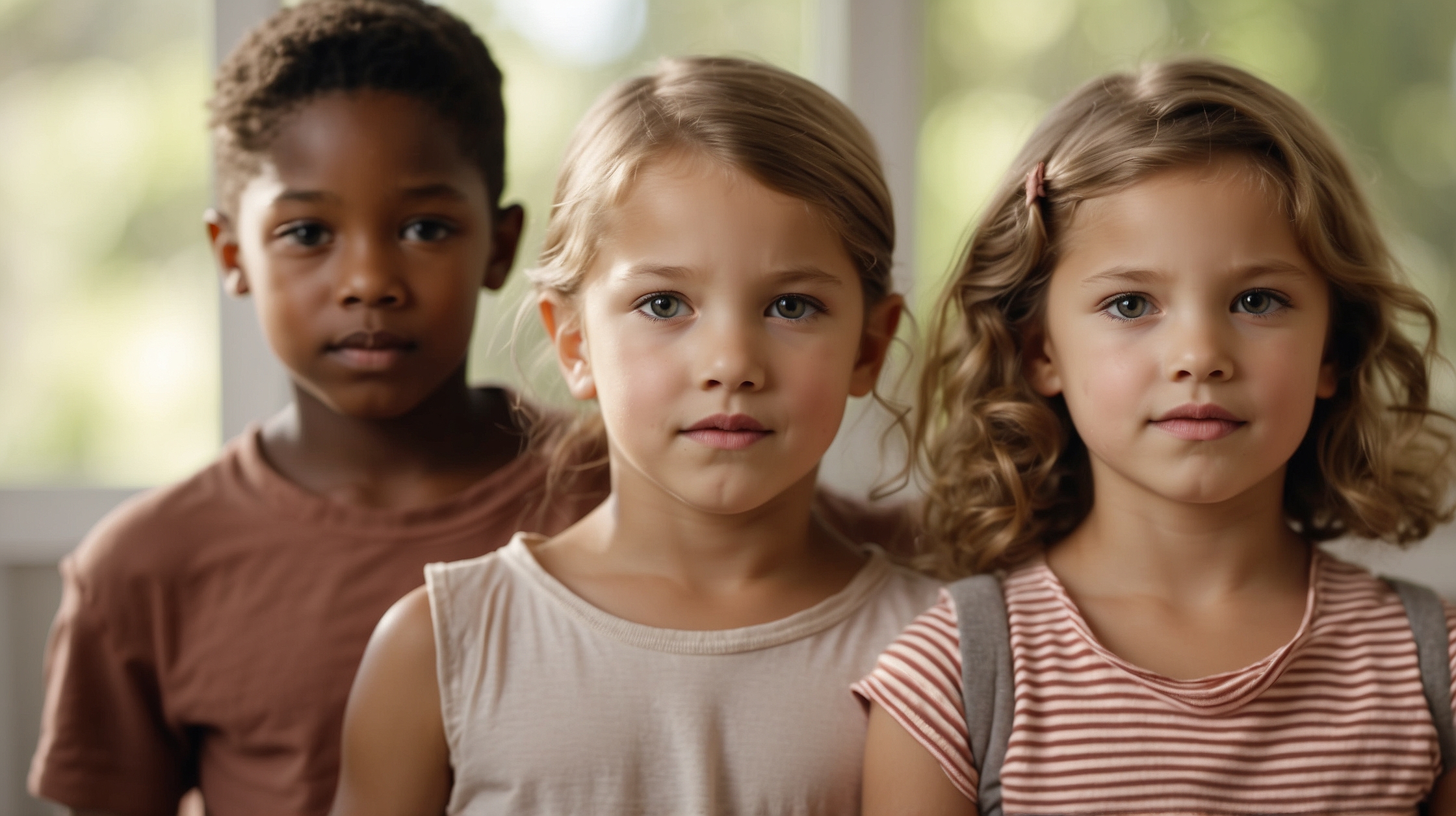
For centuries, we’ve wondered what truly shapes our personalities. Is it our genetic inheritance? Our environment? Or something more subtle—perhaps our place within the family hierarchy? While genetics undeniably play a role, a groundbreaking shift in psychological research suggests your **birth order** may impact your personality more than previously imagined, eclipsing even the influence of inherited traits.
Think of siblings you’ve known. The confident firstborn, the rebellious middle child, or the charming youngest. These stereotypes aren’t merely anecdotal, according to recent studies—there’s mounting evidence that **birth order molds individual personalities** in surprisingly consistent patterns. This challenges long-held beliefs in psychology and genetics, leading researchers to reevaluate how we understand human behavior across families.
Beyond family dinner table dynamics, the implications are vast. If birth order can significantly influence personality, educational styles, career paths, and even mental health outcomes might benefit from this insight. Let’s explore what current research reveals about how the sibling pecking order may be more influential than DNA itself.
How birth order influences personality more than genetics
| Aspect | Birth Order Impact |
|---|---|
| Leadership styles | Firstborns often emerge as natural leaders |
| Creativity & risk-taking | Laterborns more likely to embrace creative, non-traditional roles |
| Social interaction | Middle children tend to be more diplomatic and people-oriented |
| Parental attention | Differs widely depending on the sibling’s position |
| Academic performance | Firstborns generally outperform younger siblings |
How family dynamics trump genetic code
New research suggests that the **environment within a home**, particularly among siblings, creates more variation in personality than genetic factors. While DNA certainly lays the groundwork, it’s the **role a child adopts** in the family that defines behavioral patterns over time.
Studies have observed consistent traits tied to birth order. For instance, firstborn children often benefit from **unshared parental attention**, which can lead to higher achievement and responsibility. In contrast, middle children, who must negotiate attention and identity, often develop stronger social intelligence and adaptability. The youngest, frequently showered with affection yet less responsibility, often lean into creativity and humor.
“Personality is not only about genes. It’s shaped by how a child finds a unique niche within the family.”
— Dr. Lorraine Mitchell, Family Psychologist
Birth order traits explained: What makes each sibling different
The evidence supports the idea that **birth order comes with specific, often predictable personality traits**. Here’s a breakdown of the common characteristics associated with each position in the family:
Firstborns: The responsible achievers
Older siblings often take on leadership roles, both within the family and in broader social settings. They are more likely to display ambition, conscientiousness, and a desire for structure. This is partly due to serving as the “test run” for parenthood—a position full of expectations and strict rules.
“Firstborn children are raised with the most effort and concentration by parents. That experience leaves a psychological imprint.”
— Dr. Marcel Liesenfeld, Developmental Psychologist
Middle children: The adaptable diplomats
Middle children, often sandwiched between the high-achieving firstborn and the attention-seeking youngest, develop negotiation skills and emotional intelligence. They tend to be **peacemakers** and are more likely to reject traditional family roles in favor of independence outside the family structure.
Youngest children: The creative free spirits
Freed from the heavy expectations placed on their older siblings, the youngest tends to experiment. They’re often creative, outgoing, and somewhat rebellious. Having navigated a landscape of established older siblings, they might use humor or innovation to carve their identity.
Only children: The mature perfectionists
Only children share some characteristics with firstborns—primarily responsibility and achievement—but without sibling competition. As a result, they often present adultlike behaviors early on and can lean towards **perfectionism and self-sufficiency**.
Why birth order effects are more noticeable than genes
Genetic similarities across siblings don’t necessarily predict their personalities. That’s because shared genetics are overridden by **unique experiences within the household**. For instance, one child may grow up in a home where the parents are financially stable, while another arrives when the family is facing challenges. These time-based environmental factors profoundly affect development.
Parental expectations also evolve over time. Firstborns often get stricter discipline and more responsibilities. By the time the second or third child arrives, those expectations can loosen, providing a very different developmental environment. These shifting parental attitudes add layers of unpredictability to sibling personalities, independent of genetic makeup.
“Siblings may share a home, parents, and even DNA, yet live fundamentally different childhoods.”
— Dr. Emily Ross, Behavioral Geneticist
Who benefits — and who may be disadvantaged
| Winners | Losers |
|---|---|
| Firstborns (leadership and achievement roles) | Middle children (less parental attention, harder to define their role) |
| Youngest children (creativity and charm advantages) | Only children (pressure to excel, social isolation) |
Why this research matters now more than ever
In the age of personalized learning, targeted leadership coaching, and tailored parenting, understanding the root of personality is vital. If birth order plays a more significant role than previously believed, then this research could change how we approach education systems, hiring practices, and even therapy models.
These discoveries reinforce that no child is born with a blank slate, but neither are they entirely bound by their DNA. By acknowledging the role of family structure in development, parents and professionals can better accommodate each child’s natural strengths and challenges.
FAQs about birth order and personality
Does birth order really influence personality?
Yes, recent studies suggest that where you’re born in the family hierarchy can have a strong influence on traits like leadership, creativity, and independence—more so than previously believed.
Is birth order more important than genetics in personality?
While genetics set the foundation, birth order seems to have a larger impact on personality through environmental experiences and expectations in the household.
What personality is associated with middle children?
Middle children often develop strong negotiation skills, people-pleasing tendencies, and independence due to their position between siblings.
Can birth order explain sibling rivalry?
Yes, competition for parental attention and validation often depends on roles designated or assumed by siblings based on their order in the family.
What about twins—do they show typical birth order traits?
Twin dynamics can complicate birth order effects, but often, the one perceived as “older” shows some firstborn traits if roles are reinforced culturally or by parenting.
How can parents reduce negative birth order effects?
By being aware of potential biases and treating each child as an individual rather than according to stereotype, parents can balance attention and expectations.
Are only children similar to firstborns?
Yes, only children often show high levels of perfectionism and maturity, similar to firstborn traits—but may also face challenges with social adaptation due to lack of siblings.
Can birth order affect career choice?
Some studies link birth order with career preferences—firstborns often lean toward structured fields like law or engineering, while laterborns may pursue more creative, flexible careers.